

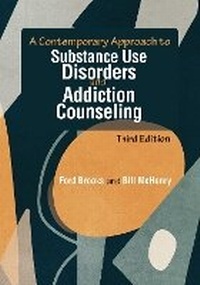
A Contemporary Approach to Substance Use Disorders and Addiction Counseling
3rd Edition
Will be published approx. on 23. November 2023
Book
Paperback/Softback
384 pages
978-1-55620-413-5 (ISBN)
Description
A unique offering of both knowledge and information, this third edition reflects the latest practices and time-tested data. Brooks and McHenry offer relevant case examples that showcase the therapy process as it relates to clients with a substance use disorder and the impact on their families.
New approaches and techniques of medication-assisted treatment with opiate addiction, harm reduction, the use of peer recovery specialists and drug courts, and the importance of addressing trauma in the treatment process are thoroughly presented to ensure effective work with clients from intake through recovery. With a look at the impact of the COVID-19 pandemic included, mental health professionals will gain an empathic understanding of the nonlinear process of recovery.
New approaches and techniques of medication-assisted treatment with opiate addiction, harm reduction, the use of peer recovery specialists and drug courts, and the importance of addressing trauma in the treatment process are thoroughly presented to ensure effective work with clients from intake through recovery. With a look at the impact of the COVID-19 pandemic included, mental health professionals will gain an empathic understanding of the nonlinear process of recovery.
More details
Edition
3rd New edition
Language
English
Place of publication
Alexandria, VA
United States
Target group
Professional and scholarly
Edition type
New edition
Product notice
Paperback (trade)
Illustrations
Illustrations
Dimensions
Height: 251 mm
Width: 178 mm
Thickness: 20 mm
Weight
703 gr
ISBN-13
978-1-55620-413-5 (9781556204135)
Copyright in bibliographic data and cover images is held by Nielsen Book Services Limited or by the publishers or by their respective licensors: all rights reserved.
Schweitzer Classification
Persons
Ford Brooks, EdD, LPC, NCC, CADC, is a professor in the Department of Counselor Education at Shippensburg University of Pennsylvania where he is the senior faculty department member and director of the Growing Edges Community Clinic. Brooks provides counseling, supervision, and training services to clients, supervisees, agencies, and schools in the south-central region of Pennsylvania. Brooks received his doctorate and education specialist degrees in counseling from the College of William and Mary, his master of science degree in rehabilitation from Virginia Commonwealth University/Medical College of Virginia (with specialization in alcohol and drug rehabilitation counseling), and a bachelor of arts degree from the University of Richmond in psychology. Brooks has been a counselor for 38 years, working primarily with clients who struggle with addiction and co-occurring mental health disorders. He has worked in hospital, inpatient and outpatient clinics, private practice, and university student affairs settings. Much of his clinical work and writing has focused on relapse prevention, spirituality issues, and surrender in addiction.
Bill McHenry, PhD, LPC-S, is associate professor of counseling at St. Edward's University. His doctorate is in counselor education from the University of South Dakota. McHenry has been a professional counselor for 27 years. His professional experiences include working with clients (individuals, groups, couples, and families) with substance use and addiction issues in schools, universities, rehabilitation programs, mental health agencies, and college counseling centers.
Bill McHenry, PhD, LPC-S, is associate professor of counseling at St. Edward's University. His doctorate is in counselor education from the University of South Dakota. McHenry has been a professional counselor for 27 years. His professional experiences include working with clients (individuals, groups, couples, and families) with substance use and addiction issues in schools, universities, rehabilitation programs, mental health agencies, and college counseling centers.
Content
Preface
About the Authors
Acknowledgments
Chapter 1 Substance Use Counseling: An Introduction
Chapter 2 Diversity Issues in Substance Use Treatment
Chapter 3 Types of Drugs and Their Effects
Chapter 4 Assessment, Diagnosis, and Interview Techniques
Chapter 5 Continuum of Nonuse to Addiction: A Biopsychosocial Understanding
Chapter 6 Treatment and Treatment Settings
Chapter 7 Developmental Approaches in Treating Addiction
Chapter 8 Family and Addiction
Chapter 9 Grief and Loss in Addiction
Chapter 10 Group Counseling and Addiction
Chapter 11 Relapse Prevention and Recovery
Chapter 12 Spirituality and Support Groups in Recovery
Chapter 13 Addiction Training, Certification, and Ethics
Chapter 14 The Importance of Counselor Self-Care
References
Selected Resources
Index
About the Authors
Acknowledgments
Chapter 1 Substance Use Counseling: An Introduction
Chapter 2 Diversity Issues in Substance Use Treatment
Chapter 3 Types of Drugs and Their Effects
Chapter 4 Assessment, Diagnosis, and Interview Techniques
Chapter 5 Continuum of Nonuse to Addiction: A Biopsychosocial Understanding
Chapter 6 Treatment and Treatment Settings
Chapter 7 Developmental Approaches in Treating Addiction
Chapter 8 Family and Addiction
Chapter 9 Grief and Loss in Addiction
Chapter 10 Group Counseling and Addiction
Chapter 11 Relapse Prevention and Recovery
Chapter 12 Spirituality and Support Groups in Recovery
Chapter 13 Addiction Training, Certification, and Ethics
Chapter 14 The Importance of Counselor Self-Care
References
Selected Resources
Index