

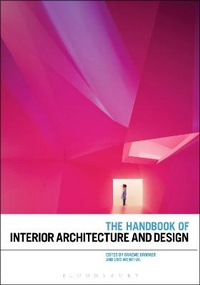
The Handbook of Interior Architecture and Design
Published on 15. December 2018
Book
Paperback/Softback
696 pages
978-1-350-08739-2 (ISBN)
Description
The Handbook of Interior Architecture and Design offers a compelling collection of original essays that seek to examine the shifting role of interior architecture and interior design, and their importance and meaning within the contemporary world.
Interior architecture and interior design are disciplines that span a complexity of ideas, ranging from human behaviour and anthropology to history and the technology of the future. Approaches to designing the interior are in a constant state of flux, reflecting and adapting to the changing systems of history, culture and politics. It is this process that allows interior design to be used as evidence for identifying patterns of consumption, gender, identity and social issues.
The Handbook of Interior Architecture and Design provides a pioneering overview of the ideas and arrangements within the two disciplines that make them such important platforms from which to study the way humans interact with the space around them.
Covering a wide range of thought and research, the book enables the reader to investigate fully the changing face of interior architecture and interior design, while offering questions about their future trajectory.
Interior architecture and interior design are disciplines that span a complexity of ideas, ranging from human behaviour and anthropology to history and the technology of the future. Approaches to designing the interior are in a constant state of flux, reflecting and adapting to the changing systems of history, culture and politics. It is this process that allows interior design to be used as evidence for identifying patterns of consumption, gender, identity and social issues.
The Handbook of Interior Architecture and Design provides a pioneering overview of the ideas and arrangements within the two disciplines that make them such important platforms from which to study the way humans interact with the space around them.
Covering a wide range of thought and research, the book enables the reader to investigate fully the changing face of interior architecture and interior design, while offering questions about their future trajectory.
Reviews / Votes
From uniquely varied viewpoints and scales of exploration, The Handbook of Interior Architecture and Design provides clear-eyed insight into a profession that has evolved dramatically in the last decades to come into its own. It is an important contribution that further clarifies the practice of Interior Architecture in the 21st century. * Lilianne Wong, Head of the Interior Architecture department at Rhode Island School of Design, USA *More details
Language
English
Place of publication
London
United Kingdom
Publishing group
Bloomsbury Publishing PLC
Target group
College/higher education
Professional and scholarly
Dimensions
Height: 244 mm
Width: 170 mm
Thickness: 36 mm
Weight
1420 gr
ISBN-13
978-1-350-08739-2 (9781350087392)
Copyright in bibliographic data and cover images is held by Nielsen Book Services Limited or by the publishers or by their respective licensors: all rights reserved.
Schweitzer Classification
Other editions
Additional editions
Graeme Brooker | Lois Weinthal
The Handbook of Interior Architecture and Design
E-Book
10/2013
1st Edition
Bloomsbury Academic
€150.69
Available for download
Persons
Graeme Brooker is Head of Interior Design at the Royal College of Art, UK. Between 2013 and 2015 he was the Head of the Department of Fashion and Interiors at Middlesex University, UK. He has authored and co-authored several books on the interior, including Rereadings: Interior Architecture and the Principles of Remodeling Existing Buildings (2004), Form and Structure: The Organisation of Interior Space (2007), Context and Environment: Site and Ideas (2008), The Visual Dictionary of Interior Architecture (2008), Objects and Elements: Occupying Interior Space (2009), What is Interior Design? (2010) and From Organisation to Decoration (2012). He is Founder and Director of the charity Interior Educators, the national subject association for interiors in the UK.
Lois Weinthal is Chair of the School of Interior Design at Ryerson University in Toronto, Canada. Her teaching explores these topics, where theoretical discussions are put into practice in the design studio. Her seminar teaching led to the publication Toward a New Interior: An Anthology of Interior Design Theory (2011), which organises the interior as a series of layers that surround the body. Additional publications include the co-edited After Taste: Expanded Practice in Interior Design (2011). In 2016, she became Editor of the international journal Interiors: Design, Architecture, Culture. Weinthal has received grants from the Graham Foundation, Fulbright and DAAD, and has exhibited and lectured internationally. Previously, she directed the Interior Design program at Parsons the New School for Design and was graduate advisor at The University of Texas at Austin.
Lois Weinthal is Chair of the School of Interior Design at Ryerson University in Toronto, Canada. Her teaching explores these topics, where theoretical discussions are put into practice in the design studio. Her seminar teaching led to the publication Toward a New Interior: An Anthology of Interior Design Theory (2011), which organises the interior as a series of layers that surround the body. Additional publications include the co-edited After Taste: Expanded Practice in Interior Design (2011). In 2016, she became Editor of the international journal Interiors: Design, Architecture, Culture. Weinthal has received grants from the Graham Foundation, Fulbright and DAAD, and has exhibited and lectured internationally. Previously, she directed the Interior Design program at Parsons the New School for Design and was graduate advisor at The University of Texas at Austin.
Content
General Introduction
PART 1: CONTEXTS
Part 1.1: Reflecting upon the Discipline
1. Modern History and Interior Design
2. Rethinking Histories, Canons + Paradigms
3. Interior Design Theory and Philosophies
4. Methods of Research + Criticality
5. Educating the Designer
6. Regulation: Convention: Legislation
7. The Profession of the Designer
Part 1.2: Interior Terrains
8. The Interiorists
9. Contested Territories
10. Adaptation/Reuse
11. New Occupancy
12. Programming and Function
13. Public Inhabitation
14. The Private Domestic Realm
15. Work Space
16. Set Design: Performance, Event, Retail
17. Exhibition Design
PART 2: OCCUPANCY
Part 2.1: The Body, Behaviour and Space
18. The Body
19. Psychology and Behaviour
20. Sexuality and Gender
21. Healthy Environments
22. Ageing Populations
23. Demographics and Identity
Part 2.2: Ethics and the Indoor Environment
24. Ethics
25. Consumption
26. Sustainability
27. Politics
28. Globalization
PART 3: REPRESENTATION AND FABRICATION
Part 3.1: Speculative forms of production
29. Drawing
30. Modelling
31. Technology
32. Digital Representation and Fabrication
33. Television, Gaming and New Media
34. Literary Narratives
Part 3.2: Atmospheric Conditions of the Interior
35. Colour + Materiality
36. Ornament and Decoration
37. Taste + Trends
38. Phenomenology and the Senses
Bibliography
Index
PART 1: CONTEXTS
Part 1.1: Reflecting upon the Discipline
1. Modern History and Interior Design
2. Rethinking Histories, Canons + Paradigms
3. Interior Design Theory and Philosophies
4. Methods of Research + Criticality
5. Educating the Designer
6. Regulation: Convention: Legislation
7. The Profession of the Designer
Part 1.2: Interior Terrains
8. The Interiorists
9. Contested Territories
10. Adaptation/Reuse
11. New Occupancy
12. Programming and Function
13. Public Inhabitation
14. The Private Domestic Realm
15. Work Space
16. Set Design: Performance, Event, Retail
17. Exhibition Design
PART 2: OCCUPANCY
Part 2.1: The Body, Behaviour and Space
18. The Body
19. Psychology and Behaviour
20. Sexuality and Gender
21. Healthy Environments
22. Ageing Populations
23. Demographics and Identity
Part 2.2: Ethics and the Indoor Environment
24. Ethics
25. Consumption
26. Sustainability
27. Politics
28. Globalization
PART 3: REPRESENTATION AND FABRICATION
Part 3.1: Speculative forms of production
29. Drawing
30. Modelling
31. Technology
32. Digital Representation and Fabrication
33. Television, Gaming and New Media
34. Literary Narratives
Part 3.2: Atmospheric Conditions of the Interior
35. Colour + Materiality
36. Ornament and Decoration
37. Taste + Trends
38. Phenomenology and the Senses
Bibliography
Index