

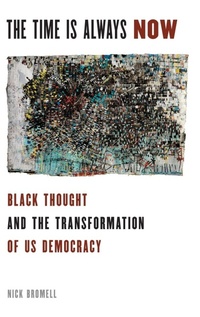
The Time is Always Now
Black Political Thought and the Transformation of US Democracy
Published on 17. October 2013
Book
Hardback
200 pages
978-0-19-997343-9 (ISBN)
Description
It is widely accepted that the liberal project in America, which was so powerful for most of the twentieth century, has been in crisis for decades. Voters have rebelled against it, the right built its resurgence on antipathy to liberalism, and even the left played a part in its demise. In short, it has died by a thousand cuts. But even as its fortunes in public life and the world of politics declined, there was a renaissance in liberal political theory and philosophy, where sophisticated defenses of and rationales for liberalism came to dominate the field. Why did a re-energized defense of liberalism, especially in the works of Robert Putnam, Michael Sandel, Robert Bellah, and John Rawls (to name four), fail to take hold? There have been many answers on offer for liberalism's anemic approval ratings, but as Nick Bromell shows in The Time is Always Now, we may have been looking in the wrong places and using the wrong defenses for liberal democracy.
Focusing on the long history of black political participation and protest, Bromell contends that it offers object lessons for liberalism. From the 1830s to the present, black intellectuals have almost necessarily identified with the subjugated and demanded that every person's inherent dignity be recognized. Despite the fact that this tradition has lasted nearly two centuries, political philosophers have mostly ignored it as an inspiration for reconstructing democracy on more egalitarian grounds. Bromell argues that blacks' reflections on their painful experience and their ability to advocate for people 'both black and more than black' (an Obama quote) provides us with the foundation for constructing a democracy that is less angry and more welcoming of a cosmopolitan polity. While this is not a history book, Bromell comes out of an American studies tradition that insists on the importance of historical and social context in shaping ideas. Concise yet sweeping in scope, Black and More than Black will force people who think hard about democracy to incorporate the insights of black Americans over time, from James McCune Smith to W.E.B. DuBois to Barack Obama.
Focusing on the long history of black political participation and protest, Bromell contends that it offers object lessons for liberalism. From the 1830s to the present, black intellectuals have almost necessarily identified with the subjugated and demanded that every person's inherent dignity be recognized. Despite the fact that this tradition has lasted nearly two centuries, political philosophers have mostly ignored it as an inspiration for reconstructing democracy on more egalitarian grounds. Bromell argues that blacks' reflections on their painful experience and their ability to advocate for people 'both black and more than black' (an Obama quote) provides us with the foundation for constructing a democracy that is less angry and more welcoming of a cosmopolitan polity. While this is not a history book, Bromell comes out of an American studies tradition that insists on the importance of historical and social context in shaping ideas. Concise yet sweeping in scope, Black and More than Black will force people who think hard about democracy to incorporate the insights of black Americans over time, from James McCune Smith to W.E.B. DuBois to Barack Obama.
Reviews / Votes
In this fine book, Nick Bromell's aim is to think through the ontological, epistemological, ethical and political registers of racial inequality, prejudice, and domination and to unleash the powers of imagination and vision on behalf of a new, more just social order and a transformed public philosophy. In the process, he enacts the 'now' on behalf of which he writes, with empathic and imaginative readings of major texts of political theory and literature, oriented by the worlds of African American letters and critical race theory. Synthetic and innovative, political, historical and literary, The Time Is Always Now will interest anyone who cares about US racial politics, 19th- and 20th-century American literature, democratic theory and black political thought. * Bonnie Honig, Nancy Duke Lewis Professor of Modern Culture and Media, and Political Science, Brown University *More details
Series
Language
English
Place of publication
New York
United States
Target group
College/higher education
Professional and scholarly
Dimensions
Height: 240 mm
Width: 161 mm
Thickness: 17 mm
Weight
510 gr
ISBN-13
978-0-19-997343-9 (9780199973439)
Copyright in bibliographic data and cover images is held by Nielsen Book Services Limited or by the publishers or by their respective licensors: all rights reserved.
Schweitzer Classification
Other editions
Additional editions
Book
04/2017
Oxford University Press Inc
€40.20
Shipment within 15-20 days
E-Book
09/2013
1st Edition
OUP eBook
€13.49
Available for download
E-Book
09/2013
1st Edition
OUP eBook
€15.49
Available for download
Person
Nick Bromell is Professor of English at the University of Massachusetts-Amherst and author of Tomorrow Never Knows (University of Chicago Press)
Content
Introduction: <"'Black and More than Black'>" ; Chapter One: <"The Tension Perpetually Sustained>" ; Democratic Indignation and the Dynamics of Black Philosophy ; Chapter Two: <"An Almost Contemptuous Fairness>" ; Styles of Democratic Indignation ; Chapter Three: <"This Is Personal>" ; Human Relationships and the Production of Democratic Dignity ; Chapter Four: <"The Network of Complex Relationships Which Bind Us Together>" ; Chesnutt, Larsen, and Baldwin on Seeing and Knowing Others ; Chapter Five: <"The Full Understanding of My Relationship to America>" ; Black Imaginings of Patriotic Cosmopolitanism ; Chapter Six: <"The Moral Force of the Universe>" ; Faith and Pluralism in the Black Democratic Imagination ; Chapter Seven: <"The Moment We're In>" ; The Democratic Imagination of Barack Obama