

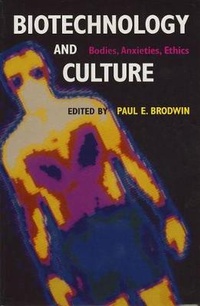
Biotechnology and Culture
Bodies, Anxieties, Ethics
Published on 22. January 2001
Book
Hardback
312 pages
978-0-253-33831-0 (ISBN)
Description
The cultural debates over biotechnology clarify the fears and longings of our age. Biotechnologies are not just medical interventions; they pose profound challenges to conventional notions about identity, human connectedness, and society. With every new media frenzy over surrogacy, cloning, organ transplantation, and the like, people raise troubling questions: can a child have two mothers? Should we learn our genetic futures? Are organs gifts or commercial products? This book traces such questions and their political and personal stakes over the last hundred years and in several contemporary locations.As birth, illness, and death increasingly come under technological control, struggles erupt over who should control the body and define its limits and capacities. Biotechnologies make the traditional "facts of life" into matters of expert judgement and partisan debate. They blur the boundary separating people from machines, male from female, and nature from culture. In these diverse ways, they destroy the taken-for-granted gold standard of the body.
This creates both anxiety and exhilaration the public sphere, because without the "natural body," the legitimacy of dominant social arrangements is seriously undercut.Biotechnologies, thus, become a convenient, tangible focus for political contests over the nuclear family, legal and professional authority, and relations between the sexes. However, these medical interventions also transform intimate personal experience. Giving birth, building new families, and surviving serious illness now immerse us in a web of machines, expert authority, and electronic images. We use and imagine the body in radically different ways, and from these emerge new collective discourses of morality and personal identity.In "Biotechnology and Culture: Bodies, Anxieties, Ethics" contributors from several disciplines examine these broad cultural effects. In this book, the same technologies (surrogacy, tissue-culture research, and medical imaging) are analysed by historians, anthropologists, cultural critics, and feminists. The moral anxieties raised by biotechnologies and the circulation of these instruments across class and national boundaries are the other interdisciplinary themes.
The approach here favours complex social dramas of the refusal, celebration, or ambivalent acceptance of new medical procedures. Eschewing polemics or pure theory, contributors show biotechnology collides with everyday life and reshapes the political and personal meanings of the body.
This creates both anxiety and exhilaration the public sphere, because without the "natural body," the legitimacy of dominant social arrangements is seriously undercut.Biotechnologies, thus, become a convenient, tangible focus for political contests over the nuclear family, legal and professional authority, and relations between the sexes. However, these medical interventions also transform intimate personal experience. Giving birth, building new families, and surviving serious illness now immerse us in a web of machines, expert authority, and electronic images. We use and imagine the body in radically different ways, and from these emerge new collective discourses of morality and personal identity.In "Biotechnology and Culture: Bodies, Anxieties, Ethics" contributors from several disciplines examine these broad cultural effects. In this book, the same technologies (surrogacy, tissue-culture research, and medical imaging) are analysed by historians, anthropologists, cultural critics, and feminists. The moral anxieties raised by biotechnologies and the circulation of these instruments across class and national boundaries are the other interdisciplinary themes.
The approach here favours complex social dramas of the refusal, celebration, or ambivalent acceptance of new medical procedures. Eschewing polemics or pure theory, contributors show biotechnology collides with everyday life and reshapes the political and personal meanings of the body.
Reviews / Votes
"This pluridisciplinary collection of essays is a gusto tour of recent biotechnology developments with many pertinent insights along the way."--Jrn of the Royal Anthroplogical Institute, December 2002More details
Series
Language
English
Place of publication
Bloomington, IN
United States
Target group
Professional and scholarly
Illustrations
2 b&w photos, 1 index
Dimensions
Height: 235 mm
Width: 156 mm
Weight
640 gr
ISBN-13
978-0-253-33831-0 (9780253338310)
Copyright in bibliographic data and cover images is held by Nielsen Book Services Limited or by the publishers or by their respective licensors: all rights reserved.
Schweitzer Classification
Other editions
Additional editions
E-Book
01/2001
1st Edition
Indiana University Press
from
€25.59
Available for download