

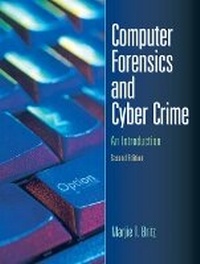
Computer Forensics and Cyber Crime
An Introduction
2nd Edition
Published on 13. February 2009
Book
Paperback/Softback
408 pages
978-0-13-244749-2 (ISBN)
Description
Completely updated in a new edition, this book fully defines computer-related crime and the legal issues involved in its investigation. Re-organized with different chapter headings for better understanding of the subject, it provides a framework for the development of a computer crime unit. Updated with new information on technology, this book is the only comprehensive examination of computer-related crime and its investigation on the market. It includes an exhaustive discussion of legal and social issues, fully defines computer crime, and provides specific examples of criminal activities involving computers, while discussing the phenomenon in the context of the criminal justice system. Computer Forensics and Cyber Crime 2e provides a comprehensive analysis of current case law, constitutional challenges, and government legislation. New to this edition is a chapter on Organized Crime & Terrorism and how it relates to computer related crime as well as more comprehensive information on Processing Evidence and Report Preparation.
More details
Edition
2nd edition
Language
English
Place of publication
United States
Publishing group
Pearson Education (US)
Target group
Professional and scholarly
Dimensions
Height: 235 mm
Width: 178 mm
Weight
531 gr
ISBN-13
978-0-13-244749-2 (9780132447492)
Copyright in bibliographic data and cover images is held by Nielsen Book Services Limited or by the publishers or by their respective licensors: all rights reserved.
Schweitzer Classification
Other editions
New editions
Book
08/2013
3rd Edition
Pearson
€122.46
Shipment within 15-20 days
Previous edition
Book
09/2003
Pearson
€53.19
Article exhausted; check for reprint
Person
Dr. Marjie T. Britz is an associate professor of criminal justice at Clemson University. She holds a bachelors of science in forensic science from Jacksonville State University, a masters of science in police administration, and a doctorate of philosophy in criminal justice from Michigan State University. She has published extensively in the areas of computer crime, organized crime, and the police subculture. She has acted as a consultant to a variety of organizations, and provided training to an assortment of law enforcement agencies. In addition, she has served on editorial and supervisory boards in both academic and practitioner venues. Her latest works include: Organized Crime: A Worldwide Perspective (Prentice-Hall) and Criminal Evidence (Allyn & Bacon).,
Content
Chapter 1 - Introduction
Chapter 2 - Computer Terminology & History
Chapter 3 - Traditional Computer Crime: Hackers and Theft of Components
Chapter 4 - Contemporary Computer Crime
Chapter 5 - Identity Theft & Identity Fraud
Chapter 6 - Organized Crime & Terrorism
Chapter 7 - Avenues for Prosecution and Government Efforts
Chapter 8 - Applying the First Amendment to Computer Related Crime
Chapter 9 - The Fourth Amendment & Other Legal Issues
Chapter 10 - Forensic Terminology & Developing Forensic Capabilities
Chapter 11 - Searching and Seizing Computer Related Evidence
Chapter 12 - Processing Evidence and Report Preparation
Chapter 13 - Conclusions & Future Issues
Chapter 2 - Computer Terminology & History
Chapter 3 - Traditional Computer Crime: Hackers and Theft of Components
Chapter 4 - Contemporary Computer Crime
Chapter 5 - Identity Theft & Identity Fraud
Chapter 6 - Organized Crime & Terrorism
Chapter 7 - Avenues for Prosecution and Government Efforts
Chapter 8 - Applying the First Amendment to Computer Related Crime
Chapter 9 - The Fourth Amendment & Other Legal Issues
Chapter 10 - Forensic Terminology & Developing Forensic Capabilities
Chapter 11 - Searching and Seizing Computer Related Evidence
Chapter 12 - Processing Evidence and Report Preparation
Chapter 13 - Conclusions & Future Issues