


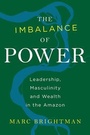
The Imbalance of Power
Leadership, Masculinity and Wealth in the Amazon
1st Edition
Published on 1. December 2016
Book
Hardback
206 pages
978-1-78533-309-5 (ISBN)
Description
Amerindian societies have an iconic status in classical political thought. For Montaigne, Hobbes, Locke, Hume and Rousseau, the native American 'state of nature' operates as a foil for the European polity. Challenging this tradition, The Imbalance of Power demonstrates ethnographically that the Carib speaking indigenous societies of the Guiana region of Amazonia do not fit conventional characterizations of 'simple' political units with 'egalitarian' political ideologies and 'harmonious' relationships with nature. Marc Brightman builds a persuasive and original theory of Amerindian politics: far from balanced and egalitarian, Carib societies are rife with tension and difference; but this imbalance conditions social dynamism and a distinctive mode of cohesion. The Imbalance of Power is based on the author's fieldwork in partnership with Vanessa Grotti, who is working on a companion volume entitled Living with the Enemy: First Contacts and the Making of Christian Bodies in Amazonia.
Reviews / Votes
"This book makes a crucial contribution to Amazonian anthropology, bringing to the forefront a topic that has remained under-thematized in the last decades." ? Carlos Fausto, Universidade Federal do Rio de Janeiro"This remarkable book on indigenous leadership The Trio, Wayana and Akuriyo (all from the Upper Tapanahony, Suriname), skilfully uses the tools of anthropology to provide us with enlightening ethnography, far from the usual traps of isolation, environmentalism and indigenous resistance." ? AIBR
More details
Language
English
Place of publication
Oxford
United Kingdom
Target group
College/higher education
Product notice
Library binding
Illustrations
20 Illustrations
Dimensions
Height: 235 mm
Width: 157 mm
Thickness: 16 mm
Weight
457 gr
ISBN-13
978-1-78533-309-5 (9781785333095)
DOI
10.3167/9781785333095
Copyright in bibliographic data and cover images is held by Nielsen Book Services Limited or by the publishers or by their respective licensors: all rights reserved.
Schweitzer Classification
Other editions
Additional editions
E-Book
12/2016
1st Edition
Berghahn Books
€24.49
Available for download

E-Book
12/2016
1st Edition
Berghahn Books
€24.49
Available for download
Person
Marc Brightman is Professor of Anthropology at the University of Bologna. He has published on a variety of topics including ownership, indigenous movements, animism and forest governance.
Content
Preface
Acknowledgements
A note on Trio and Wayana orthography
List of acronyms and abbreviations
Maps
Introduction
Guianan Leadership
Guiana
The Trio, Wayana and Akuriyo
Fieldwork and its Limitations
Structure and Scope of the Book
Chapter 1. Making Trio and Other Peoples
Ethnogenesis
A Theory of Continuity
Substance and Filiation
Telling Stories, Making Groups
Time, History and Identity
'The Trio' as a Group
Ethnogenesis and Alterity
Missionisation and Ethnicity: The Contact of the Akuriyo
Slavery and Identity
Marriage and Manioc
Strategic Ethnicity
Leadership Inside and Out
Chapter 2. Houses and In-Laws
Leadership, Inequality and the House
Houses and Housebuilders
The House as Artefact
The Collective House
Scale and the Household
Consanguinity, Affinity and the 'Atom of Politics'
Symmetry and Asymmetry
Leadership and the House as Idea
Chapter 3. Trade, Money and Influence
Economic Influence
Exchange and Trade
Trading with Maroons
Money
The Politics of Air Travel
Airborne Evangelism
The City, Prestige and Mobility
Air Entrepreneurship
Public Speaking
Literacy
Metaphysical Communication
Bible Economy
Leadership and Influence Beyond Consanguinity
Chapter 4. Music and Ritual Capacities
Structured Sound
Tortoiseshell Pipes: Individual and Collective
Rattles and Shamanism: Percussion and Harmony
Capacity, Blowing and Song
The Music of the Other
Speech as Music
Ceremonial Dialogue
Music and Leadership
Heterophony
Music and Difference
Chapter 5. Owning Places and Persons
The Language of Possession
Moveable Wealth
The Value of Land
Names and Places
Gender Asymmetry and Women as Property
Ownership, Wealth and Influence
Conclusion: Society Transcends the State
Glossary
Appendix: Trio Relationship Terminology
References
Acknowledgements
A note on Trio and Wayana orthography
List of acronyms and abbreviations
Maps
Introduction
Guianan Leadership
Guiana
The Trio, Wayana and Akuriyo
Fieldwork and its Limitations
Structure and Scope of the Book
Chapter 1. Making Trio and Other Peoples
Ethnogenesis
A Theory of Continuity
Substance and Filiation
Telling Stories, Making Groups
Time, History and Identity
'The Trio' as a Group
Ethnogenesis and Alterity
Missionisation and Ethnicity: The Contact of the Akuriyo
Slavery and Identity
Marriage and Manioc
Strategic Ethnicity
Leadership Inside and Out
Chapter 2. Houses and In-Laws
Leadership, Inequality and the House
Houses and Housebuilders
The House as Artefact
The Collective House
Scale and the Household
Consanguinity, Affinity and the 'Atom of Politics'
Symmetry and Asymmetry
Leadership and the House as Idea
Chapter 3. Trade, Money and Influence
Economic Influence
Exchange and Trade
Trading with Maroons
Money
The Politics of Air Travel
Airborne Evangelism
The City, Prestige and Mobility
Air Entrepreneurship
Public Speaking
Literacy
Metaphysical Communication
Bible Economy
Leadership and Influence Beyond Consanguinity
Chapter 4. Music and Ritual Capacities
Structured Sound
Tortoiseshell Pipes: Individual and Collective
Rattles and Shamanism: Percussion and Harmony
Capacity, Blowing and Song
The Music of the Other
Speech as Music
Ceremonial Dialogue
Music and Leadership
Heterophony
Music and Difference
Chapter 5. Owning Places and Persons
The Language of Possession
Moveable Wealth
The Value of Land
Names and Places
Gender Asymmetry and Women as Property
Ownership, Wealth and Influence
Conclusion: Society Transcends the State
Glossary
Appendix: Trio Relationship Terminology
References