

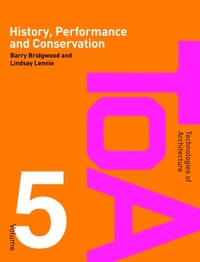
History, Performance and Conservation
1st Edition
Published on 1. December 2008
Book
Paperback/Softback
352 pages
978-0-415-43420-1 (ISBN)
Description
Ideal for students of architectural technology, this volume of the Technologies of Architecture series covers the technologies available and the processes necessary for the conservation of existing buildings and environments.
This book provides, in a single text, the tools for students to be able to evaluate such buildings, as well as an extensive understanding of the mechanisms which cause their deterioration and knowledge of the technologies available to correct their status. The ever higher standards set for buildings, especially in energy conservation contexts, demand that practitioners appreciate how the performance of existing structures can be enhanced, which is also covered.
Considering the work of conservation within a holistic perspective and historical context, this book is additionally invaluable for architecture and construction students.
This book provides, in a single text, the tools for students to be able to evaluate such buildings, as well as an extensive understanding of the mechanisms which cause their deterioration and knowledge of the technologies available to correct their status. The ever higher standards set for buildings, especially in energy conservation contexts, demand that practitioners appreciate how the performance of existing structures can be enhanced, which is also covered.
Considering the work of conservation within a holistic perspective and historical context, this book is additionally invaluable for architecture and construction students.
Reviews / Votes
"This volume concludes and fits nicely into the ToA series, and would help any architecture course to bring together historical, technological and cultural streams that more commonly have been seen as separate streams of study." - Peter R. Smith, Architectural Science Review"Ideal for use in architectural technology courses, the book offers the construction of our heritage and how it should be appropriately protected and conserved. It draws on a wealth of examples, offering a comprehensive picture of the architectural development of the UK within an holistic perspective and historical context, making it available for both students and professionals." - Lonaard magazine
More details
Series
Language
English
Place of publication
London
United Kingdom
Target group
College/higher education
Illustrations
207 s/w Zeichnungen
207 Line drawings, black and white
Dimensions
Height: 246 mm
Width: 189 mm
Weight
650 gr
ISBN-13
978-0-415-43420-1 (9780415434201)
Copyright in bibliographic data and cover images is held by Nielsen Book Services Limited or by the publishers or by their respective licensors: all rights reserved.
Schweitzer Classification
Other editions
Additional editions
Barry Bridgwood | Lindsay Lennie
History, Performance and Conservation
E-Book
09/2013
1st Edition
Taylor & Francis
€59.49
Available for download
Barry Bridgwood | Lindsay Lennie
History, Performance and Conservation
E-Book
09/2013
1st Edition
Taylor & Francis
€59.49
Available for download
Barry Bridgwood | Lindsay Lennie
History, Performance and Conservation
Book
12/2008
1st Edition
Taylor & Francis
€282.73
Shipment within 15-20 days
Persons
Barry Bridgwood is a chartered architectural technologist. He is the compiler/author, along with Professor P.F.G.Banfill, of www.understandingconservation.org and former module leader (conservation philosophy and practice) for Building Conservation (Technology and Management) at Heriot-Watt University MSc/post graduate diploma course.
Lindsay Lennie is a chartered surveyor with a post-graduate diploma and PhD in building conservation. Lindsay's special interest is historic retail buildings and in 2006 was awarded a Research Fellowship with Historic Scotland to survey and research Scotland's historic shops.
Lindsay Lennie is a chartered surveyor with a post-graduate diploma and PhD in building conservation. Lindsay's special interest is historic retail buildings and in 2006 was awarded a Research Fellowship with Historic Scotland to survey and research Scotland's historic shops.
Content
Part 1: Introduction Part 2: Early Architectural History Part 3: The Renaissance to the Twentieth Century Part 4: Vernacular Architecture Part 5: Materials & Performance Part 6: Conservation Philosophy, Historical Context & Legislation Part 7: Conservation in Practice Part 8: Overview