

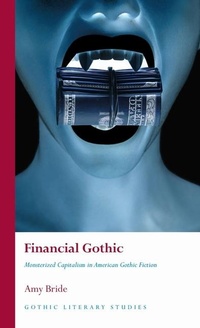
Financial Gothic
Monsterized Capitalism in American Gothic Fiction
Published on 15. October 2023
Book
Hardback
280 pages
978-1-83772-063-7 (ISBN)
Description
Financial Gothic explores the persistent concern of American Gothic literature with finance - and finance as having always been a gothic phenomenon - from 1880 to the present day. The study reads Frankensteinian monsters, haunted houses, vampires and zombies in American literature and film as cultural responses to such twentieth and twenty-first century financial phenomena as the 1929 Wall Street Crash, post-war housing debt, financial deregulation, and the 2008 Credit Crunch. Consideration is also given to the pre-existing consensus on racial readings of American gothic, and how these interpretations of the slave trade can be expanded upon in conversation with their financial contexts. Drawing on contemporary insights into financialised understandings of economics within the humanities, new analysis of finance as an inherently gothic phenomenon, and archival work completed on the Library of Congress's Black History Collection, Financial Gothic highlights an as-yet-unrecognised dimension of haunting and monstrosity within American gothic fiction.
More details
Series
Language
English
Place of publication
Wales
United Kingdom
Target group
Professional and scholarly
Product notice
sewn/stitched
Cloth over boards
Illustrations
Not illustrated
Dimensions
Height: 216 mm
Width: 140 mm
Thickness: 20 mm
Weight
481 gr
ISBN-13
978-1-83772-063-7 (9781837720637)
DOI
10.1234/b11260
Copyright in bibliographic data and cover images is held by Nielsen Book Services Limited or by the publishers or by their respective licensors: all rights reserved.
Schweitzer Classification
Other editions
Additional editions
E-Book
10/2023
Gwasg Prifysgol Cymru
€111.99
Available for download
E-Book
10/2023
1st Edition
University of Wales Press
€92.49
Available for download
Person
Amy Bride is lecturer in American studies at the University of Manchester.
Content
Acknowledgements
List of Figures
Introduction: Gothic Finance and Financial Gothic
Chapter One: 'It's Alive!': The 1929 Wall Street Crash and Pulp/Popular/Political Monsters
Chapter Two: 'The Evil is the House Itself': Credit, Citizenship, and the Postwar Haunting House
Chapter Three: Deregulation Sucks: Mass Consumption of Liquidity and the Deregulated Vampire
Chapter Four: 'Myself is Fabricated, An Aberration': Late-Capitalism and the Hyperreal Vampire
Chapter Five: Mindless Consumers: The 2008 Crash and the Post-Millennial Zombie
Conclusion: Monsterized Capitalism and Capitalist Monsters
Works Cited
Glossary of Financial Terms
List of Figures
Introduction: Gothic Finance and Financial Gothic
Chapter One: 'It's Alive!': The 1929 Wall Street Crash and Pulp/Popular/Political Monsters
Chapter Two: 'The Evil is the House Itself': Credit, Citizenship, and the Postwar Haunting House
Chapter Three: Deregulation Sucks: Mass Consumption of Liquidity and the Deregulated Vampire
Chapter Four: 'Myself is Fabricated, An Aberration': Late-Capitalism and the Hyperreal Vampire
Chapter Five: Mindless Consumers: The 2008 Crash and the Post-Millennial Zombie
Conclusion: Monsterized Capitalism and Capitalist Monsters
Works Cited
Glossary of Financial Terms