

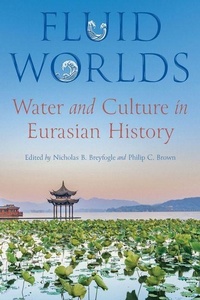
Fluid Worlds
Water and Culture in Eurasian History
Will be published approx. on 22. September 2026
Book
Paperback/Softback
416 pages
978-0-8229-6803-0 (ISBN)
Description
Bodies of water have played myriad roles in human history-as cultural landmarks, foundation myths and origin stories, symbols of identity, sources of political legitimacy, and as ways of constructing shared values. Focusing on the rivers, lakes, glaciers, and seas of Eurasia-including China, Japan, Korea, Vietnam, Central Asia, the tsarist empire, and the Soviet Union-Fluid Worlds investigates water's role in human culture, from the fourteenth century to the twenty-first. As the authors of this edited collection show, political authority, social status, and cultural importance have been core categories for producing knowledge about water. Ultimately, how humans think about and assign value to water affects the actions they take to try to control, transform, or move it, from hydroelectric dam building to waterscape conservation. Today, as the world population grows, water supplies are increasingly polluted, glaciers melt, sea levels rise, and aquifers deplete, we face profound ethical and ideological dilemmas about managing the world's water. Lessons from the historical relationships between human culture and water will take on increasing relevance as we consider how to confront these challenges and shape our future.
Reviews / Votes
In this splendid collection, Nicholas Breyfogle and Philip Brown have assembled an international and interdisciplinary roster of authors who offer fresh insights on the history of water from the Volga to Vietnam. In their hands, water is less about acre-feet or cubic kilometers per second and more about diverse cultural meanings of springs, streams, rivers, canals, dams, and seas, and how these meanings intersected with the exercise of political power in Eurasia. A strong addition to the literature in environmental humanities and environmental history. -- John McNeill, Georgetown University Skipping nimbly from lakes to seas to glaciers to rivers, this wonderfully inventive volume showcases cutting-edge research on the tangled relationship between water and human culture. Highlighting examples from a broad swath of Eurasian history, it offers an important counterweight to literature that has tended to focus on Europe and North America. -- Sarah Cameron, University of Maryland, College ParkMore details
Language
English
Place of publication
Pittsburgh PA
United States
Product notice
Paperback (trade)
Illustrations
18 b&w illustrations, 12 maps, 1 table
Dimensions
Height: 229 mm
Width: 152 mm
ISBN-13
978-0-8229-6803-0 (9780822968030)
Copyright in bibliographic data and cover images is held by Nielsen Book Services Limited or by the publishers or by their respective licensors: all rights reserved.
Schweitzer Classification
Persons
Nicholas Breyfogle (Editor)
Nicholas B. Breyfogle is professor of history and Director of the Harvey Goldberg Center for Excellence in Teaching at The Ohio State University. He is the author of Heretics and Colonizers: Forging Russia's Empire in the South Caucasus (2005), which was awarded the Ohio Academy of History Outstanding Publication Award, 2006; and editor or coeditor of Hydraulic Societies: Water, Power, and Control in East and Central Asian History (with Philip C. Brown, 2023); Place and Nature: Essays in Russian Environmental History (2021); Nature at War: American Environments and World War II (2020); Readings in Water History (2020); Eurasian Environments: Nature and Ecology in Imperial Russian and Soviet History (2018); and Peopling the Russian Periphery: Borderland Colonization in Eurasian History (2007). He is also the recipient of the Herbert Feis Award for Distinguished Contributions to Public History from the American Historical Association.
Philip Brown (Editor)
Philip C. Brown is professor emeritus of Japanese and East Asian history at The Ohio State University. He is the author of Cultivating Commons: Joint Ownership of Arable Land in Early Modern Japan (2011) and Central Authority and Local Autonomy in the Formation of Early Modern Japan: The Case of Kaga Domain (1993). His coedited books include Hydraulic Societies: Water, Power and Control in East and Central Asian History (with Nicholas Breyfogle, 2023) and Environment and Society in the Japanese Islands: From Prehistory to the Present (2015).He has received numerous awards sponsored by the Fulbright-Hays program, the Japan-US Friendship/NEH Fellowship program, and the National Science Foundation.
Nicholas B. Breyfogle is professor of history and Director of the Harvey Goldberg Center for Excellence in Teaching at The Ohio State University. He is the author of Heretics and Colonizers: Forging Russia's Empire in the South Caucasus (2005), which was awarded the Ohio Academy of History Outstanding Publication Award, 2006; and editor or coeditor of Hydraulic Societies: Water, Power, and Control in East and Central Asian History (with Philip C. Brown, 2023); Place and Nature: Essays in Russian Environmental History (2021); Nature at War: American Environments and World War II (2020); Readings in Water History (2020); Eurasian Environments: Nature and Ecology in Imperial Russian and Soviet History (2018); and Peopling the Russian Periphery: Borderland Colonization in Eurasian History (2007). He is also the recipient of the Herbert Feis Award for Distinguished Contributions to Public History from the American Historical Association.
Philip Brown (Editor)
Philip C. Brown is professor emeritus of Japanese and East Asian history at The Ohio State University. He is the author of Cultivating Commons: Joint Ownership of Arable Land in Early Modern Japan (2011) and Central Authority and Local Autonomy in the Formation of Early Modern Japan: The Case of Kaga Domain (1993). His coedited books include Hydraulic Societies: Water, Power and Control in East and Central Asian History (with Nicholas Breyfogle, 2023) and Environment and Society in the Japanese Islands: From Prehistory to the Present (2015).He has received numerous awards sponsored by the Fulbright-Hays program, the Japan-US Friendship/NEH Fellowship program, and the National Science Foundation.