


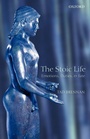
The Stoic Life
Emotions, Duties, and Fate
Published on 23. June 2005
Book
Hardback
352 pages
978-0-19-925626-6 (ISBN)
Description
Tad Brennan explains how to live the Stoic life - and why we might want to. Stoicism has been one of the main currents of thought in Western civilization for two thousand years: Brennan offers a fascinating guide through the ethical ideas of the original Stoic philosophers, and shows how valuable these ideas remain today, both intellectually and in practice. He writes in a lively informal style which will bring Stoicism to life for readers who are new to ancient philosophy. The Stoic Life will also be of great interest to philosophers and classicists seeking a full understanding of the intellectual legacy of the Stoics.
Brennan starts from scrupulous attention to the evidence (references are provided to all of the standard collections of Stoic texts). He provides translations of the original texts, with extensive annotations that will allow readers to pursue further reading. No knowledge of Greek is required. An introductory section provides context by introducing the reader to the most important figures in the Stoic school, the philosophical climate in which they worked, and a brief summary of the leading tenets of the Stoic system. After this context is established, the book is divided into three sections. The first provides a thorough exploration of the Stoic school's theories of psychology, focusing on their analyses of fear, desire, and other emotions. The second develops the more centrally ethical topics of value, obligation, and right action. The third part explores the Stoic school's views on fate, determinism, and moral responsibility.
For anyone interested in the origins of Western ethical thought, who wishes to understand the vast influence that Stoic philosophy has had on philosophy and religion up to our time, this book will be essential reading.
Brennan starts from scrupulous attention to the evidence (references are provided to all of the standard collections of Stoic texts). He provides translations of the original texts, with extensive annotations that will allow readers to pursue further reading. No knowledge of Greek is required. An introductory section provides context by introducing the reader to the most important figures in the Stoic school, the philosophical climate in which they worked, and a brief summary of the leading tenets of the Stoic system. After this context is established, the book is divided into three sections. The first provides a thorough exploration of the Stoic school's theories of psychology, focusing on their analyses of fear, desire, and other emotions. The second develops the more centrally ethical topics of value, obligation, and right action. The third part explores the Stoic school's views on fate, determinism, and moral responsibility.
For anyone interested in the origins of Western ethical thought, who wishes to understand the vast influence that Stoic philosophy has had on philosophy and religion up to our time, this book will be essential reading.
Reviews / Votes
T.B's book is an imporatnt contribution to the subject and it should not be missed by anybody with an interest in Stoic ethics. * Valaimir Mikes Philosophie AntiqueChoice *More details
Language
English
Place of publication
Oxford
United Kingdom
Target group
Professional and scholarly
General readers, students, and specialists in ancient thought or moral philosophy
Illustrations
1 line drawing
Dimensions
Height: 222 mm
Width: 145 mm
Thickness: 24 mm
Weight
633 gr
ISBN-13
978-0-19-925626-6 (9780199256266)
Copyright in bibliographic data and cover images is held by Nielsen Book Services Limited or by the publishers or by their respective licensors: all rights reserved.
Schweitzer Classification
Other editions
Additional editions
Book
01/2007
Oxford University Press
€63.10
Shipment within 15-20 days
Person
Tad Brennan is Professor of Philosophy at Northwestern University.
Content
I. INTRODUCTION; II. PSYCHOLOGY; III. ETHICS; IV. FATE; CONCLUSION