

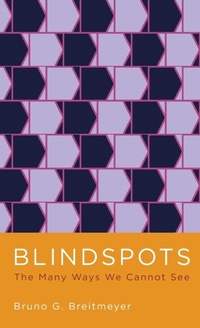
Blindspots
The Many Ways We Cannot See
Published on 22. April 2010
Book
Hardback
288 pages
978-0-19-539426-9 (ISBN)
Description
Sight can be so effortless, so useful, and so entertaining--the average human can distinguish several million colors; a falcon can see a fencepost from three thousand yards--that we never stop to think about how complex a process it is and how easily it can fail us. We never have as clear and complete a picture of the world around us as we think we do. The gaps between what our eyes take in and what is in our mind's eye provide the unifying theme in Bruno Breitmeyer's wide-ranging volume. In his fascinating account of the many ways that our eyes, and minds, both see and fail to see, Breitmeyer moves from cataracts and color blindness through blindsight, acquired dyslexia, and visual agnosias, including fascinating cases like the woman who did not know what she was seeing was a dog until it barked. He then uses what we've learned about the limits of our sight to illustrate the limits of our ability to mentally visualize and our ability to reason, covering everything from logical fallacies to how our motives and emotions relentlessly color the way we see the world. This book will intrigue anyone interested in how easily we can fail to capture the world around us without even realizing it.
Reviews / Votes
Readers in psychology, the neurosciences, as well as the humanities will find * Perception *More details
Language
English
Place of publication
New York
United States
Illustrations
40 b/w halftones, 45 line illus.
Dimensions
Height: 222 mm
Width: 145 mm
Thickness: 22 mm
Weight
660 gr
ISBN-13
978-0-19-539426-9 (9780195394269)
Copyright in bibliographic data and cover images is held by Nielsen Book Services Limited or by the publishers or by their respective licensors: all rights reserved.
Schweitzer Classification
Other editions
Additional editions
E-Book
04/2010
1st Edition
OUP eBook
€37.99
Available for download
Person
Bruno Breitmeyer, Professor of Psychology at the University of Houston, studied mathematics at the University of Illinois, Champaign-Urbana, and received his Ph D in experimental psychology from Stanford University. Over the past four decades his research has focused on the spatiotemporal dynamics of visual perception. He is an internationally acknowledged expert in the areas of visual masking and nonconscious visual processing.