

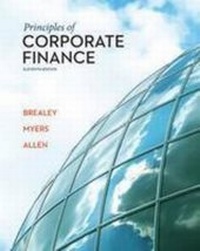
Principles of Corporate Finance
11th Edition
Published on 15. January 2013
Book
Hardback
976 pages
978-0-07-803476-3 (ISBN)
Description
A presentation of financial theory with in-depth analysis and applications. It presents theory as a way of helping prospective financial managers solve practical problems, and as a way of learning why companies and management act as they do. This edition has been updated throughout.
More details
Product info
Student Textbook
Edition
11th Revised edition
Language
English
Place of publication
Australia
Publishing group
McGraw-Hill Education - Europe
Target group
College/higher education
Edition type
Revised edition
Illustrations
224 Illustrations
Dimensions
Height: 262 mm
Width: 208 mm
Thickness: 38 mm
Weight
1674 gr
ISBN-13
978-0-07-803476-3 (9780078034763)
Schweitzer Classification
Other editions
New editions
Richard Brealey | Stewart Myers | Franklin Allen
Principles of Corporate Finance
Book
03/2016
12th Edition
McGraw-Hill Education
€390.70
Article is exhausted; no reprint
Persons
Richard A. Brealey - Emeritus Professor of Finance at London Business School. He is the former president of the European Finance Association and a former director of the American Finance Association. He is a fellow of the British Academy and has served as a special adviser to the Governor of the Bank of England and director of a number of financial institutions. Other books written by Professor Brealey include Introduction to Risk and Return from Common Stocks.
Stewart C. Myers - Emeritus Professor of Financial Economics at MIT's Sloan School of Management. He is past president of the American Finance Association, a research associate at the National Bureau of Economic Research, a principal of the Brattle Group Inc., and a retired director of Entergy Corporation. His research is primarily concerned with the valuation of real and financial assets, corporate financial policy, and financial aspects of government regulation of business. He is the author of influential research papers on many topics, including adjusted present value, rate of return regulation, pricing and capital allocation in insurance, real options, and moral hazard and information issues in capital structure decisions.
Franklin Allen - Professor of Finance and Economics, Imperial College London, and Emeritus Nippon Life Professor of Finance at the Wharton School of the University of Pennsylvania. He is past president of the American Finance Association, Western Finance Association, Society for Financial Studies, Financial Intermediation Research Society, and Financial Management Association. His research has focused on financial innovation, asset price bubbles, comparing financial systems, and financial crises. He is Director of the Brevan Howard Centre for Financial Analysis at Imperial College Business School.
Stewart C. Myers - Emeritus Professor of Financial Economics at MIT's Sloan School of Management. He is past president of the American Finance Association, a research associate at the National Bureau of Economic Research, a principal of the Brattle Group Inc., and a retired director of Entergy Corporation. His research is primarily concerned with the valuation of real and financial assets, corporate financial policy, and financial aspects of government regulation of business. He is the author of influential research papers on many topics, including adjusted present value, rate of return regulation, pricing and capital allocation in insurance, real options, and moral hazard and information issues in capital structure decisions.
Franklin Allen - Professor of Finance and Economics, Imperial College London, and Emeritus Nippon Life Professor of Finance at the Wharton School of the University of Pennsylvania. He is past president of the American Finance Association, Western Finance Association, Society for Financial Studies, Financial Intermediation Research Society, and Financial Management Association. His research has focused on financial innovation, asset price bubbles, comparing financial systems, and financial crises. He is Director of the Brevan Howard Centre for Financial Analysis at Imperial College Business School.
Content
Part One: Value
Chapter: 1. Introduction to Corporate Finance
Chapter: 2. How to Calculate Present Values
Chapter: 3. Valuing Bonds
Chapter: 4. The Value of Common Stocks
Chapter: 5. Net Present Value and Other Investment Criteria
Chapter: 6. Making Investment Decisions with the Net Present Value Rule
Part Two: Risk
Chapter: 7. Introduction to Risk and Return
Chapter: 8. Portfolio Theory and the Capital Asset Pricing Model
Chapter: 9. Risk and the Cost of Capital
Part Three: Best Practices in Capital Budgeting
Chapter: 10. Project Analysis
Chapter: 11. Investment, Strategy, and Economic Rents
Chapter: 12. Agency Problems, Compensation, and Performance Measurement
Part Four: Financing Decisions and Market Efficiency
Chapter: 13. Efficient Markets and Behavioral Finance
Chapter: 14. An Overview of Corporate Financing
Chapter: 15. How Corporations Issue Securities
Part Five: Payout Policy and Capital Structure
Chapter: 16. Payout Policy
Chapter: 17. Does Debt Policy Matter?
Chapter: 18. How Much Should a Corporation Borrow?
Chapter: 19. Financing and Valuation
Part Six: Options
Chapter: 20. Understanding Options
Chapter: 21. Valuing Options
Chapter: 22. Real Options
Part Seven: Debt Financing
Chapter: 23. Credit Risk and the Value of Corporate Debt
Chapter: 24. The Many Different Kinds of Debt
Chapter: 25. Leasing
Part Eight: Risk Management
Chapter: 26. Managing Risk
Chapter: 27. Managing International Risks
Part Nine: Financial Planning and Working Capital Management
Chapter: 28. Financial Analysis
Chapter: 29. Financial Planning
Chapter: 30. Working Capital Management
Part Ten: Mergers, Corporate Control, and Governance
Chapter: 31. Mergers
Chapter: 32. Corporate Restructuring
Chapter: 33. Governance and Corporate Control Around the World
Part Eleven: Conclusion
Chapter: 34. Conclusion: What We Do and Do Not Know About Finance
Chapter: 1. Introduction to Corporate Finance
Chapter: 2. How to Calculate Present Values
Chapter: 3. Valuing Bonds
Chapter: 4. The Value of Common Stocks
Chapter: 5. Net Present Value and Other Investment Criteria
Chapter: 6. Making Investment Decisions with the Net Present Value Rule
Part Two: Risk
Chapter: 7. Introduction to Risk and Return
Chapter: 8. Portfolio Theory and the Capital Asset Pricing Model
Chapter: 9. Risk and the Cost of Capital
Part Three: Best Practices in Capital Budgeting
Chapter: 10. Project Analysis
Chapter: 11. Investment, Strategy, and Economic Rents
Chapter: 12. Agency Problems, Compensation, and Performance Measurement
Part Four: Financing Decisions and Market Efficiency
Chapter: 13. Efficient Markets and Behavioral Finance
Chapter: 14. An Overview of Corporate Financing
Chapter: 15. How Corporations Issue Securities
Part Five: Payout Policy and Capital Structure
Chapter: 16. Payout Policy
Chapter: 17. Does Debt Policy Matter?
Chapter: 18. How Much Should a Corporation Borrow?
Chapter: 19. Financing and Valuation
Part Six: Options
Chapter: 20. Understanding Options
Chapter: 21. Valuing Options
Chapter: 22. Real Options
Part Seven: Debt Financing
Chapter: 23. Credit Risk and the Value of Corporate Debt
Chapter: 24. The Many Different Kinds of Debt
Chapter: 25. Leasing
Part Eight: Risk Management
Chapter: 26. Managing Risk
Chapter: 27. Managing International Risks
Part Nine: Financial Planning and Working Capital Management
Chapter: 28. Financial Analysis
Chapter: 29. Financial Planning
Chapter: 30. Working Capital Management
Part Ten: Mergers, Corporate Control, and Governance
Chapter: 31. Mergers
Chapter: 32. Corporate Restructuring
Chapter: 33. Governance and Corporate Control Around the World
Part Eleven: Conclusion
Chapter: 34. Conclusion: What We Do and Do Not Know About Finance