

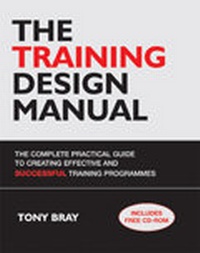
The Training Design Manual
The Complete Practical Guide to Creating Effective and Successful Training Programmes
1st Edition
Published on 3. April 2006
Book
Paperback/Softback
320 pages
978-0-7494-4570-6 (ISBN)
Description
No matter how training is delivered, at some stage someone will have had to sit down and plan what will be done, the order it's to be done in and exactly how it's to be delivered. This workbook and CD-Rom provides a one-stop reference manual to designing and delivering a successful training course.
Written in a practical and user-friendly style, The Training Design Manual provides both theory and practical exercises and guides the reader through the total design process from start to finish. Activity sections are included requiring readers to complete specific tasks which build towards a complete course design. Examples of materials and course peripherals are also included. Theory and concepts are followed by practical application and a blend of text and graphics appeals to a wide range of learning styles. A CD-Rom includes templates, activities and course materials.
Written in a practical and user-friendly style, The Training Design Manual provides both theory and practical exercises and guides the reader through the total design process from start to finish. Activity sections are included requiring readers to complete specific tasks which build towards a complete course design. Examples of materials and course peripherals are also included. Theory and concepts are followed by practical application and a blend of text and graphics appeals to a wide range of learning styles. A CD-Rom includes templates, activities and course materials.
Reviews / Votes
"This A-Z manual of instructional design for trainers of all experience levels guides users through a step-by-step process leading up to the launch of a successful training course." Advance magazine "Accompanied by promises of being a one stop reference manual for planning and designing a course. And author Tony Bray is a man of his word...The author is to be applauded for covering a wide range of activities in a very accessible manner." Training and Coaching Today "Ideal resource to have for inexperienced trainers not yet qualified or subject matter experts that have been asked to contribute to the development of workplace programmes" HRD Ireland "Packed with useful hints and strategies...All of the sections that one would expect are covered, along with one or two that one might not have expected, such as diversity of e-learning...takes a logical flow through the design process." Training Journal "Tony Bray offers practitioners step-by-step guidance on designing and delivering a successful training course." Reference and Research Book News "A solid, user-friendly manual offering both theoretical guidance and practical exercises to aid the reader in designing a successful training course for any field, business or endeavor...Highly recommended." Library BookwatchMore details
Language
English
Place of publication
London
United Kingdom
Target group
Professional and scholarly
Product notice
Paperback (trade)
Dimensions
Height: 1 mm
Width: 1 mm
Thickness: 1 mm
Weight
1 gr
ISBN-13
978-0-7494-4570-6 (9780749445706)
Copyright in bibliographic data and cover images is held by Nielsen Book Services Limited or by the publishers or by their respective licensors: all rights reserved.
Schweitzer Classification
Other editions
New editions
Tony Bray
The Training Design Manual
The Complete Practical Guide to Creating Effective and Successful Training Programmes
Book
07/2009
2nd Edition
Kogan Page Ltd
€53.10
Shipment within 10-20 days
Person
Tony Bray runs Aquarius International, a training consultancy, having previously had a management career with British Telecom. He is the author of several training books including Trade Secrets of Using E-Learning in Training (Thoroughgood) and 13 trainer packs including Top Teambuilding and Training that Sticks (Fenman).
Content
1 Introduction Welcome; Structure of the book; What is 'learning'... and 'training'?; The benefits of good design; Focus on designing a real course 2 The training design project Identify your stakeholders; Project dashboard; The initial planning meeting 3 Designing for global diversity The DESIGN process; DESIGNing for global corporate diversity; Why diversity is important; Accessibility for trainer-led courses; Accessibility for web-based materials; The employer's 'two tick' commitment 4 Formal learning needs analysis The importance of learning needs analysis; Who will you consult?; Learning needs checklist; Data collection techniques; Practical examples; Now focus on your course 5 Team-based needs analysis Introduction; Functional competences; Core competences; Critical work processes 6 What do you propose? Training may not be the solution; Define the overall course 'envelope'; Internal or external designers?; Write your proposal; Sunflower analysis 7 The impact of learning styles How people learn; Climb the learning ladder; The impact of learning styles; Fight the filters; So what does this mean for me? 8 Go with the flow Process map the flow; Learning methodologies; Four ways to communicate; Timing the course outline; 'Sign off' by the project sponsor 9 The STAR design model Follow the STAR; 'S' is for stimulate interest; 'T' is for transfer ideas or concepts; Techniques for transferring ideas or concepts; 'A' is for apply the learning; Techniques for applying the learning; 'R' is for review what's changed 10 Designing more complex activities Designing workshop sessions; Reversed workshop sessions; Team-based projects; Role play or skill practices; Using actors 11 Designing each session in detail Comply with company standards or policies; The session plan; Timings; Session title; Objectives; Learning methods; Administration and logistics; A real example; 'Diet' session plan; Sponsor 'sign off' 12 Designing course materials What might you need?; Harmonize with company standards; Sources for course content; Displaying text effectively; Delegate name cards or badges; Workbooks for trainer-led courses; Delegate handouts; Exercise briefing notes; Feedback sheets; Course peripherals 13 Using audio Why use audio?; Some examples; Slightly different uses; Equipment needs 14 Designing visual aids Why use visual aids?; What visual aids can we use?; Basic design principles; Flipcharts; Overhead transparencies; Computer graphics; Potential pitfalls; Plan your visuals 15 Designing e-learning Why e-learning?; Managing the project; The electronic learning system; Using quizzes; The course flow chart; Building individual screens; Creating the storyboards; The trainer-led course; The delegate workbook 16 Train the trainers Write a Trainer's Guide; Train the trainers; Trainer-led courses for blended learning 17 Select and manage the venue Draft the venue specification; Manage the venue 18 Pilot the course Plan the pilot; Pilots for blended learning; Deliver the pilot; Evaluate the pilot; Sponsor 'sign off' 19 Go live Confirm ownership; Identify resources and materials; Market the programme; Deliver the programme; Follow up; What could go wrong? 20 Review and relaunch Review what's changed; Sources of feedback; Measuring wider business impact; Time for decision; The end of the journey
1 Introduction
Welcome; Structure of the book; What is 'learning'. and 'training'?; The benefits of good design; Focus on designing a real course
2 The training design project
Identify your stakeholders; Project dashboard; The initial planning meeting
3 Designing for global diversity
The DESIGN process; DESIGNing for global corporate diversity; Why diversity is important; Accessibility for trainer-led courses; Accessibility for web-based materials; The employer's 'two tick' commitment
4 Formal learning needs analysis
The importance of learning needs analysis; Who will you consult?; Learning needs checklist; Data collection techniques; Practical examples; Now focus on your course
5 Team-based needs analysis
Introduction; Functional competences; Core competences; Critical work processes
6 What do you propose?
Training may not be the solution; Define the overall course 'envelope';
Internal or external designers?; Write your proposal; Sunflower analysis
7 The impact of learning styles
How people learn; Climb the learning ladder; The impact of learning styles;
Fight the filters; So what does this mean for me?
8 Go with the flow
Process map the flow; Learning methodologies; Four ways to communicate;
Timing the course outline; 'Sign off' by the project sponsor
9 The STAR design model
Follow the STAR; 'S' is for stimulate interest; 'T' is for transfer ideas or concepts; Techniques for transferring ideas or concepts; 'A' is for apply the learning; Techniques for applying the learning; 'R' is for review what's changed
10 Designing more complex activities
Designing workshop sessions; Reversed workshop sessions; Team-based projects; Role play or skill practices; Using actors
11 Designing each session in detail
Comply with company standards or policies; The session plan; Timings; Session title; Objectives; Learning methods; Administration and logistics;
A real example; 'Diet' session plan; Sponsor 'sign off'
12 Designing course materials
What might you need?; Harmonize with company standards; Sources for course content; Displaying text effectively; Delegate name cards or badges; Workbooks for trainer-led courses; Delegate handouts; Exercise briefing notes; Feedback sheets; Course peripherals
13 Using audio
Why use audio?; Some examples; Slightly different uses; Equipment needs
14 Designing visual aids
Why use visual aids?; What visual aids can we use?; Basic design principles;
Flipcharts; Overhead transparencies; Computer graphics; Potential pitfalls; Plan your visuals
15 Designing e-learning
Why e-learning?; Managing the project; The electronic learning system; Using quizzes; The course flow chart; Building individual screens; Creating the storyboards; The trainer-led course; The delegate workbook
16 Train the trainers
Write a Trainer's Guide; Train the trainers; Trainer-led courses for blended learning
17 Select and manage the venue
Draft the venue specification; Manage the venue
18 Pilot the course
Plan the pilot; Pilots for blended learning; Deliver the pilot; Evaluate the pilot; Sponsor 'sign off'
19 Go live
Confirm ownership; Identify resources and materials; Market the programme; Deliver the programme; Follow up; What could go wrong?
20 Review and relaunch
Review what's changed; Sources of feedback; Measuring wider business impact; Time for decision; The end of the journey
Welcome; Structure of the book; What is 'learning'. and 'training'?; The benefits of good design; Focus on designing a real course
2 The training design project
Identify your stakeholders; Project dashboard; The initial planning meeting
3 Designing for global diversity
The DESIGN process; DESIGNing for global corporate diversity; Why diversity is important; Accessibility for trainer-led courses; Accessibility for web-based materials; The employer's 'two tick' commitment
4 Formal learning needs analysis
The importance of learning needs analysis; Who will you consult?; Learning needs checklist; Data collection techniques; Practical examples; Now focus on your course
5 Team-based needs analysis
Introduction; Functional competences; Core competences; Critical work processes
6 What do you propose?
Training may not be the solution; Define the overall course 'envelope';
Internal or external designers?; Write your proposal; Sunflower analysis
7 The impact of learning styles
How people learn; Climb the learning ladder; The impact of learning styles;
Fight the filters; So what does this mean for me?
8 Go with the flow
Process map the flow; Learning methodologies; Four ways to communicate;
Timing the course outline; 'Sign off' by the project sponsor
9 The STAR design model
Follow the STAR; 'S' is for stimulate interest; 'T' is for transfer ideas or concepts; Techniques for transferring ideas or concepts; 'A' is for apply the learning; Techniques for applying the learning; 'R' is for review what's changed
10 Designing more complex activities
Designing workshop sessions; Reversed workshop sessions; Team-based projects; Role play or skill practices; Using actors
11 Designing each session in detail
Comply with company standards or policies; The session plan; Timings; Session title; Objectives; Learning methods; Administration and logistics;
A real example; 'Diet' session plan; Sponsor 'sign off'
12 Designing course materials
What might you need?; Harmonize with company standards; Sources for course content; Displaying text effectively; Delegate name cards or badges; Workbooks for trainer-led courses; Delegate handouts; Exercise briefing notes; Feedback sheets; Course peripherals
13 Using audio
Why use audio?; Some examples; Slightly different uses; Equipment needs
14 Designing visual aids
Why use visual aids?; What visual aids can we use?; Basic design principles;
Flipcharts; Overhead transparencies; Computer graphics; Potential pitfalls; Plan your visuals
15 Designing e-learning
Why e-learning?; Managing the project; The electronic learning system; Using quizzes; The course flow chart; Building individual screens; Creating the storyboards; The trainer-led course; The delegate workbook
16 Train the trainers
Write a Trainer's Guide; Train the trainers; Trainer-led courses for blended learning
17 Select and manage the venue
Draft the venue specification; Manage the venue
18 Pilot the course
Plan the pilot; Pilots for blended learning; Deliver the pilot; Evaluate the pilot; Sponsor 'sign off'
19 Go live
Confirm ownership; Identify resources and materials; Market the programme; Deliver the programme; Follow up; What could go wrong?
20 Review and relaunch
Review what's changed; Sources of feedback; Measuring wider business impact; Time for decision; The end of the journey