

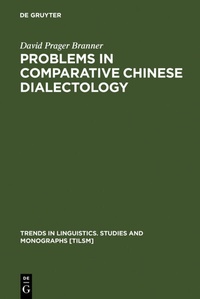
Problems in Comparative Chinese Dialectology
The Classification of Miin and Hakka
1st Edition
Published on 17. December 1999
Book
Hardback
XIII, 477 pages
978-3-11-015831-1 (ISBN)
Description
This book discusses the methodology of systematic Chinese Dialect classification, with particular attention to the conservative Miin and Hakka groups spoken in southern China. The primary linguistic methodology employed is the historical-comparative method, and the dialects chosen as examples of classification are those spoken in and around the township of Wann'an in western Fukien's Longyan country.
The book features extensive comparative tables of dialect forms, and a two-hundred page appendix outlining the diasystem of the four principal Wann'an dialects.
More details
Series
Edition
Reprint 2011
Language
English
Place of publication
Berlin/Boston
Germany
Publishing group
de Gruyter Mouton
Target group
Professional and scholarly
US School Grade: College Graduate Student
Product notice
Cloth over boards
Dimensions
Height: 236 mm
Width: 160 mm
Thickness: 40 mm
Weight
968 gr
ISBN-13
978-3-11-015831-1 (9783110158311)
Schweitzer Classification
Other editions
Additional editions
David Prager Branner
Problems in Comparative Chinese Dialectology
The Classification of Miin and Hakka
E-Book
04/2011
1st Edition
De Gruyter Mouton
€189.95
Available for download
David Prager Branner
Problems in Comparative Chinese Dialectology
The Classification of Miin and Hakka
Book
01/2000
1st Edition
De Gruyter Mouton
€269.00
Article exhausted; check different version
Content
1. The ideas of Chinese dialect classification
1.1. Introduction
1.2. Dialects and the Chinese idea of dialect
1.3. Goals and methods in classification and comparison
1.4. The primacy of data and the cultivation of data
1.5. Reconstruction
1.6. Under-description and the need for correspondence sets
1.7. Rigor in classification - reinventing the wheel
1.8. Bundling of features
1.9. Beentzhyh and meaningful elicitation
1.10. To recapitulate
2. Wann'an and the problem of this study
2.1. Wann'an township
2.2. The meaning of the names "Hakka" and "Miin"
2.3. The settlement of Wann'an, its geography, and local trades
2.4. Major sites
2.5. Markets and roads
2.6. The problem of this study: Norman's diagnostic rules
2.7. Common Miin initial-types
2.8. The "Shawwuu Hypothesis"
3. Wann'an's affiliation and the cohesiveness of diagnostic features
3.1. The Hakka test
3.2. Comparative Wann'an tones
3.3. The Miin test
3.4. Is Norman's Hakka criterion an artifact of his sources?
3.5. Evidence from rural Liancherng
3.6. Hakka in general
3.7. Conclusions and prospects for further research on Hakka
4. The character of Wann'an dialects
4.1. Other features of Miin
4.2. The classification of Wann'an within Miin
4.3. Subclassification within Coastal Miin
4.4. Conclusion
5. Wann'an evidence about Common Miin
5.1. A fourth nasal initial correspondence
5.2. Rogue nasalization and evidence of voiceless nasals
5.3. The shaang tone glottal stop in Miin
5.4. Addendum: chiuhsheng lengthening?
6. Conclusion: The place of Miin in the greater history of Chinese
6.1. Introduction
6.2. The question of the history of spoken Chinese
6.3. Chinese linguistic macro-history
6.4. The tonal proto-system of Miin
6.5. A digression on the relative date of tone splitting
6.6. Miin as a relic of Chinese before massive palatalization
6.7. Conclusion and hopes for the future
1.1. Introduction
1.2. Dialects and the Chinese idea of dialect
1.3. Goals and methods in classification and comparison
1.4. The primacy of data and the cultivation of data
1.5. Reconstruction
1.6. Under-description and the need for correspondence sets
1.7. Rigor in classification - reinventing the wheel
1.8. Bundling of features
1.9. Beentzhyh and meaningful elicitation
1.10. To recapitulate
2. Wann'an and the problem of this study
2.1. Wann'an township
2.2. The meaning of the names "Hakka" and "Miin"
2.3. The settlement of Wann'an, its geography, and local trades
2.4. Major sites
2.5. Markets and roads
2.6. The problem of this study: Norman's diagnostic rules
2.7. Common Miin initial-types
2.8. The "Shawwuu Hypothesis"
3. Wann'an's affiliation and the cohesiveness of diagnostic features
3.1. The Hakka test
3.2. Comparative Wann'an tones
3.3. The Miin test
3.4. Is Norman's Hakka criterion an artifact of his sources?
3.5. Evidence from rural Liancherng
3.6. Hakka in general
3.7. Conclusions and prospects for further research on Hakka
4. The character of Wann'an dialects
4.1. Other features of Miin
4.2. The classification of Wann'an within Miin
4.3. Subclassification within Coastal Miin
4.4. Conclusion
5. Wann'an evidence about Common Miin
5.1. A fourth nasal initial correspondence
5.2. Rogue nasalization and evidence of voiceless nasals
5.3. The shaang tone glottal stop in Miin
5.4. Addendum: chiuhsheng lengthening?
6. Conclusion: The place of Miin in the greater history of Chinese
6.1. Introduction
6.2. The question of the history of spoken Chinese
6.3. Chinese linguistic macro-history
6.4. The tonal proto-system of Miin
6.5. A digression on the relative date of tone splitting
6.6. Miin as a relic of Chinese before massive palatalization
6.7. Conclusion and hopes for the future