

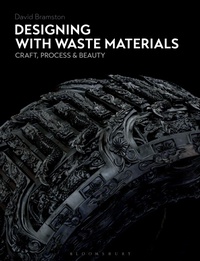
Designing with Waste Materials
Craft, Process and Beauty
Will be published approx. on 4. February 2027
Book
Paperback/Softback
192 pages
978-1-350-46796-5 (ISBN)
Description
Taking a step towards changing the future of sustainable design, this book explores the innovative world of creative possibilities hidden within waste materials.
Designing with Waste Materials showcases how discarded, redundant, and surplus materials can transform into a new global design language.
Renowned designer and educator Dave Bramston outlines the art of understanding different materials and unlocking their untapped potential. He challenges the conventional notion of waste, suggesting that rejected materials are often misunderstood rather than inherently inappropriate.
Through engaging global case studies, striking images, and insightful examples, this book offers practical wisdom and inspiration. Experienced practitioners share their knowledge, demonstrating how waste materials can drive creativity and beauty. Designers are empowered to explore diverse material, and learn how experimental play and hands-on exploration can redefine design processes, allowing for unexpected and stunning results.
An essential companion to unleashing creativity, fostering responsibility, and breaking free from the ordinary by embracing the opportunities found by incorporating waste materials into design practice.
Designing with Waste Materials showcases how discarded, redundant, and surplus materials can transform into a new global design language.
Renowned designer and educator Dave Bramston outlines the art of understanding different materials and unlocking their untapped potential. He challenges the conventional notion of waste, suggesting that rejected materials are often misunderstood rather than inherently inappropriate.
Through engaging global case studies, striking images, and insightful examples, this book offers practical wisdom and inspiration. Experienced practitioners share their knowledge, demonstrating how waste materials can drive creativity and beauty. Designers are empowered to explore diverse material, and learn how experimental play and hands-on exploration can redefine design processes, allowing for unexpected and stunning results.
An essential companion to unleashing creativity, fostering responsibility, and breaking free from the ordinary by embracing the opportunities found by incorporating waste materials into design practice.
Reviews / Votes
A wonderfully composed work that champions the creative and ethical transformation of material culture as we aim to move towards a more sustainable global outlook. It will undoubtedly inspire designers to work more imaginatively with the materials around them. * Daniel Sutherland, Associate Dean of Economic, Social and Cultural Development, and Designer, Gray's School of Art, Robert Gordon University, UK *More details
Language
English
Place of publication
London
United Kingdom
Publishing group
Bloomsbury Publishing PLC
Target group
College/higher education
Professional and scholarly
Illustrations
108 colour figures
Dimensions
Height: 246 mm
Width: 189 mm
Thickness: 25 mm
Weight
454 gr
ISBN-13
978-1-350-46796-5 (9781350467965)
Copyright in bibliographic data and cover images is held by Nielsen Book Services Limited or by the publishers or by their respective licensors: all rights reserved.
Schweitzer Classification
Person
Dave Bramston is Associate Professor of Design, Environmental Design Department, School of Architecture and Design, CUMT Xuzhou, Jiangsu Province, China. He has conducted workshops throughout China, UK and USA using waste materials and has developed a global network of contacts, including individual designers, organisations and companies, specialising in waste materials. His previous books for Bloomsbury/AVA include Idea Searching (2008), Material Thoughts (2009), Visual Conversations (2010) and Idea Searching for Design (2016).
Content
1: Sourcing Waste Materials: Street and Factory Creativity
- Unseen potential: The advantage of a seemingly useless material
- Sourcing the unwanted: Where to find waste materials
- Creative advantages: Hidden opportunities within random materials
- Creative collisions: Combining abstract materials to find originality
- Unlimited selection: The diversity of materials available
- Steering the language: An alternative visual language
- Respecting the unfamiliar: Aligning curiosity with alternative practice
2: Low Carbon Practices: Tools and Time
- An alternative process: Understanding work practices with waste materials
- Low carbon tools: Simplistic tools for creativity
- Lost inspiration: Applying forgotten making traditions
- Keeping it local: A change of perception
- Less rush. More care: Individual connection
- Recognising lateral solutions: Something different
- Eradicating difficulties: Common denominators
3: Experimental Play: Getting Hands Dirty
- Making mistakes: Originality searching
- Material transformation: Revealing beauty
- Question everything: Changing contexts
- Unseen fabrics: Deconstruction assembly
- Hidden details: Shrouded features
- Unexpected: Identifying uniqueness
- Encouraging fantastical: Beyond boundaries
4: Craftsmanship: Care and Attention
- Inspiration in everything: Understanding creative suggestions
- Improbable: Developing the unbelievable
- Creating collections: Multiple uniqueness
- Beauty without resource: Simplicity works
- Continual deconstruction: Rework, rework, rework.
- Surprise and amaze: Unexpected outcomes
- Alternative working practice: Work differently.
5: Summary
Embrace waste materials: Don't waste materials
- Summary
- Summary overview
6: Twenty projects
- Acknowledgments
- Unseen potential: The advantage of a seemingly useless material
- Sourcing the unwanted: Where to find waste materials
- Creative advantages: Hidden opportunities within random materials
- Creative collisions: Combining abstract materials to find originality
- Unlimited selection: The diversity of materials available
- Steering the language: An alternative visual language
- Respecting the unfamiliar: Aligning curiosity with alternative practice
2: Low Carbon Practices: Tools and Time
- An alternative process: Understanding work practices with waste materials
- Low carbon tools: Simplistic tools for creativity
- Lost inspiration: Applying forgotten making traditions
- Keeping it local: A change of perception
- Less rush. More care: Individual connection
- Recognising lateral solutions: Something different
- Eradicating difficulties: Common denominators
3: Experimental Play: Getting Hands Dirty
- Making mistakes: Originality searching
- Material transformation: Revealing beauty
- Question everything: Changing contexts
- Unseen fabrics: Deconstruction assembly
- Hidden details: Shrouded features
- Unexpected: Identifying uniqueness
- Encouraging fantastical: Beyond boundaries
4: Craftsmanship: Care and Attention
- Inspiration in everything: Understanding creative suggestions
- Improbable: Developing the unbelievable
- Creating collections: Multiple uniqueness
- Beauty without resource: Simplicity works
- Continual deconstruction: Rework, rework, rework.
- Surprise and amaze: Unexpected outcomes
- Alternative working practice: Work differently.
5: Summary
Embrace waste materials: Don't waste materials
- Summary
- Summary overview
6: Twenty projects
- Acknowledgments