

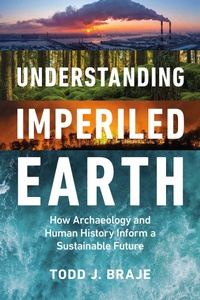
Understanding Imperiled Earth
How Archaeology and Human History Inform a Sustainable Future
Published on 5. March 2024
Book
Hardback
208 pages
978-1-58834-759-6 (ISBN)
Description
A unique introduction to how understanding archaeology can support modern-day sustainability efforts, from restoring forested land to developing fire management strategies
An essential and hopeful book for climate-conscious readers
The world faces an uncertain future with the rise of climate change, biodiversity loss, deforestation, overfishing, and other threats. Understanding Imperiled Earth meets this uncertainty head-on, presenting archaeology and history as critical guides to addressing the modern environmental crisis.
Anthropologist Todd J. Braje draws connections between deep history and today's hot-button environmental news stories to reveal how the study of the ancient past can help build a more sustainable future. The book covers a diverse array of interconnected issues, including:
Braje examines how historical roots offer a necessary baseline for a healthier Earth, because understanding how the planet used to be is fundamental to creating effective restoration efforts moving forward through urban forests, sustainable food webs, and more. Understanding Imperiled Earth offers an illuminating, hopeful, and actionable approach to some of the world's most urgent problems.
An essential and hopeful book for climate-conscious readers
The world faces an uncertain future with the rise of climate change, biodiversity loss, deforestation, overfishing, and other threats. Understanding Imperiled Earth meets this uncertainty head-on, presenting archaeology and history as critical guides to addressing the modern environmental crisis.
Anthropologist Todd J. Braje draws connections between deep history and today's hot-button environmental news stories to reveal how the study of the ancient past can help build a more sustainable future. The book covers a diverse array of interconnected issues, including:
- how modern humans have altered the natural world
- conservation work of Indigenous communities
- extinction of megafauna like dire wolves and woolly rhinoceros
- the risk of deforestation highlighted by Notre Dame's destruction
- the extinction crisis reflected by endangered bird species in Hawai'i
- fish scarcity driving demand and price, like the single blue-fin tuna fish that sold for three million dollars
- importance of "action archaeology"
Braje examines how historical roots offer a necessary baseline for a healthier Earth, because understanding how the planet used to be is fundamental to creating effective restoration efforts moving forward through urban forests, sustainable food webs, and more. Understanding Imperiled Earth offers an illuminating, hopeful, and actionable approach to some of the world's most urgent problems.
More details
Language
English
Place of publication
United States
Dimensions
Height: 159 mm
Width: 238 mm
Thickness: 20 mm
Weight
416 gr
ISBN-13
978-1-58834-759-6 (9781588347596)
Copyright in bibliographic data and cover images is held by Nielsen Book Services Limited or by the publishers or by their respective licensors: all rights reserved.
Schweitzer Classification
Other editions
Additional editions
Todd J. Braje
Understanding Imperiled Earth
How Archaeology and Human History Can Inform a Sustainable Future
E-Book
03/2024
Smithsonian Books
€29.49
Available for download
Person
TODD J. BRAJE received his PhD in anthropology from the University of Oregon and is the executive director of the University of Oregon Museum of Natural and Cultural History, after more than a decade spent as a professor at San Diego State University. He's the author of several books, including Islands through Time and Modern Oceans, Ancient Sites, and has published more than one hundred academic journal articles and book chapters. His research focuses on the archaeology of maritime societies, the application of archaeological records to modern resource management, and the peopling of the New World.