

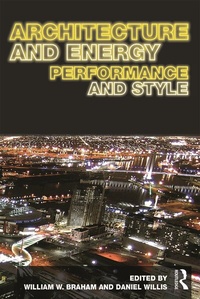
Architecture and Energy
Performance and Style
1st Edition
Published on 17. May 2013
Book
Paperback/Softback
192 pages
978-0-415-63930-9 (ISBN)
Description
Does energy consumption influence architectural style? Should more energy-efficient buildings look different? Can that "look" be used to explain or enhance their performance?
Architecture and Energy provides architects and architectural theorists with more durable arguments for environmental design decisions, arguments addressing three different scales or aspects of contemporary construction. By drawing together essays from the leading experts in the field, this book engages with crucial issues in sustainable design, such as:
The larger role of energy in forming the cultural and economic systems in which architecture is conceived, constructed, and evaluated
The different measures and meanings of energy "performance" and how those measures are realized in buildings
The specific ways in which energy use translates into the visible aspects of architectural style.
Drawing on research from the UK, US, Europe, and Asia the book outlines the problems surrounding energy and architecture and provides the reader with a considered overview of this important topic.
Architecture and Energy provides architects and architectural theorists with more durable arguments for environmental design decisions, arguments addressing three different scales or aspects of contemporary construction. By drawing together essays from the leading experts in the field, this book engages with crucial issues in sustainable design, such as:
The larger role of energy in forming the cultural and economic systems in which architecture is conceived, constructed, and evaluated
The different measures and meanings of energy "performance" and how those measures are realized in buildings
The specific ways in which energy use translates into the visible aspects of architectural style.
Drawing on research from the UK, US, Europe, and Asia the book outlines the problems surrounding energy and architecture and provides the reader with a considered overview of this important topic.
More details
Language
English
Place of publication
London
United Kingdom
Publishing group
Taylor & Francis Ltd
Target group
College/higher education
Professional and scholarly
Illustrations
69 s/w Abbildungen
69 Illustrations, black and white
Dimensions
Height: 234 mm
Width: 156 mm
Weight
380 gr
ISBN-13
978-0-415-63930-9 (9780415639309)
Copyright in bibliographic data and cover images is held by Nielsen Book Services Limited or by the publishers or by their respective licensors: all rights reserved.
Schweitzer Classification
Other editions
Additional editions
E-Book
07/2013
1st Edition
Routledge
€69.99
Available for download
E-Book
07/2013
1st Edition
Routledge
€69.99
Available for download
Book
05/2013
1st Edition
Routledge
€238.09
Shipment within 15-20 days
Persons
William W. Braham is Associate Professor of Architecture at the University of Pennsylvania, where he is currently Director of the Master of Environmental Building Design.
Daniel Willis is Professor of Architecture at Pennsylvania State University, where he is Interim Director of The Institute for the Arts and Humanities and a founder of the Center for Research on Design and Innovation.
Daniel Willis is Professor of Architecture at Pennsylvania State University, where he is Interim Director of The Institute for the Arts and Humanities and a founder of the Center for Research on Design and Innovation.
Content
Introduction: Architecture and Energy (Again) Part 1: Energy Systems 1. Architecture, Style, and Power: the Work of Civilization 3. Architecture and Life 4. Energy and the Social Hierarchy of Households (and Buildings) 5. Design in the Light of Dark Energy Part 2: Building Performance 6. Less is Less: Are Architects Thinking Too Small? 7. Environmental Surfing - Delight and Nature's Renewable Energies 8. Adaptive Architecture 9. Designing for Low-Energy: Seeking Representations of High-Performance Homes in Post-War America Part 3: Architectural Aspects 10. Technics and Poetics of the Architectural Environment 11. The Formations of Energy in Architecture 12. Visualizing Renewable Resources