

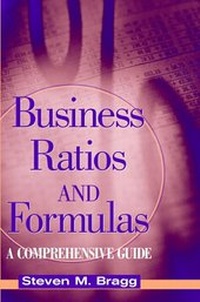
Business Ratios and Formulas
A Comprehensive Guide
1st Edition
Published on 30. September 2002
Book
Hardback
334 pages
978-0-471-39643-7 (ISBN)
Description
Business managers need a description of the key management ratios, formulas, and statistics, for companies to use to evaluate their operations. This book provides a comprehensive and thorough list of every ratio, formula and statistical analysis, and how to compile and interpret that information.
Reviews / Votes
"It is an important, Quick Reference item that should be in every business collection." (Choice, April 2003)More details
Edition
1., Aufl.
Language
English
Place of publication
New York
United States
Publishing group
John Wiley and Sons Ltd
Target group
College/higher education
Professional and scholarly
Illustrations
glossary, index
Dimensions
Height: 23.8 cm
Width: 16.4 cm
Weight
680 gr
ISBN-13
978-0-471-39643-7 (9780471396437)
Schweitzer Classification
Other editions
New editions
Book
11/2006
2nd Edition
Wiley
€71.90
Article exhausted; check for reprint
Additional editions
E-Book
03/2003
Wiley
€70.99
Available for download
Person
STEVEN M. BRAGG, CPA, CMA, CIA, CPM, CPIM, has been the chief financial officer or controller of four companies, as well as a consulting manager at Ernst & Young. He received a master's degree in finance from Bentley College, an MBA from Babson College, and a bachelor's degree in economics from the University of Maine. He is also author of Just-In-Time Accounting and Managing Explosive Corporate Growth and coauthor of The Controller's Function, all from Wiley. He resides in Englewood, Colorado.
Content
About the Author; Preface; 1. Introduction; 2. Asset Utilization Measurements; Sales to Working Capital Ratio; Sales to Fixed Assets Ratio; Sales to Administrative Expenses Ratio; Sales to Equity Ratio; Sales per Person; Sales Backlog Ratio; Sales Returns to Gross Sales Ratio; Repairs and Maintenance Expense to Fixed Assets Ratio; Accumulated Depreciation to Fixed Assets Ratio; Fringe Benefits to Wages and Salaries Expense; Sales Expenses to Sales Ratio; Discretionary Cost Ratio; Interest Expense to Debt Ratio; Foreign Exchange Ratios; Overhead Rate; Goodwill to Assets Ratio; Overhead to Cost of Sales Ratio; Investment Turnover; Break-Even Point; Margin of Safety; Tax Rate Percentage; 3. Operating Performance Measurements; Operating Assets Ratio; Sales to Operating Income Ratio; Sales Margin; Gross Profit Percentage; Gross Profit Index; Investment Income Percentage; Operating Profit Percentage; Operating Leverage Ratio; Net Income Percentage; Profit per Person; 4. Cash Flow Measurements; Cash Flow from Operations; Cash Flow Return on Sales; Fixed Charge Coverage; Expense Coverage Days; Cash Flow Coverage Ratio; Cash Receipts to Billed Sales and Progress Payments; Cash to Current Assets Ratio; Cash Flow to Fixed Asset Requirements; Cash Flow Return on Assets; Cash to Working Capital Ratio; Cash Reinvestment Ratio; Cash to Current Liabilities Ratio; Cash Flow to Debt Ratio; Stock Price to Cash Flow Ratio; Dividend Payout Ratio; 5. Liquidity Measurements; Accounts Receivable Turnover; Average Receivable Collection Period; Days Delinquent Sales Outstanding; Days Sales in Receivables Index; Accounts Receivable Investment; Ending Receivable Balance; Inventory to Sales Ratio; Inventory Turnover; Inventory to Working Capital Ratio; Liquidity Index; Accounts Payable Days; Accounts Payable Turnover; Current Ratio; Quick Ratio; Cash Ratio; Sales to Current Assets Ratio; Working Capital Productivity; Defensive Interval Ratio; Current Liability Ratio; Required Current Liabilities to Total Current Liabilities Ratio; Working Capital to Debt Ratio; Risky Asset Conversion Ratio; Noncurrent Assets to Noncurrent Liabilities Ratio; Short-term Debt to Long-term Debt Ratio; Altman's Z-Score Bankruptcy Prediction Formula; 6. Capital Structure and Solvency Measurements; Times Interest Earned; Debt Coverage Ratio; Asset Quality Index; Accruals to Assets Ratio; Times Preferred Dividend Earned; Debt to Equity Ratio; Funded Capital Ratio; Retained Earnings to Stockholders' Equity; Preferred Stock to Total Stockholders' Equity; Issued Shares to Authorized Shares; 7. Return on Investment Measurements; Net Worth; Book Value Per Share; Tangible Book Value; Return on Assets Employed; Return on Operating Assets; Return on Equity Percentage; Return on Common Equity; Financial Leverage Index; Equity Growth Rate; Earnings per Share; Percentage Change in Earnings Per Share; Economic Value Added; Dividend Payout Ratio; Dividend Yield Ratio; 8. Market Performance Measurements; Insider Stock Buy-Sell Ratio; Market Value Added; Stock Options to Common Shares Ratio; Cost of Capital; Sales to Stock Price Ratio; Price/Earnings Ratio; Capitalization Rate; 9. Measurements for the Accounting/Finance Department; Purchase Discounts Taken to Total Discounts; Percentage of Payment Discounts Missed; Transactions Processed per Person; Transaction Error Rate; Average Time to Issue Invoices; Average Employee Expense Report Turnaround Time; Payroll Transaction Fees per Employee; Time to Produce Financial Statements; Percentage of Tax Filing Dates Missed; Proportion of Products Costed Prior to Release; Internal Audit Savings to Cost Percentage; Internal Audit Efficiency; Bad Debt Percentage; Percent of Receivables over XX Days Old; Percentage Collected of Dollar Volume Assigned; Percent of Cash Applied on Day of Receipt; Cost of Credit; Earnings Rate on Invested Funds; Brokerage Fee Percentage; Borrowing Base Usage Percentage; 10. Measurements for the Engineering Department; Bill of Material Accuracy; Labor Routing Accuracy; Percentage of New Products Introduced; Percentage of Sales from New Products; Percentage of New Parts Used in New Products; Percentage of Existing Parts Reused in New Products; Average Number of Distinct Products per Design Platform; Percentage of Products Reaching Market before Competition; Ratio of Actual to Target Cost; Warranty Claims Percentage; Time from Design Inception to Production; Percentage of Floor Space Utilization; 11. Measurements for the Logistics Department; Production Schedule Accuracy; Economic Order Quantity; Number of Orders to Place in a Period; Economic Production Run Size; Raw Material Inventory Turns; Raw Material Content; Finished Goods Inventory Turns; Obsolete Inventory Percentage; Percentage of Inventory XX Days Old; Percentage of Returnable Inventory; Inventory Accuracy; Percentage of Certified Suppliers; Electronic Data Interchange Supplier Percentage; On-Time Parts Delivery Percentage; Purchased Component Defect Rate; Incoming Components Correct Quantity Percentage; Percentage of Actual Payments Varying from Purchase Order Price; Percentage of Purchase Orders Issued below Minimum Dollar Level; Proportion of Corporate Credit Card Usage; Percentage of Receipts Authorized by Purchase Orders; Freight Audit Recovery Ratio; Picking Accuracy for Assembled Products; Average Time to Ship; On-Time Delivery Percentage; Percentage of Products Damaged in Transit; Percentage of Sales through Distributors; 12. Measurements for the Production Department; Constraint Productivity; Constraint Rework Percentage; Constraint Schedule Attainment; Constraint Utilization; Degree of Unbalance; Throughput Effectiveness; Break-Even Plant Capacity; Manufacturing Effectiveness; Productivity Index; Unit Output per Direct Labor Hour; Average Equipment Setup Time; Unscheduled Machine Downtime Percentage; Acceptable Product Completion Percentage; Work-in-Process Turnover; Scrap Percentage; Warranty Claims Percentage; Maintenance Expense to Fixed Assets Ratio; Indirect Expense Index; Reorder Point; On-Time Delivery Ratio; 13. Measurements for the Sales and Marketing Department; Market Share; Customer Turnover; Browse to Buy Conversion Ratio; Recency; Direct Mail Effectiveness Ratio; Inbound Telemarketing Retention Ratio; Quote to Close Ratio; Sales per Salesperson; Sales Productivity; Sales Effectiveness; Sales Trend Percentage by Product Line; Product Demand Elasticity; Days of Backlog; 14. Measurement Analysis with an Electronic Spreadsheet; Financial Statement Proportional Analysis; Financial Statement Ratio Analysis; Automated Ratio Result Analysis; Leverage Analysis; Trend Analysis; Forecasting; Cash Flow Analysis; Capital Asset Analysis; Compounding Analysis; Investment Analysis; Risk Analysis; Glossary; Appendix: Measurement Summary; Index