

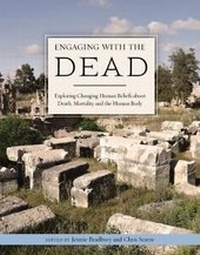
Engaging with the Dead
Exploring Changing Human Beliefs about Death, Mortality and the Human Body
Published on 30. September 2017
Book
Hardback
288 pages
978-1-78570-663-9 (ISBN)
Description
Engaging with the Dead adopts a cross-disciplinary, archaeologically focused, approach to explore a variety of themes linked to the interpretation of mortuary traditions, death and the ways of disposing of the dead. Nineteen papers highlight the current vitality of 'death studies' and the potential of future research and discoveries. Contributors explore changing beliefs and practices over time, considering how modern archaeology, ethnography and historical records can aid our interpretations of the past, as well as considering how past practices may have influenced understandings of death and dying within the modern world. It is clear that there are very significant variations in the quantity of dead that appear in the archaeological record over time, and the contributions to this volume attempt to understand why that might be the case.
By bringing together papers from a variety of specialists working within Europe and the Near East, we investigate the pivotal role of death studies in the 21st century, providing a case for the retention of human remains in archaeological collections. Engaging with the Dead aims to set period specific contributions within a broader perspective and integrates papers from bioarchaeologists, theologists, textual specialists, as well as archaeologists. It provides an in-depth introduction to the multitude of ways in which the mortuary record can be interrogated and interpreted and explores the role of archaeology and theology within contemporary social studies.
This volume challenges our current understanding and conceptualisation of mortuary practices in the ancient and contemporary world.
By bringing together papers from a variety of specialists working within Europe and the Near East, we investigate the pivotal role of death studies in the 21st century, providing a case for the retention of human remains in archaeological collections. Engaging with the Dead aims to set period specific contributions within a broader perspective and integrates papers from bioarchaeologists, theologists, textual specialists, as well as archaeologists. It provides an in-depth introduction to the multitude of ways in which the mortuary record can be interrogated and interpreted and explores the role of archaeology and theology within contemporary social studies.
This volume challenges our current understanding and conceptualisation of mortuary practices in the ancient and contemporary world.
Reviews / Votes
Though Middle East heavy, the volume is stimulating with many interesting ideas. It views 'mortuary rituals' from different and varied perspectives. * The Archaeological Journal * [This book] has a large A4 format which gives room for the images, diagrams and tables to do their work. [...] Two papers are outstanding for their content. The paper [Living with the Dead, Past and Present] has a clear goal and is novel in its combination of mortuary archaeology with contemporary psychological theory. * Time and Mind *More details
Series
Language
English
Place of publication
Oxford
United Kingdom
Target group
College/higher education
Illustrations
b/w and colour
Dimensions
Height: 280 mm
Width: 220 mm
ISBN-13
978-1-78570-663-9 (9781785706639)
Copyright in bibliographic data and cover images is held by Nielsen Book Services Limited or by the publishers or by their respective licensors: all rights reserved.
Schweitzer Classification
Other editions
Additional editions
Bradbury Jennie Bradbury | Scarre Chris Scarre
Engaging with the Dead
Exploring Changing Human Beliefs about Death, Mortality and the Human Body
E-Book
09/2017
Oxbow Books
€40.49
Available for download
Jennie Bradbury
Engaging with the Dead
Exploring Changing Human Beliefs about Death, Mortality and the Human Body
E-Book
09/2017
OXBOW BOOKS
€40.49
Available for download
Persons
Jennie Bradbury is Senior Research Associate on the Endangered Archaeology in the Middle East & North Africa (EAMENA) project at the University of Oxford. She is a Near Eastern archaeologist, with research interests in traditions of burial in the ancient near east, landscape archaeology, GIS and remote sensing and society and social complexity. Christopher Scarre is Professor of Archaeology at Durham University, and specialises in the Neolithic monumentality of the Atlantic facade of Europe. He has excavated at megalithic monuments in western France, Portugal and the Channel Islands.
Content
1. Introduction: Engaging with the dead
Jennie Bradbury and Chris Scarre
2. Tracking the dead in the Neolithic: the 'Invisible Dead' in Britain
Mandy Jay & Chris Scarre
3. Mind the gap ... what did Late Bronze Age people do with their dead?: Evidence from Cliffs End, Kent
Jacqueline McKinley
4. Death in the countryside: New light on Romano-British rural burial practice
Alex Smith
5. Iron Age Mortuary Variability in the Southern Levant
David Ilan
6. Taphonomic agents as the source of bias in osteological research in the Near East Arkadiusz Soltysiak & Rafal Fetner
7. Protracted burial practices and the beginning of cremation in the ancient Near East: two independent phenomena?
Candida Felli
8. Shifting identities: mortuary practices, human belief and society in the Levantine Bronze Age
Jennie Bradbury & Graham Philip
9. Looking Forward to Look Back: How Investigations of Historical Burial Populations can Inform our Interpretations of Prehistoric Burial Practice
Amanda Murphy & Andrew Chamberlain
10. Developing and implementing big picture approaches in bioarchaeology: opportunities and challenges
Charlotte Roberts
11. Dead and (un)buried: reconstructing attitudes to death in long-term perspective
Mike Parker-Pearson
12. Reanimating the Dead: The circulation of human bone in the British Later Bronze Age
Joanna Brueck
13. Remembering the "ancient" dead: long-term funerary processes at two royal burial places at Qatna, Syria
Peter Pflaezner
14. The visible dead: ethnographic perspectives on the curation, display and circulation of human remains in Iron Age Britain
Ian Armit
15. The Distribution of Graves and the Food within - the Evidence from 2nd Millennium B.C.E. Mari, Syria
Sarah Lange
16. Variations on a Tomb: The Umm el-Marra Mortuary Complex in the Context of Elite Burial Ritual in 3rd Millennium Western Syria
Sarah Yukich
17. Continuing bonds past and present: A reinterpretation of Southwest Asia's Neolithic mortuary practices in light of contemporary theories of bereavement
Karina Croucher
18. Conceptualising the Dead Body: The image of the corpse in modern burial reform
Julie Rugg
19. Conclusion: Beyond the Invisible Dead
Jennie Bradbury & Chris Scarre
Short Biography
Jennie Bradbury and Chris Scarre
2. Tracking the dead in the Neolithic: the 'Invisible Dead' in Britain
Mandy Jay & Chris Scarre
3. Mind the gap ... what did Late Bronze Age people do with their dead?: Evidence from Cliffs End, Kent
Jacqueline McKinley
4. Death in the countryside: New light on Romano-British rural burial practice
Alex Smith
5. Iron Age Mortuary Variability in the Southern Levant
David Ilan
6. Taphonomic agents as the source of bias in osteological research in the Near East Arkadiusz Soltysiak & Rafal Fetner
7. Protracted burial practices and the beginning of cremation in the ancient Near East: two independent phenomena?
Candida Felli
8. Shifting identities: mortuary practices, human belief and society in the Levantine Bronze Age
Jennie Bradbury & Graham Philip
9. Looking Forward to Look Back: How Investigations of Historical Burial Populations can Inform our Interpretations of Prehistoric Burial Practice
Amanda Murphy & Andrew Chamberlain
10. Developing and implementing big picture approaches in bioarchaeology: opportunities and challenges
Charlotte Roberts
11. Dead and (un)buried: reconstructing attitudes to death in long-term perspective
Mike Parker-Pearson
12. Reanimating the Dead: The circulation of human bone in the British Later Bronze Age
Joanna Brueck
13. Remembering the "ancient" dead: long-term funerary processes at two royal burial places at Qatna, Syria
Peter Pflaezner
14. The visible dead: ethnographic perspectives on the curation, display and circulation of human remains in Iron Age Britain
Ian Armit
15. The Distribution of Graves and the Food within - the Evidence from 2nd Millennium B.C.E. Mari, Syria
Sarah Lange
16. Variations on a Tomb: The Umm el-Marra Mortuary Complex in the Context of Elite Burial Ritual in 3rd Millennium Western Syria
Sarah Yukich
17. Continuing bonds past and present: A reinterpretation of Southwest Asia's Neolithic mortuary practices in light of contemporary theories of bereavement
Karina Croucher
18. Conceptualising the Dead Body: The image of the corpse in modern burial reform
Julie Rugg
19. Conclusion: Beyond the Invisible Dead
Jennie Bradbury & Chris Scarre
Short Biography