


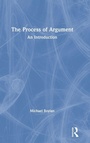
The Process of Argument
An Introduction
1st Edition
Published on 5. May 2020
Book
Paperback/Softback
160 pages
978-0-367-42525-8 (ISBN)
Description
The Process of Argument: An Introduction is a necessary companion for anyone seeking to engage in successful persuasion: To organize, construct, and communicate arguments. It is both comprehensive and accessible: An authoritative guide to logical thinking and effective communication.
The book begins with techniques to improve reading comprehension, including guides on navigating through fake news and internet trolls. Then, readers are taught how to reconstruct deductive, inductive, and abductive presentations so that the logical structure is explicit. And finally, there is a step-by-step guide for responding to these texts via the argumentative essay.
Along the way are current examples from social media and elsewhere on the internet along with guides for assessing truth claims in an ever-complicated community worldview. Throughout, are carefully selected reading questions and exercises that will pace readers in order to ensure that the text is securely grasped and successfully applied.
Key Features
Offers guidance on how to read a text through self-analysis and social criticism
Provides a step-by-step procedure for allowing the student to move from reading to reconstruction to being prepared to write an effective argumentative essay
Presents truth theory and shows readers how they can helpfully acquaint themselves with a version of realistic, foundational epistemology
Offers guidelines and helpful tools on how best to structure an argumentative, pro or con, essay
Includes expansive coverage of inductive logic through the use and assessment of statistics
Covers abductive logic as it applies to the analysis of narrative in argumentative writing
Has up-to-date examples from the media, including from blogs, social media, and television
Includes a helpful glossary of all important terms in the book
The book begins with techniques to improve reading comprehension, including guides on navigating through fake news and internet trolls. Then, readers are taught how to reconstruct deductive, inductive, and abductive presentations so that the logical structure is explicit. And finally, there is a step-by-step guide for responding to these texts via the argumentative essay.
Along the way are current examples from social media and elsewhere on the internet along with guides for assessing truth claims in an ever-complicated community worldview. Throughout, are carefully selected reading questions and exercises that will pace readers in order to ensure that the text is securely grasped and successfully applied.
Key Features
Offers guidance on how to read a text through self-analysis and social criticism
Provides a step-by-step procedure for allowing the student to move from reading to reconstruction to being prepared to write an effective argumentative essay
Presents truth theory and shows readers how they can helpfully acquaint themselves with a version of realistic, foundational epistemology
Offers guidelines and helpful tools on how best to structure an argumentative, pro or con, essay
Includes expansive coverage of inductive logic through the use and assessment of statistics
Covers abductive logic as it applies to the analysis of narrative in argumentative writing
Has up-to-date examples from the media, including from blogs, social media, and television
Includes a helpful glossary of all important terms in the book
More details
Language
English
Place of publication
London
United Kingdom
Publishing group
Taylor & Francis Ltd
Target group
College/higher education
Illustrations
4 s/w Abbildungen, 4 s/w Zeichnungen, 1 s/w Tabelle
1 Tables, black and white; 4 Line drawings, black and white; 4 Illustrations, black and white
Dimensions
Height: 229 mm
Width: 152 mm
Thickness: 10 mm
Weight
262 gr
ISBN-13
978-0-367-42525-8 (9780367425258)
Copyright in bibliographic data and cover images is held by Nielsen Book Services Limited or by the publishers or by their respective licensors: all rights reserved.
Schweitzer Classification
Other editions
Additional editions
Book
05/2020
1st Edition
Routledge
€205.90
Shipment within 15-20 days

E-Book
04/2020
1st Edition
Routledge
€52.49
Available for download

E-Book
04/2020
1st Edition
Routledge
€52.49
Available for download
Person
Michael Boylan is Professor of Philosophy at Marymount University in Arlington, Virginia. He is the author of 37 books, most recently Fictive Narrative Philosophy (2019), The Origins of Ancient Greek Science (2015), and Natural Human Rights: A Theory (2014).
Content
Introduction Part One: Reading the Text 1. Confronting the Text 2. Critical Reading: Worldviews, Fallacies, and the Common Body of Knowledge 3. Assessing Degrees of Certainty and What it Means Part Two: Reconstructing the Text 4. Outlining Deductive Argument 5. Outlining Inductive Argument 6. Abductive Logical Outlining Part Three: Responding to the Text 7. Finding Out What You Believe 8. The Con Essay 9. The Pro Essay Appendix The Big Picture Glossary