

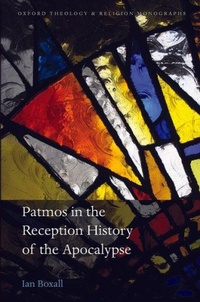
Patmos in the Reception History of the Apocalypse
Published on 18. April 2013
Book
Hardback
288 pages
978-0-19-967420-6 (ISBN)
Description
This monograph explores the significance accorded to John's island of Patmos (Rev. 1:9) within the wider reception history of the Apocalypse. In contrast to the relatively scant attention paid to John's island in modern commentaries, this reception-historical survey reveals both the greater prominence accorded to Patmos by earlier interpreters, and the richer diversity of readings the text has provoked. These include interest in the physical character of Patmos and its significance as an island; the date and reason for John's sojourn there; attempts to locate Patmos in a geography which is sometimes more mythical than literal; the meaning of the name 'Patmos' in the context of a biblical book which treats other place-names symbolically. This diversity is supported by a close reading of Rev. 1:9, which highlights the extent to which even its literal sense is highly ambiguous.
Ian Boxall brings together for the first time in a coherent narrative a wide range of interpretations of Patmos, reflecting different chronological periods, cultural contexts, and Christian traditions. Boxall understands biblical interpretation broadly, to include interpretations in biographical traditions about John, sermons, liturgy, and visual art as well as biblical commentaries.He also considers popular and marginal readings alongside magisterial and centrist ones, and draws analogies between similar hermeneutical strategies across the centuries. In the final chapter Boxall explores the wider implications of his study for biblical scholarship, advocating an approach which encourages use of the imagination and reader participation, and which works with a broader concept of 'meaning' than traditional historical criticism.
Ian Boxall brings together for the first time in a coherent narrative a wide range of interpretations of Patmos, reflecting different chronological periods, cultural contexts, and Christian traditions. Boxall understands biblical interpretation broadly, to include interpretations in biographical traditions about John, sermons, liturgy, and visual art as well as biblical commentaries.He also considers popular and marginal readings alongside magisterial and centrist ones, and draws analogies between similar hermeneutical strategies across the centuries. In the final chapter Boxall explores the wider implications of his study for biblical scholarship, advocating an approach which encourages use of the imagination and reader participation, and which works with a broader concept of 'meaning' than traditional historical criticism.
Reviews / Votes
Boxall's remarkable achievement is to have shown how to read an apparently theologically unpromising text in such a way as to demonstrate its powerful contribution to the Christian conversation about its sources of truth and understanding. And to have done so in a way which is elegant, which carries its learning lightly and which has produces a book which is a joy to read. * John Riches, The Expository Times *More details
Series
Language
English
Place of publication
Oxford
United Kingdom
Target group
College/higher education
Product notice
Unsewn / adhesive bound
Cloth over boards
With dust jacket
Illustrations
8 colour plates
Dimensions
Height: 234 mm
Width: 152 mm
Thickness: 23 mm
Weight
612 gr
ISBN-13
978-0-19-967420-6 (9780199674206)
Copyright in bibliographic data and cover images is held by Nielsen Book Services Limited or by the publishers or by their respective licensors: all rights reserved.
Schweitzer Classification
Other editions
Additional editions
E-Book
04/2013
1st Edition
OUP eBook
€81.49
Available for download
Person
Ian Boxall, Senior Tutor and Tutorial Fellow in New Testament, St Stephen's House, Oxford
Content
Introduction ; 1. I was on the Island Called Patmos : Re-reading Rev. 1:9 ; 2. Patmos in Early Patristic Tradition (2nd 5th Centuries) ; 3. Patmos in Early Medieval Latin Tradition (6th 10th Centuries) ; 4. Patmos in Later Medieval Latin Tradition (1000 1516) ; 5. Patmos in Eastern Traditions from the 5th Century ; 6. Patmos in Western Interpreters from 1517 ; 7. Visual Interpretations of Patmos ; 8. Hermeneutical Reflections ; Appendix 1: Patmos in Modern Commentators ; Appendix 2: The Pre-Johannine Reception: Patmos in Classical Sources and Inscriptions