

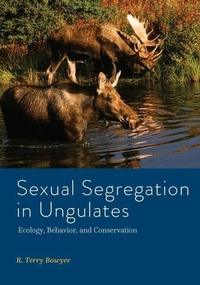
Sexual Segregation in Ungulates
Ecology, Behavior, and Conservation
Published on 10. January 2023
Book
Hardback
200 pages
978-1-4214-4506-9 (ISBN)
Description
Why does it benefit some male and female animals to live separately?
Winner of the Wildlife Society Publication Best Authored Book Award by The Wildlife Society
Sexual segregation, wherein the sexes of a species live apart for long periods of time, has far-reaching consequences for the ecology, behavior, and conservation of hooved mammals, which are called ungulates. Award-winning researcher R. Terry Bowyer has spent the past four decades unravelling the causes and consequences of this perplexing phenomenon by studying ungulates and the large carnivores that prey upon them.
In Sexual Segregation in Ungulates, Bowyer's critical, thought-provoking approach helps resolve long-standing disagreements concerning sexual segregation and offers future pathways for species and habitat conservation. He highlights important elements of the natural history of wild ungulate species, including bighorn sheep and elk. He then uses this perspective to frame and test hypotheses illuminating the motivations behind sexual segregation. He investigates the role of sexual segregation in mechanisms underpinning ungulate mating systems, sexual dimorphism, paternal behavior, and population dynamics.
Bowyer's research spans ecosystems from deserts to the Arctic and involves most species of ungulates inhabiting the North American continent. He also provides a timely review of sexual segregation for species of plants and other animals, including humans. Covering definitions, theory, findings, and practical applications of related study, Bowyer describes the behavioral patterns related to sexual segregation, explains how to detect these patterns, and considers the implications of sexual segregation for new approaches to conservation and management of ungulates and other species of wildlife.
This book is essential reading for scientists and all those interested in the conservation and management of species, including wildlife professionals, hunters, outdoor enthusiasts, and naturalists.
Winner of the Wildlife Society Publication Best Authored Book Award by The Wildlife Society
Sexual segregation, wherein the sexes of a species live apart for long periods of time, has far-reaching consequences for the ecology, behavior, and conservation of hooved mammals, which are called ungulates. Award-winning researcher R. Terry Bowyer has spent the past four decades unravelling the causes and consequences of this perplexing phenomenon by studying ungulates and the large carnivores that prey upon them.
In Sexual Segregation in Ungulates, Bowyer's critical, thought-provoking approach helps resolve long-standing disagreements concerning sexual segregation and offers future pathways for species and habitat conservation. He highlights important elements of the natural history of wild ungulate species, including bighorn sheep and elk. He then uses this perspective to frame and test hypotheses illuminating the motivations behind sexual segregation. He investigates the role of sexual segregation in mechanisms underpinning ungulate mating systems, sexual dimorphism, paternal behavior, and population dynamics.
Bowyer's research spans ecosystems from deserts to the Arctic and involves most species of ungulates inhabiting the North American continent. He also provides a timely review of sexual segregation for species of plants and other animals, including humans. Covering definitions, theory, findings, and practical applications of related study, Bowyer describes the behavioral patterns related to sexual segregation, explains how to detect these patterns, and considers the implications of sexual segregation for new approaches to conservation and management of ungulates and other species of wildlife.
This book is essential reading for scientists and all those interested in the conservation and management of species, including wildlife professionals, hunters, outdoor enthusiasts, and naturalists.
More details
Series
Language
English
Place of publication
Baltimore, MD
United States
Target group
Professional and scholarly
Product notice
sewn/stitched
Cloth over boards
Illustrations
43 s/w Abbildungen
43 Illustrations, black and white
Dimensions
Height: 256 mm
Width: 178 mm
Thickness: 18 mm
Weight
567 gr
ISBN-13
978-1-4214-4506-9 (9781421445069)
DOI
10.56021/9781421445076
Copyright in bibliographic data and cover images is held by Nielsen Book Services Limited or by the publishers or by their respective licensors: all rights reserved.
Schweitzer Classification
Other editions
Additional editions
E-Book
01/2023
Johns Hopkins University Press
€76.49
Available for download
Person
R. Terry Bowyer (ESTACADA, OR) is Professor Emeritus of Wildlife Ecology and senior research scientist at the Institute of Arctic Biology of the University of Alaska Fairbanks. He has received the Distinguished Moose Biologist Award, the O. C. Wallmo Award for his studies of mule deer, and the C. Hart Merriam Award for his outstanding contributions to the science of mammalogy.
Content
Preface
Acknowledgments
Chapter 1. Introduction and Overview
Historical Perspectives
Ungulate Characteristics and Relevant Aspects of Their Behavior, Ecology, and Conservation
Mating Systems
Predator Pits, Apparent Competition, and Territorial Regulation of Populations
Sexual Segregation in Plants and Animals
Chapter 2. Differences between the Sexes
Definitions of Sexual Segregation
Sexual Differences in Morphology, Physiology, and Foraging Behavior
Sexual Dimorphism
The Role of Resources and Predation Risk in Gregariousness
Chapter 3. Temporospatial Patterns
Defining Social Groups
Temporal Patterns of Sexual Segregation and Aggregation
Spatial Patterns of Sexual Segregation
Chapter 4. Detection and Measurement
Detecting Sexual Segregation
Measuring Sexual Segregation
Effects of Scale
Chapter 5. Failed Concepts
Setting Aside Rejected Hypotheses
Social Hypotheses
Ecological Hypotheses
Limiting Overutilization of Habitats
Chapter 6. The Role of Social Behavior
Social Aggression and Sexual Affinities
Activity Patterns
The Social-Constraints Hypothesis
Chapter 7. Ecological Aspects of Sexual Segregation
Competition Hypothesis
Gastrocentric Hypothesis
Niche-Partitioning Hypothesis
Predation-Risk Hypothesis
Multiple Causations and Tradeoffs
Chapter 8. Consequences of Sexual Segregation for Theory and Management
Paternal Investment and Sexual Selection
Population Dynamics
Chapter 9. Failing to Consider Sexual Segregation
Moose
North American Elk
White-Tailed Deer
Bighorn Sheep
Chapter 10. The Future
Defining Sexual Segregation
Why Is Sexual Segregation Overlooked?
Future Questions and Directions
Relevance to Other Organisms
Literature Cited
Index
Acknowledgments
Chapter 1. Introduction and Overview
Historical Perspectives
Ungulate Characteristics and Relevant Aspects of Their Behavior, Ecology, and Conservation
Mating Systems
Predator Pits, Apparent Competition, and Territorial Regulation of Populations
Sexual Segregation in Plants and Animals
Chapter 2. Differences between the Sexes
Definitions of Sexual Segregation
Sexual Differences in Morphology, Physiology, and Foraging Behavior
Sexual Dimorphism
The Role of Resources and Predation Risk in Gregariousness
Chapter 3. Temporospatial Patterns
Defining Social Groups
Temporal Patterns of Sexual Segregation and Aggregation
Spatial Patterns of Sexual Segregation
Chapter 4. Detection and Measurement
Detecting Sexual Segregation
Measuring Sexual Segregation
Effects of Scale
Chapter 5. Failed Concepts
Setting Aside Rejected Hypotheses
Social Hypotheses
Ecological Hypotheses
Limiting Overutilization of Habitats
Chapter 6. The Role of Social Behavior
Social Aggression and Sexual Affinities
Activity Patterns
The Social-Constraints Hypothesis
Chapter 7. Ecological Aspects of Sexual Segregation
Competition Hypothesis
Gastrocentric Hypothesis
Niche-Partitioning Hypothesis
Predation-Risk Hypothesis
Multiple Causations and Tradeoffs
Chapter 8. Consequences of Sexual Segregation for Theory and Management
Paternal Investment and Sexual Selection
Population Dynamics
Chapter 9. Failing to Consider Sexual Segregation
Moose
North American Elk
White-Tailed Deer
Bighorn Sheep
Chapter 10. The Future
Defining Sexual Segregation
Why Is Sexual Segregation Overlooked?
Future Questions and Directions
Relevance to Other Organisms
Literature Cited
Index