

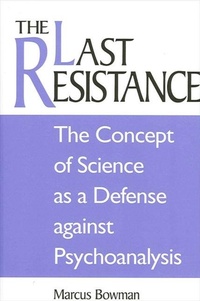
The Last Resistance
The Concept of Science as a Defense against Psychoanalysis
Published on 1. August 2002
Book
Paperback/Softback
191 pages
978-0-7914-5452-7 (ISBN)
Description
A fundamentally new examination of the controversies raging around psychoanalysis.
Radical and uncompromising, The Last Resistance is a penetrating rediscovery of the essential nature of psychoanalysis. Looking at the Freud wars in the historical context of the rise of modern science and the decline of traditional religion, it shows how outmoded notions of science are used as a resistance to the rational investigation of the self. Unashamedly partisan, this new examination of the controversies raging around psychoanalysis will prove compelling for readers of every faction in the Freudian conflicts.
Radical and uncompromising, The Last Resistance is a penetrating rediscovery of the essential nature of psychoanalysis. Looking at the Freud wars in the historical context of the rise of modern science and the decline of traditional religion, it shows how outmoded notions of science are used as a resistance to the rational investigation of the self. Unashamedly partisan, this new examination of the controversies raging around psychoanalysis will prove compelling for readers of every faction in the Freudian conflicts.
Reviews / Votes
"I like the author's impressive conceptual mastery of the recent criticisms of psychoanalysis and the philosophical power and nuance of his response to those criticisms. The book contains the most intelligent philosophical discussion of the writings on psychoanalysis by Popper, Gruenbaum, Webster, Sulloway, and Masson. Bowman also offers a brilliant analysis of Freud's supposed hermeneutic friends, Ricoeur and Lacan. Almost as a bonus, he gives an insightful treatment of Nietzsche's ideal of intention (as it relates to psychoanalysis). The book packs a terrific intellectual punch." - Paul Robinson, Stanford University"In a sort of tour de force, essay-like, accessible style, Bowman presents his views on the recent and ongoing debate on the 'scientific status' of psychoanalysis. He competently and persuasively takes on the critics of Freud-be they of the positivist camp, Popper, Gruenbaum, Webster, or of the more challenging authors, Lacan or Ricoeur-unearthing some of the underlying motives at work in 'downgrading' psychoanalysis to a 'pseudo-science' (or simply hermeneutics). Flowing from his central and very cogent counter-arguments against Freud's detractors, Bowman moves on to an impassioned plea for 'mental health' as being the task of enhancing a genuine sense of autonomous selfhood, which is being undermined by the anti-Freudians." - Leo Goldberger, coeditor of Ideas and Identities: The Life and Work of Erik Erikson
More details
Series
Language
English
Place of publication
Albany, NY
United States
Target group
College/higher education
Professional and scholarly
US School Grade: College Graduate Student and over
Product notice
Paperback (trade)
Dimensions
Height: 231 mm
Width: 150 mm
Thickness: 11 mm
Weight
259 gr
ISBN-13
978-0-7914-5452-7 (9780791454527)
Copyright in bibliographic data and cover images is held by Nielsen Book Services Limited or by the publishers or by their respective licensors: all rights reserved.
Schweitzer Classification
Other editions
Additional editions

E-Book
02/2012
State University of New York Press
€26.49
Available for download
Person
Marcus Bowman is a practicing psychotherapist living in Cork, Ireland.
Content
ACKNOWLEDGMENTS
1. INTRODUCTION: DEPTH PSYCHOLOGY AND THE PROBLEM OF SCIENCE
Science and the Corrosion of Tradition
Science and the Self
The Metaphors of Science
Science and Consensus
The Distortion of Defense
2. PLACING PSYCHOANALYSIS AS A SCIENCE
The Cartesian Separation of Mind from Science
Psychoanalysis and Hermeneutics
Freud's Own Remarks on the Classification of Psychoanalysis
3. NIETZSCHE AND THE CRITIQUE OF INTENTION
The Challenge to Dualism from Pragmatism
Nietzsche's Critique of Intention
Applications to Psychopathology
4. ISSUES FROM STUDIES ON HYSTERIA
Individuation and Neurosis
Breuer's Case of Anna O.
The Case of Elisabeth von R.
Catharsis and Psychoanalysis
5. DEFENSE AND THE PROBLEM OF IDENTITY
Defense and the Conflict between Hunger and Overabundance
Exception and Rule in Freudian Metapsychology
General Summary and Conclusion
NOTES
BIBLIOGRAPHY
INDEX
1. INTRODUCTION: DEPTH PSYCHOLOGY AND THE PROBLEM OF SCIENCE
Science and the Corrosion of Tradition
Science and the Self
The Metaphors of Science
Science and Consensus
The Distortion of Defense
2. PLACING PSYCHOANALYSIS AS A SCIENCE
The Cartesian Separation of Mind from Science
Psychoanalysis and Hermeneutics
Freud's Own Remarks on the Classification of Psychoanalysis
3. NIETZSCHE AND THE CRITIQUE OF INTENTION
The Challenge to Dualism from Pragmatism
Nietzsche's Critique of Intention
Applications to Psychopathology
4. ISSUES FROM STUDIES ON HYSTERIA
Individuation and Neurosis
Breuer's Case of Anna O.
The Case of Elisabeth von R.
Catharsis and Psychoanalysis
5. DEFENSE AND THE PROBLEM OF IDENTITY
Defense and the Conflict between Hunger and Overabundance
Exception and Rule in Freudian Metapsychology
General Summary and Conclusion
NOTES
BIBLIOGRAPHY
INDEX