

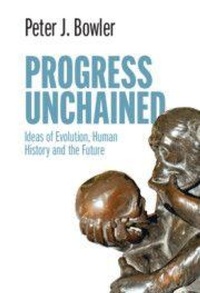
Progress Unchained
Ideas of Evolution, Human History and the Future
Published on 4. March 2021
Book
Hardback
314 pages
978-1-108-84255-6 (ISBN)
Description
Progress Unchained reinterprets the history of the idea of progress using parallels between evolutionary biology and changing views of human history. Early concepts of progress in both areas saw it as the ascent of a linear scale of development toward a final goal. The 'chain of being' defined a hierarchy of living things with humans at the head, while social thinkers interpreted history as a development toward a final paradise or utopia. Darwinism reconfigured biological progress as a 'tree of life' with multiple lines of advance not necessarily leading to humans, each driven by the rare innovations that generate entirely new functions. Popular writers such as H. G. Wells used a similar model to depict human progress, with competing technological innovations producing ever-more rapid changes in society. Bowler shows that as the idea of progress has become open-ended and unpredictable, a variety of alternative futures have been imagined.
Reviews / Votes
'From the antique idea of a Chain of Being to the continually branching Tree of Life, Bowler brings a lifetime of learning to the intellectual history of progress. Few could show us with such precision and clarity how progress came to be 'unchained', and what this history might mean for our own visions of the future.' Alison Bashford, University of New South Wales 'Evolutionary speculation has always been bound up with social ideas and hopes of progress. Peter Bowler argues that Charles Darwin altered the debate fundamentally, showing that evolution is no predetermined upward rise, but increasingly a function of human creativity. This wonderfully provocative book is as entertaining to read as its underlying erudition impresses. Highly recommended.' Michael Ruse, Professor Emeritus, University of Guelph 'In this timely and wide-ranging survey, a leading historian of evolutionary theory explores the doctrine of progress and the fate during the nineteenth and earlier twentieth centuries of pictures of an attainable utopia. Peter Bowler's study of writings in public science and science fiction provides fascinating reading for anyone interested in how models of what is to come changed in history and may change again.' Simon Schaffer, University of Cambridge '... the book is well written and altogether thought provoking.' J. L. Hunt, CHOICE 'Peter Bowler's most recent book adds to his long career and to his many authoritative studies of the history of ideas involving evolutionary theory from the 18th century to the present. His latest work presents an excellent survey of discussions on 'progress' writ large ... Bowler's survey of the intellectual history of the doctrine of progress over the past few centuries offers an authoritative and comprehensive account, whereas his more provocative thesis serves to generate some questions as well as productive discussion.' Stewart Kreitzer, Journal of the History of BiologyMore details
Language
English
Place of publication
Cambridge
United Kingdom
Product notice
sewn/stitched
Cloth over boards
Illustrations
Worked examples or Exercises
Dimensions
Height: 229 mm
Width: 160 mm
Thickness: 25 mm
Weight
588 gr
ISBN-13
978-1-108-84255-6 (9781108842556)
Copyright in bibliographic data and cover images is held by Nielsen Book Services Limited or by the publishers or by their respective licensors: all rights reserved.
Schweitzer Classification
Other editions
Additional editions
Book
approx. 05/2026
Cambridge University Press
Unfortunately, price unknown
Not yet published
E-Book
03/2021
Cambridge University Press
€29.49
Available for download
E-Book
02/2021
Cambridge University Press
€31.49
Available for download
Person
Peter J. Bowler is Emeritus Professor of the School of History, Anthropology, Politics and Philosophy at Queen's University Belfast.
Content
Preface; 1. Introduction: ladders and trees; Part I. The Ladder of Progress and the End of History: 2. From the chain of being to the ladder of creation; 3. The hierarchy of humanity; 4. Progress to paradise: Christianity, idealism and history; 5. Ascent to utopia: the quest for a perfect society; 6. End of an era?; Part II. Toward a World of Unlimited Possibilities: 7. Darwinian visions; 8. The uniqueness of humans; 9. Branching out: the evolution of civilizations; 10. Toward an uncertain future; 11. Epilogue: where did it all go wrong?; Bibliography.