

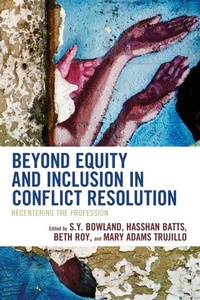
Beyond Equity and Inclusion in Conflict Resolution
Recentering the Profession
Published on 30. March 2022
Book
Hardback
336 pages
978-1-5381-6437-2 (ISBN)
Description
Beyond Equity and Inclusion in Conflict Resolution: Recentering the Profession examines the many ways racism manifests in a professional field. Useful for any field that recruits adherents and standardizes practices, this volume addresses how individuals, organizations, and institutions are shaped by and give shape to racially based exclusion. With contributions by 46 contributors, most of whom are people of color, this book offers a unique opportunity for readers to reach beyond assumptions, biases, and other limitations to change-bringing awareness.
Reviews / Votes
This timely and compelling book offers a valuable approach for addressing issues of systemic racism and oppression in the field of conflict resolution. The ideas are highly original and shed light on an important topic that is largely unacknowledged and certainly unaddressed. -- Tina Nabatchi, Director, Program for the Advancement of Research on Conflict and Collaboration, Syracuse University Centering the personal and the lived experiences of BIPoC people (and starting with the authors as both subjects and agents themselves) as well as recognizing the 'gate keeper' and 'legitimizing' nature of white-dominated academics and academic institutions, and the positionality of this text in relation to that, is refreshing. The approach used by the authors provides a starting point for (re)entering into the discourse on conflict transformation by way of raising up a different epistemology that continues to be suppressed, underrepresented, and devalued to the detriment of the field. -- Manuel Padilla, Collaborative governance facilitator, Portland State University Extraordinarily thoughtful, timely, and necessary.... This is a book that all of us need to read, to learn from, to discuss, and offer gratitude for having our eyes opened. -- Franklin Dukes, Distinguished Institute Fellow, Institute for Engagement and Negotiation, University of Virginia Penetrating and essential reading about inequalities in the field, offering deep insightsfor manifesting a more equitable future. This book is an invaluable call to action to make a necessary paradigm shift in conflict transformation work. It belongs in every course and training syllabus and to be actively engaged with to alter our institutions and practices. -- Leah Wing, Faculty, University of Massachusetts, Amherst This important book is for anyone interested in resolving conflict more equitably, and that is virtually everyone these days. It's a great resource for leaders, including HR professionals and others. It tackles a vital question: how to eliminate racism, cultural dominance, and institutional oppression in conflict resolution, and that includesrestorative justice, strategic peacebuilding, human security, conflict transformation, and more. The editors and writers represent uniquely diverse backgrounds and experiences, and write in forms as diverse as transcribed interviews, prose essays, poetry, and personal reflection. The result is unusual, delightful, and impactful. -- John Bourdeau, Professor Emeritus and Senior Research Scientist, University of Southern California Beyond Equity and Inclusion in Conflict Resolution is a much-needed compendium. You will likely feel validated by some essays and challenged by others; either way, this provocative collection will make you think. It's an important addition to the theory and practice of mediation. -- Douglas Stone, co-author, Difficult Conversations and lecturer on law at Harvard Law School, Co-author of Difficult Conversations and Thanks for the FeedbackMore details
Series
Language
English
Place of publication
United States
Publishing group
Bloomsbury Publishing Plc
Target group
Professional and scholarly
Illustrations
1 b/w illustration; 1 table
Dimensions
Height: 260 mm
Width: 183 mm
Thickness: 23 mm
Weight
828 gr
ISBN-13
978-1-5381-6437-2 (9781538164372)
Copyright in bibliographic data and cover images is held by Nielsen Book Services Limited or by the publishers or by their respective licensors: all rights reserved.
Schweitzer Classification
Other editions
Additional editions
S.Y. Bowland | Hasshan Batts | Beth Roy
Beyond Equity and Inclusion in Conflict Resolution
Recentering the Profession
E-Book
03/2022
1st Edition
Rowman & Littlefield Publishers
€32.99
Available for download
Persons
S.Y. Bowland, JD, is a founder of the Practitioners Research and Scholarship Institute and co-edited the anthology Re-Centering Culture and Knowledge in Conflict Resolution Practice. She was born and raised in Harlem and earned her J.D. from the National Law Center at George Washington University. She is a skilled ADR and Restorative Processes Practitioner. She has taught at the high school, undergraduate and graduate educational levels.
Hasshan Batts, DHSc, MSW, is a prison survivor, healer, son, father, brother, husband, grandfather and friend. Hasshan is a Community Epidemiologist, community based participatory researcher, and leading expert on Trauma Informed Care, Violence Prevention, Reentry and Community Engagement. Hasshan is the Executive Director of the Promise Neighborhoods of the Lehigh Valley, adjunct professor, Lehigh University post-doctoral Research fellow, Rider-Pool Collective Impact fellow, and a distinguished Robert Wood Johnson Culture of Health Leader. Hasshan has been featured in numerous interviews, documentaries and short films and he delivered a TEDX Talk on The Healing Power of Radical Welcome. Hasshan holds a joint MSW from North Carolina A&T and The University of North Carolina at Greensboro, a post graduate certificate in Global Health and Doctorate in Health Sciences from Nova Southeastern University in Florida.
Beth Roy, PhD, mediates organizations and communities confronting challenges to diversity. She teaches workshops on ways to talk and listen across differing identities. Her published works include Some Trouble with Cows: Making Sense of Social Conflict and 41 Shots...and Counting: What Amado Diallo Teaches Us about Policing, Race, and Justice. She co-edited the anthology Re-Centering Culture and Knowledge in Conflict Resolution Practice.. She is a co-founder of the Practitioners Research and Scholarship Institute.
Mary Adams Trujillo, PhD, is emeritus professor of intercultural communication and conflict transformation at North Park University. She is a co-founder of the Practitioners Research and Scholarship Institute and co-edited the anthology Re-Centering Culture and Knowledge in Conflict Resolution Practice. She conducts programs in intercultural dialogue and spiritual practice in community settings.
Hasshan Batts, DHSc, MSW, is a prison survivor, healer, son, father, brother, husband, grandfather and friend. Hasshan is a Community Epidemiologist, community based participatory researcher, and leading expert on Trauma Informed Care, Violence Prevention, Reentry and Community Engagement. Hasshan is the Executive Director of the Promise Neighborhoods of the Lehigh Valley, adjunct professor, Lehigh University post-doctoral Research fellow, Rider-Pool Collective Impact fellow, and a distinguished Robert Wood Johnson Culture of Health Leader. Hasshan has been featured in numerous interviews, documentaries and short films and he delivered a TEDX Talk on The Healing Power of Radical Welcome. Hasshan holds a joint MSW from North Carolina A&T and The University of North Carolina at Greensboro, a post graduate certificate in Global Health and Doctorate in Health Sciences from Nova Southeastern University in Florida.
Beth Roy, PhD, mediates organizations and communities confronting challenges to diversity. She teaches workshops on ways to talk and listen across differing identities. Her published works include Some Trouble with Cows: Making Sense of Social Conflict and 41 Shots...and Counting: What Amado Diallo Teaches Us about Policing, Race, and Justice. She co-edited the anthology Re-Centering Culture and Knowledge in Conflict Resolution Practice.. She is a co-founder of the Practitioners Research and Scholarship Institute.
Mary Adams Trujillo, PhD, is emeritus professor of intercultural communication and conflict transformation at North Park University. She is a co-founder of the Practitioners Research and Scholarship Institute and co-edited the anthology Re-Centering Culture and Knowledge in Conflict Resolution Practice. She conducts programs in intercultural dialogue and spiritual practice in community settings.
Content
TABLE OF CONTENTS
Acknowledgements
Introduction
SECTION ONE: HINDSIGHT
Introduction by Beth Roy
Chapter One: Aggregating Wisdom, Amplifying Voices by Cherise D. Hairston
Chapter Two: Rage is NOT an Option by Nadine Tafoya
Chapter Three: Achieving Belonging and Connectedness by Cheryl Jamison
Chapter Four: The Method IS the Message by Roberto Chene
Chapter Five: Whiteness in Academia by Pushpa Iyer
Chapter Six: The State of Rights and Dreams by Benjamin Davis
Chapter Seven: The Soft Technology of Control by Beth Roy
Chapter Eight: Cultural Appropriation vs. Cultural Learning by Lucy Moore
Chapter Nine: "Kareem was killed long before the trigger was pulled...and we are all complicit" by Hasshan Batts & Jeani Garcia
Chapter Ten: Letter from a white editor to her white readers by Beth Roy
SECTION TWO: INSIGHT
We by Rubye Howard Braye
Introduction by S.Y. Bowland
Chapter Eleven: Vision of Inclusive Knowledge
Embracing the Good: Taking a Risk by Maria Volpe
Writing a Multicultural Choir by Dwight L. Wilson
Message to Credible Messengers by Hasshan Batts
What Rule Do You Need an Exception To? by S.Y. Bowland
Chapter Twelve: Vision of Expansive Culture
Responsibilities of a White Justice Fighter by Jeff Hitchcock
The Jig is Up! Movement by Johnnie Mitchell
Vision for Justice by Michelle Armster
Chapter Thirteen: Vision of Power-Sharing Organizations
Achieving Solidarity in Decolonization by tom kunesh, S.Y. Bowland, Ji Choe, Jorge Morales & Diego Navarro
Inspired by Celeste Brock
Bring Your Magnificence by S.Y. Bowland
ancestors by Frank Eugene Hall
Chapter Fourteen: Vision of Welcoming Institutions
Dignity, Respect and Healing in a Diseased World by Diane Ciccone
Verdict by Mary L. Jones Wade
Chapter Fifteen: Vision of Equitable Practices
In Search of Academic Freedom by Angie Beeman & Tsedale M. Melaku
How are we in the world? by S.Y. Bowland
Chapter Sixteen: Vision of Seeing the Invisible Context of Oppression
the mudang sends the missionary home by Ji Choe
Chapter Seventeen: Vision of Action
An End to Myths and Hypocrisy by James Ciccone
Where Can I Say It? By Laurie F. Childers
SECTION THREE: FORESIGHT
Introduction by Mary Adams Trujillo
Chapter Eighteen: In the Beginning: Setting the Context
Truth and (re)Conciliation by Mark Charles
Birthing a Nation by Jonathan Webb
Chapter Nineteen: Shifting Paradigms
Shifting Paradigms by Beth Roy, Roberto Chene, John Paul Lederach, S.Y. Bowland & Mary Adams Trujillo
One Hundred Years From Now? You May Not Be There by Grande Lum
Chapter Twenty: Keepers of Tears
Writing as Conflict Resolution Practice by Laurene Miller Patterson
Performance as Conflict Resolution Practice by Jada Gee
Chapter Twenty-one: "We need to elder better"
Digging Out After Atlanta by Tomi Nagai-Rothe
Chapter Twenty-two: Transformative Pedagogies
We teach to change the world by Barbara L. Jones & Mary Adams Trujillo
Decentering Power, Centering Stories by Michelle Clifton Soderstrom, Jamal Bakr & Henry Cervantes
Chapter Twenty-three: Restorative Justice: What Is It Really?
Sticking to Doing Things the Way We Always Have, Even When We Know It's Not Working by Tonya Covington
Can Restorative justice Make Young, Black lives Matter in Schools? by Johonna R. McCants-Turner
Chapter Twenty-four: Hope and Healing
Politics of Hope and Healing: Lessons from Chicago by Gerson Ramirez & Henry Cervantes
Chapter Twenty-five: Credible Witnesses and Testimonies
Heart Work by Rayshauna Gray
Radical Welcome by Hasshan Batts
Chapter Twenty-six: Walking by Faith
Fierce Love by Cherice Bock
Morning Musing by Velda Love
Conclusion
Acknowledgements
Introduction
SECTION ONE: HINDSIGHT
Introduction by Beth Roy
Chapter One: Aggregating Wisdom, Amplifying Voices by Cherise D. Hairston
Chapter Two: Rage is NOT an Option by Nadine Tafoya
Chapter Three: Achieving Belonging and Connectedness by Cheryl Jamison
Chapter Four: The Method IS the Message by Roberto Chene
Chapter Five: Whiteness in Academia by Pushpa Iyer
Chapter Six: The State of Rights and Dreams by Benjamin Davis
Chapter Seven: The Soft Technology of Control by Beth Roy
Chapter Eight: Cultural Appropriation vs. Cultural Learning by Lucy Moore
Chapter Nine: "Kareem was killed long before the trigger was pulled...and we are all complicit" by Hasshan Batts & Jeani Garcia
Chapter Ten: Letter from a white editor to her white readers by Beth Roy
SECTION TWO: INSIGHT
We by Rubye Howard Braye
Introduction by S.Y. Bowland
Chapter Eleven: Vision of Inclusive Knowledge
Embracing the Good: Taking a Risk by Maria Volpe
Writing a Multicultural Choir by Dwight L. Wilson
Message to Credible Messengers by Hasshan Batts
What Rule Do You Need an Exception To? by S.Y. Bowland
Chapter Twelve: Vision of Expansive Culture
Responsibilities of a White Justice Fighter by Jeff Hitchcock
The Jig is Up! Movement by Johnnie Mitchell
Vision for Justice by Michelle Armster
Chapter Thirteen: Vision of Power-Sharing Organizations
Achieving Solidarity in Decolonization by tom kunesh, S.Y. Bowland, Ji Choe, Jorge Morales & Diego Navarro
Inspired by Celeste Brock
Bring Your Magnificence by S.Y. Bowland
ancestors by Frank Eugene Hall
Chapter Fourteen: Vision of Welcoming Institutions
Dignity, Respect and Healing in a Diseased World by Diane Ciccone
Verdict by Mary L. Jones Wade
Chapter Fifteen: Vision of Equitable Practices
In Search of Academic Freedom by Angie Beeman & Tsedale M. Melaku
How are we in the world? by S.Y. Bowland
Chapter Sixteen: Vision of Seeing the Invisible Context of Oppression
the mudang sends the missionary home by Ji Choe
Chapter Seventeen: Vision of Action
An End to Myths and Hypocrisy by James Ciccone
Where Can I Say It? By Laurie F. Childers
SECTION THREE: FORESIGHT
Introduction by Mary Adams Trujillo
Chapter Eighteen: In the Beginning: Setting the Context
Truth and (re)Conciliation by Mark Charles
Birthing a Nation by Jonathan Webb
Chapter Nineteen: Shifting Paradigms
Shifting Paradigms by Beth Roy, Roberto Chene, John Paul Lederach, S.Y. Bowland & Mary Adams Trujillo
One Hundred Years From Now? You May Not Be There by Grande Lum
Chapter Twenty: Keepers of Tears
Writing as Conflict Resolution Practice by Laurene Miller Patterson
Performance as Conflict Resolution Practice by Jada Gee
Chapter Twenty-one: "We need to elder better"
Digging Out After Atlanta by Tomi Nagai-Rothe
Chapter Twenty-two: Transformative Pedagogies
We teach to change the world by Barbara L. Jones & Mary Adams Trujillo
Decentering Power, Centering Stories by Michelle Clifton Soderstrom, Jamal Bakr & Henry Cervantes
Chapter Twenty-three: Restorative Justice: What Is It Really?
Sticking to Doing Things the Way We Always Have, Even When We Know It's Not Working by Tonya Covington
Can Restorative justice Make Young, Black lives Matter in Schools? by Johonna R. McCants-Turner
Chapter Twenty-four: Hope and Healing
Politics of Hope and Healing: Lessons from Chicago by Gerson Ramirez & Henry Cervantes
Chapter Twenty-five: Credible Witnesses and Testimonies
Heart Work by Rayshauna Gray
Radical Welcome by Hasshan Batts
Chapter Twenty-six: Walking by Faith
Fierce Love by Cherice Bock
Morning Musing by Velda Love
Conclusion