

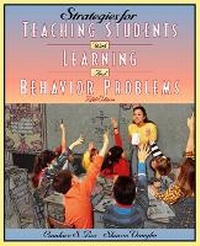
Strategies for Teaching Students with Learning and Behavioral Problems
5th Edition
Published on 28. February 2002
Book
Paperback/Softback
556 pages
978-0-205-34195-5 (ISBN)
Description
Strategies for Teaching Students with Learning and Behavior Problems continues to provide in-depth descriptions of methods and strategies for teaching students, managing professional roles, and collaborating with families, professionals, and paraprofessionals.
This new edition features an increased emphasis on secondary level students by adding a new chapter on "Transition Planning and Life Skills/Transition Education." The authors have also integrated technology throughout the text with the addition of Tech Talks and relevant Websites. Additional emphasis has been placed on monitoring student progress and teaching diverse students throughout the book.
The book has been updated with regard to IDEA '97 and the March '99 implementation regulations and the use of research-based practices, with the chapters on reading being completely revised to reflect new research on teaching phonological awareness, the alphabetic principle, word analysis, and the chapter on socialization, revised to emphasize positive behavioral supports school-wide and within classrooms.
This new edition features an increased emphasis on secondary level students by adding a new chapter on "Transition Planning and Life Skills/Transition Education." The authors have also integrated technology throughout the text with the addition of Tech Talks and relevant Websites. Additional emphasis has been placed on monitoring student progress and teaching diverse students throughout the book.
The book has been updated with regard to IDEA '97 and the March '99 implementation regulations and the use of research-based practices, with the chapters on reading being completely revised to reflect new research on teaching phonological awareness, the alphabetic principle, word analysis, and the chapter on socialization, revised to emphasize positive behavioral supports school-wide and within classrooms.
More details
Edition
5th edition
Language
English
Place of publication
United States
Publishing group
Pearson Education (US)
Target group
Professional and scholarly
Dimensions
Height: 235 mm
Width: 192 mm
Thickness: 20 mm
Weight
957 gr
ISBN-13
978-0-205-34195-5 (9780205341955)
Copyright in bibliographic data and cover images is held by Nielsen Book Services Limited or by the publishers or by their respective licensors: all rights reserved.
Schweitzer Classification
Other editions
New editions
Candace S. Bos | Sharon R. Vaughn
Strategies for Teaching Students with Learning and Behavior Problems
Book
06/2005
6th Edition
Pearson
€79.41
Article exhausted; check for reprint
Previous edition
Candace S. Bos | Sharon R. Vaughn
Strategies for Teaching Students with Learning and Behavior Problems
Book
09/1997
4th Edition
Pearson
€69.51
Article exhausted; check for reprint
Content
Most chapters conclude with "Think and Apply," "Summary," "Websites," and "Instructional Activities."
1. The Teaching-Learning Process.
What Are the Characteristics of Students with Learning and Behavior Problems?
What Factors Should Be Considered When Determining How Serious a Learning and Behavior Problem Is?
What Learning and Educational Environments Are Available for Students with Learning and Behavior Problems?
Mainstreaming Special Education Students.
Mainstreaming and Inclusion.
Developing an Individualized Education Program.
How Do Teachers Teach Students with Learning and Behavior Problems?
Features of Effective Instruction.
Designing Instruction.
Invitations for Learning.
2. Approaches to Learning and Teaching.
Operant Learning and Applied Behavior Analysis.
Cognitive Strategy Instruction.
Sociocultural Theory of Cognitive Development.
Information Processing and Schema Theories.
3. Oral Language.
Content of Language Instruction.
Guidelines for Teaching Language.
Planning Instruction for Students Who Are Culturally and Linguistically Diverse (CLD).
Metalinquistics.
4. Reading: Phonological Awareness, Alphabetic Principle, and Word Recognition.
Reading and Reading Instruction.
Phonological Awareness, Letter-Sound Correspondence, and Alphabetic Principle.
Word Recognition, Decoding, and Word Study.
Teaching Word Recognition and Word Study.
5. Reading: Fluency and Comprehension.
Teaching Fluency.
Teaching Comprehension.
6. Written Expression.
Teaching the Writing Process.
Teaching Spelling.
Teaching Handwriting.
7. Content Area Learning and Study Skills.
Teaching Content Area Information and Vocabulary.
Making Adaptations.
Study Skills and Learning Strategies.
8. Mathematics.
Factors Influencing Math Ability.
Teaching Perspectives.
Curriculum Based Measurement.
Prenumber Skills.
Numeration and Place Value.
Computation: Addition, Subtraction, Multiplication, Division.
Fractions.
Measurement.
Problem Solving.
Approaches to Increasing Math Performance.
Focus on Real-World Mathematics.
Curriculum and Materials.
9. Socialization and Classroom Management.
Social Competence and Social Difficulties.
Intervention Strategies.
10. Transition Planning and Life Skills Education by James Patton, Ph.D.
Case Study: "Ken".
Fundamental Issues Related to Transition.
Overriding Themes of Transition.
Transition Education.
Transition Planning Process.
Instructional Considerations by Domain of Adulthood.
Recommended Timeline for Transition Planning Process.
11. Coordinating Instruction, Collaborating, and Co-Teaching.
Getting Started.
Challenges to Successful Inclusion and Co-Teaching.
Consultation and Collaboration.
12. Communicating with Parents and Professionals.
Communication Skills.
Working with Parents.
Working with Professionals.
Appendix A: Educational Publishers.
Appendix B: Educational Computer Software and Multimedia Publishers.
References.
Index.
1. The Teaching-Learning Process.
What Are the Characteristics of Students with Learning and Behavior Problems?
What Factors Should Be Considered When Determining How Serious a Learning and Behavior Problem Is?
What Learning and Educational Environments Are Available for Students with Learning and Behavior Problems?
Mainstreaming Special Education Students.
Mainstreaming and Inclusion.
Developing an Individualized Education Program.
How Do Teachers Teach Students with Learning and Behavior Problems?
Features of Effective Instruction.
Designing Instruction.
Invitations for Learning.
2. Approaches to Learning and Teaching.
Operant Learning and Applied Behavior Analysis.
Cognitive Strategy Instruction.
Sociocultural Theory of Cognitive Development.
Information Processing and Schema Theories.
3. Oral Language.
Content of Language Instruction.
Guidelines for Teaching Language.
Planning Instruction for Students Who Are Culturally and Linguistically Diverse (CLD).
Metalinquistics.
4. Reading: Phonological Awareness, Alphabetic Principle, and Word Recognition.
Reading and Reading Instruction.
Phonological Awareness, Letter-Sound Correspondence, and Alphabetic Principle.
Word Recognition, Decoding, and Word Study.
Teaching Word Recognition and Word Study.
5. Reading: Fluency and Comprehension.
Teaching Fluency.
Teaching Comprehension.
6. Written Expression.
Teaching the Writing Process.
Teaching Spelling.
Teaching Handwriting.
7. Content Area Learning and Study Skills.
Teaching Content Area Information and Vocabulary.
Making Adaptations.
Study Skills and Learning Strategies.
8. Mathematics.
Factors Influencing Math Ability.
Teaching Perspectives.
Curriculum Based Measurement.
Prenumber Skills.
Numeration and Place Value.
Computation: Addition, Subtraction, Multiplication, Division.
Fractions.
Measurement.
Problem Solving.
Approaches to Increasing Math Performance.
Focus on Real-World Mathematics.
Curriculum and Materials.
9. Socialization and Classroom Management.
Social Competence and Social Difficulties.
Intervention Strategies.
10. Transition Planning and Life Skills Education by James Patton, Ph.D.
Case Study: "Ken".
Fundamental Issues Related to Transition.
Overriding Themes of Transition.
Transition Education.
Transition Planning Process.
Instructional Considerations by Domain of Adulthood.
Recommended Timeline for Transition Planning Process.
11. Coordinating Instruction, Collaborating, and Co-Teaching.
Getting Started.
Challenges to Successful Inclusion and Co-Teaching.
Consultation and Collaboration.
12. Communicating with Parents and Professionals.
Communication Skills.
Working with Parents.
Working with Professionals.
Appendix A: Educational Publishers.
Appendix B: Educational Computer Software and Multimedia Publishers.
References.
Index.