

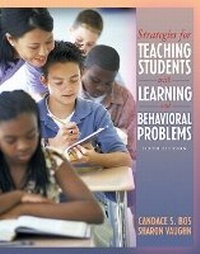
Strategies for Teaching Students with Learning and Behavior Problems
6th Edition
Published on 9. June 2005
Book
Paperback/Softback
592 pages
978-0-205-40772-9 (ISBN)
Description
The latest edition of this bestselling text,Strategies for Teaching Students with Learning and Behavior Problems provides practical, immediately-useful strategies for teaching students, managing professional responsibilities, and collaborating with family and other educators.
A practical guide for graduate and undergraduate students, this book is based on current research on the best practices for providing instructional and support services to students with learning and behavior problems in a variety of settings. The sixth edition contains more applied teaching strategies than ever before. There is also an increased integration and emphasis on the topics of progress monitoring and assessment, diversity and English language learners, and family involvement, discussion of which are highlighted by icons throughout the text.
A practical guide for graduate and undergraduate students, this book is based on current research on the best practices for providing instructional and support services to students with learning and behavior problems in a variety of settings. The sixth edition contains more applied teaching strategies than ever before. There is also an increased integration and emphasis on the topics of progress monitoring and assessment, diversity and English language learners, and family involvement, discussion of which are highlighted by icons throughout the text.
More details
Edition
6th edition
Language
English
Place of publication
United States
Publishing group
Pearson Education (US)
Target group
Professional and scholarly
Dimensions
Height: 276 mm
Width: 214 mm
Thickness: 23 mm
Weight
1194 gr
ISBN-13
978-0-205-40772-9 (9780205407729)
Copyright in bibliographic data and cover images is held by Nielsen Book Services Limited or by the publishers or by their respective licensors: all rights reserved.
Schweitzer Classification
Other editions
New editions
Candace S. Bos
Strategies for Teaching Students with Learning and Behavior Problems (with MyLab Education)
International Edition
Book
07/2008
7th Edition
Pearson
€92.99
Article exhausted; check for reprint
Previous edition
Candace S. Bos | Sharon R. Vaughn
Strategies for Teaching Students with Learning and Behavioral Problems
Book
02/2002
5th Edition
Pearson
€76.94
Article exhausted; check for reprint
Content
II. UNDERSTANDING STUDENTS WITH LEARNING AND BEHAVIOR PROBLEMS.
1. The Teaching-Learning Process.
What Are the Characteristics of Students with Learning and Behavior Problems?
What Factors Should Be Considered When Determining How Serious a Learning or Behavior Problem Is?
What Are the Defining Features of Special Education?
What Learning and Educational Environments Are Available for Students with Learning and Behavior Problems?
Including Special Education Students.
Mainstreaming and Inclusion.
Developing an Individualized Education Program.
Developing a Functional Behavioral Assessment.
How Do Teachers Teach Students with Learning and Behavior Problems?
Features of Effective Instruction.
Designing Instruction.
Delivering Instruction.
Response to Intervention (RTI) as a Means of Identifying Students with Learning Disabilities.
Chapter 2: Approaches to Learning and Teaching.
Operant Learning and Applied Behavior Analysis.
Cognitive Strategy Instruction.
Sociocultural Theory of Cognitive Development.
Information Processing and Schema Theories.
II. INSTRUCTING STUDENTS WITH LEARNING AND BEHAVIOR PROBLEMS.
3. Oral Language.
Content of Language Instruction.
Guidelines for Teaching Language.
Planning Instruction For Students Who are Culturally and Linguistically Diverse (Cld).
Metalinguistics.
Working With The Speech-Language Teacher.
Working With Parents To Extend Language Concepts.
4. Reading: Phonological Awareness, Alphabetic Principle, and Word Recognition.
Reading and Reading Instruction.
Phonological Awareness, Letter-Sound Correspondence, and the Alphabetic Principle.
Word Identification, Decoding, and Word Study.
Teaching Phonics, Word Recognition, and Word Study.
5. Reading: Fluency and Comprehension.
Teaching Fluency.
Teaching Comprehension.
6. Written Expression.
Teaching The Writing Process.
Teaching Spelling.
Teaching Handwriting.
Chapter 7. Content Area Learning and Vocabulary Instruction.
Teaching Content Area Information and Vocabulary.
Making Adaptations.
Study Skills and Learning Strategies.
8. Mathematics.
Factors Influencing Math Ability.
Assessing Mathematics Performance.
Prenumber Skills.
Numeration And Place Value.
Computation: Addition, Subtraction, Multiplication, Division.
Fractions.
Measurement.
Problem Solving.
How to Help Parents Help their Children with Mathematics.
Approaches to Increasing Math Performance.
Focus on Real-World Mathematics.
Curriculum and Materials.
III. ORGANIZING AND PLANNING INSTRUCTION FOR STUDENTS WITH LEARNING AND BEHAVIOR PROBLEMS.
9. Socialization and Classroom Management.
Social Competence and Social Difficulties.
Intervention Strategies.
10. Transition Planning and Life Skills/Transition Education (contributed by James R. Patton).
Fundamental Issues Related to Transition.
Transition Education.
Transition Planning Process.
11. Coordinating Instruction, Collaborating, and Co-teaching.
Getting Started.
Challenges to Successful Inclusion and Co-teaching.
Consultation and Collaboration.
12. Communicating with Parents and Professionals.
Communication Skills.
Working with Parents.
Working with Professionals.
1. The Teaching-Learning Process.
What Are the Characteristics of Students with Learning and Behavior Problems?
What Factors Should Be Considered When Determining How Serious a Learning or Behavior Problem Is?
What Are the Defining Features of Special Education?
What Learning and Educational Environments Are Available for Students with Learning and Behavior Problems?
Including Special Education Students.
Mainstreaming and Inclusion.
Developing an Individualized Education Program.
Developing a Functional Behavioral Assessment.
How Do Teachers Teach Students with Learning and Behavior Problems?
Features of Effective Instruction.
Designing Instruction.
Delivering Instruction.
Response to Intervention (RTI) as a Means of Identifying Students with Learning Disabilities.
Chapter 2: Approaches to Learning and Teaching.
Operant Learning and Applied Behavior Analysis.
Cognitive Strategy Instruction.
Sociocultural Theory of Cognitive Development.
Information Processing and Schema Theories.
II. INSTRUCTING STUDENTS WITH LEARNING AND BEHAVIOR PROBLEMS.
3. Oral Language.
Content of Language Instruction.
Guidelines for Teaching Language.
Planning Instruction For Students Who are Culturally and Linguistically Diverse (Cld).
Metalinguistics.
Working With The Speech-Language Teacher.
Working With Parents To Extend Language Concepts.
4. Reading: Phonological Awareness, Alphabetic Principle, and Word Recognition.
Reading and Reading Instruction.
Phonological Awareness, Letter-Sound Correspondence, and the Alphabetic Principle.
Word Identification, Decoding, and Word Study.
Teaching Phonics, Word Recognition, and Word Study.
5. Reading: Fluency and Comprehension.
Teaching Fluency.
Teaching Comprehension.
6. Written Expression.
Teaching The Writing Process.
Teaching Spelling.
Teaching Handwriting.
Chapter 7. Content Area Learning and Vocabulary Instruction.
Teaching Content Area Information and Vocabulary.
Making Adaptations.
Study Skills and Learning Strategies.
8. Mathematics.
Factors Influencing Math Ability.
Assessing Mathematics Performance.
Prenumber Skills.
Numeration And Place Value.
Computation: Addition, Subtraction, Multiplication, Division.
Fractions.
Measurement.
Problem Solving.
How to Help Parents Help their Children with Mathematics.
Approaches to Increasing Math Performance.
Focus on Real-World Mathematics.
Curriculum and Materials.
III. ORGANIZING AND PLANNING INSTRUCTION FOR STUDENTS WITH LEARNING AND BEHAVIOR PROBLEMS.
9. Socialization and Classroom Management.
Social Competence and Social Difficulties.
Intervention Strategies.
10. Transition Planning and Life Skills/Transition Education (contributed by James R. Patton).
Fundamental Issues Related to Transition.
Transition Education.
Transition Planning Process.
11. Coordinating Instruction, Collaborating, and Co-teaching.
Getting Started.
Challenges to Successful Inclusion and Co-teaching.
Consultation and Collaboration.
12. Communicating with Parents and Professionals.
Communication Skills.
Working with Parents.
Working with Professionals.