

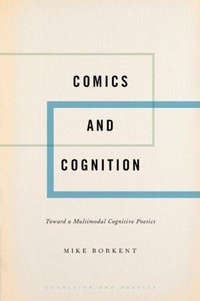
Comics and Cognition
Toward a Multimodal Cognitive Poetics
Published on 18. January 2024
Book
Hardback
304 pages
978-0-19-750978-4 (ISBN)
Description
Comics and Cognition develops an analytical approach to multimodal communication in comics through insights from embodied cognitive science, especially cognitive linguistics and visual psychology. Mike Borkent extends previous cognitive poetic frameworks to the study of multimodality in comics, providing a cohesive analytical framework that connects comics to other literary and artistic interests. His approach highlights the embodiment of cognition, a process which structures knowledge in long term memory, and activates it through perception, mental simulation, and blending. These cognitive processes allow readers to make impressions, predictions, inferences, and eventually conclusions about a text. Many of these layers of reader comprehension are unconscious but emerge into a conscious experience of the multimodal text with a richly construed and nuanced texture.
This book unpacks the dynamic interplay between the reader and the multimodal text throughout the processes of reading, including opportunities for interaction, interrogation, and improvisation of meaning derived from the reader's embodied and textual experiences, tackling crucial features of the comics form, and their impact on such issues as viewpoint, temporality, abstraction, metacommentary, and transmediation. The proposed multimodal cognitive poetics applies to narrative and art comics, in both print and digital media.
This book unpacks the dynamic interplay between the reader and the multimodal text throughout the processes of reading, including opportunities for interaction, interrogation, and improvisation of meaning derived from the reader's embodied and textual experiences, tackling crucial features of the comics form, and their impact on such issues as viewpoint, temporality, abstraction, metacommentary, and transmediation. The proposed multimodal cognitive poetics applies to narrative and art comics, in both print and digital media.
More details
Series
Language
English
Place of publication
New York
United States
Target group
College/higher education
Product notice
sewn/stitched
Cloth over boards
Dimensions
Height: 226 mm
Width: 160 mm
Thickness: 38 mm
Weight
499 gr
ISBN-13
978-0-19-750978-4 (9780197509784)
Copyright in bibliographic data and cover images is held by Nielsen Book Services Limited or by the publishers or by their respective licensors: all rights reserved.
Schweitzer Classification
Other editions
Additional editions
E-Book
10/2023
OUP eBook
€57.99
Available for download
E-Book
10/2023
OUP eBook
€57.99
Available for download
Person
Mike Borkent is an independent researcher and former lecturer at the University of British Columbia. He co-edited Language and the Creative Mind and has published a range of articles and chapters on comics, visual poetry, and Canadian and Indigenous literatures from a cognitive poetic perspective.
Content
Acknowledgements
List of Figures
List of Tables Chapter 1 - Introduction Chapter 2 - How to Talk About Comics and Not Fear Them: Literacies, Fallacies, and Modalities Chapter 3 - Multimodality and Cognition: Perception, Knowledge Networks, and the Construction of Meaning Chapter 4 - Paneling Construal and Viewpoint: Abstractions, Bodies, and Synaesthetic Forms Chapter 5 - Expanded Viewpoint Networks: Metonymies, Metaphors, and Other Blends Chapter 6 - Temporalities: Metaphors, Modalities, and Arrangements Chapter 7 - Spatial Conceptualizations: Layout as Viewpoint and Narrative Strategy in The Underwater Welder Chapter 8 - Abstraction and Experimentation in Comics: Improvisation and Meaning Chapter 9 - Conclusions and Extensions: Expanding Multimodal Cognitive Poetics through Digital Comics References
List of Figures
List of Tables Chapter 1 - Introduction Chapter 2 - How to Talk About Comics and Not Fear Them: Literacies, Fallacies, and Modalities Chapter 3 - Multimodality and Cognition: Perception, Knowledge Networks, and the Construction of Meaning Chapter 4 - Paneling Construal and Viewpoint: Abstractions, Bodies, and Synaesthetic Forms Chapter 5 - Expanded Viewpoint Networks: Metonymies, Metaphors, and Other Blends Chapter 6 - Temporalities: Metaphors, Modalities, and Arrangements Chapter 7 - Spatial Conceptualizations: Layout as Viewpoint and Narrative Strategy in The Underwater Welder Chapter 8 - Abstraction and Experimentation in Comics: Improvisation and Meaning Chapter 9 - Conclusions and Extensions: Expanding Multimodal Cognitive Poetics through Digital Comics References