

The Book of Miracles
Published on 21. November 2013
Book
Hardback
560 pages
978-3-8365-4285-2 (ISBN)
Description
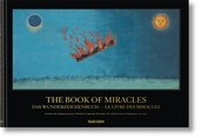
Apocalypse then. This title features newly uncovered illuminations from the Renaissance depicting miraculous phenomena. The Book of Miracles that first surfaced a few years ago and recently made its way into an American private collection is one of the most spectacular new discoveries in the field of Renaissance art. The nearly complete surviving illustrated manuscript, which was created in the Swabian Imperial Free City of Augsburg around 1550, is composed of 169 pages with large-format illustrations in gouache and watercolor depicting wondrous and often eerie celestial phenomena, constellations, conflagrations, and floods as well as other catastrophes and occurrences. It deals with events ranging from the creation of the world and incidents drawn from the Old Testament, ancient tradition, and medieval chronicles to those that took place in the immediate present of the book's author and, with the illustrations of the visionary Book of Revelation, even includes the future end of the world.
The surprisingly modern-looking, sometimes hallucinatory illustrations and the cursory descriptions of the Book of Miracles strikingly convey a unique view of the concerns and anxieties of the 16th century, of apocalyptic thinking and eschatological expectation. The present facsimile volume reproduces the Book of Miracles in its entirety for the first time and thus makes one of the most important works of the German Renaissance finally available to art lovers and scholars. The introduction puts the codex in its cultural and historical context, and an extensive description of the manuscript and its miniatures, as well as a complete transcript of the text, accompany the facsimile in an appendix.
The surprisingly modern-looking, sometimes hallucinatory illustrations and the cursory descriptions of the Book of Miracles strikingly convey a unique view of the concerns and anxieties of the 16th century, of apocalyptic thinking and eschatological expectation. The present facsimile volume reproduces the Book of Miracles in its entirety for the first time and thus makes one of the most important works of the German Renaissance finally available to art lovers and scholars. The introduction puts the codex in its cultural and historical context, and an extensive description of the manuscript and its miniatures, as well as a complete transcript of the text, accompany the facsimile in an appendix.
More details
Other editions
New editions

Joshua P. Waterman | Till-Holger Borchert
The Book of Miracles
Das Wunderzeichenbuch/Le Livre Des Miracles
Book
05/2017
TASCHEN
€50.00
Available immediately
Persons
Till-Holger Borchert studierte Kunstgeschichte, Musikwissenschaften und Deutsche Literatur an den Universitäten von Bonn und Bloomington (IN). Der anerkannte Experte der altniederländischen Malerei leitet seit 2002 das Groeningemuseum in Brügge. Er kuratierte zahlreiche kunst- und kulturhistorische Ausstellungen, u. a. in Brüssel, Maastricht, Rotterdam, Madrid und New York. Borchert unterrichtete Kunstgeschichte an den Universitäten von Aachen und Memphis (TN) und leitet das Flämische Forschungszentrum zur Kunst in den Burgundischen Niederlanden.Joshua P. Waterman studied art history and literature at Princeton University, where he received a Ph.D. for his dissertation on the correlation between literature and painting of the Silesian Baroque period. The proven expert for German Renaissance art worked at the Metropolitan Museum of Art in New York and was an Andrew Mellon Fellow at the Philadelphia Museum of Art. He is currently working as a research assistant at the Germanisches Nationalmuseum in Nuremberg. Joshua P. Waterman has collaborated on several international exhibitions, including in New York, Philadelphia, Cologne and Bruges.