

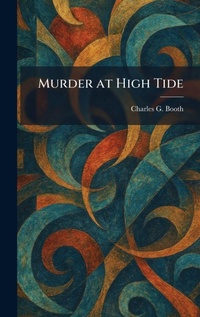
Murder at High Tide
Description
"Murder at High Tide" is a classic mystery novel that captures the essence of Golden Age detective fiction. Set in an era of sophisticated suspense, the story centers on a calculated crime and the meticulous investigation required to solve it. Charles G. Booth weaves a narrative filled with atmosphere and intrigue, inviting readers to explore a world where appearances are often deceiving and every clue counts.
As the plot unfolds, the work demonstrates the intricate craftsmanship and logical deduction that defined early 20th-century crime literature. The tension builds alongside the coastal setting, reflecting both the title's literal and metaphorical implications. "Murder at High Tide" stands as a compelling example of the traditional mystery genre, offering a puzzle that challenges the intellect while maintaining a brisk and engaging pace. This work remains a significant contribution to the mystery canon, highlighting Booth's talent for creating enduring tales of murder and detection.
This work has been selected by scholars as being culturally important, and is part of the knowledge base of civilization as we know it. This work was reproduced from the original artifact, and remains as true to the original work as possible. Therefore, you may see the original copyright references, library stamps (as most of these works have been housed in our most important libraries around the world), and other notations in the work.
This work is in the public domain in the United States of America, and possibly other nations. Within the United States, you may freely copy and distribute this work, as no entity (individual or corporate) has a copyright on the body of the work.
As a reproduction of a historical artifact, this work may contain missing or blurred pages, poor pictures, errant marks, etc. Scholars believe, and we concur, that this work is important enough to be preserved, reproduced, and made generally available to the public. We appreciate your support of the preservation process, and thank you for being an important part of keeping this knowledge alive and relevant.