

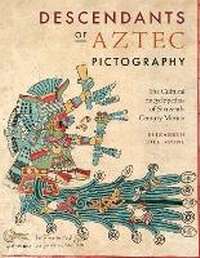
Descendants of Aztec Pictography
The Cultural Encyclopedias of Sixteenth-Century Mexico
Will be published approx. on 12. January 2021
Book
Hardback
264 pages
978-1-4773-2167-6 (ISBN)
Description
In the aftermath of the sixteenth-century Spanish conquest of Mexico, Spanish friars and authorities partnered with indigenous rulers and savants to gather detailed information on Aztec history, religious beliefs, and culture. The pictorial books they created served the Spanish as aids to evangelization and governance, but their content came from the native intellectuals, painters, and writers who helped to create them. Examining the nine major surviving texts, preeminent Latin American art historian Elizabeth Hill Boone explores how indigenous artists and writers documented their ancestral culture.
Analyzing the texts as one distinct corpus, Boone shows how they combined European and indigenous traditions of documentation and considers questions of motive, authorship, and audience. For Spanish authorities, she shows, the books revealed Aztec ideology and practice, while for the indigenous community, they preserved venerated ways of pictorial expression as well as rhetorical and linguistic features of ancient discourses. The first comparative analysis of these encyclopedias, Descendants of Aztec Pictography analyzes how the painted compilations embraced artistic traditions from both sides of the Atlantic.
Analyzing the texts as one distinct corpus, Boone shows how they combined European and indigenous traditions of documentation and considers questions of motive, authorship, and audience. For Spanish authorities, she shows, the books revealed Aztec ideology and practice, while for the indigenous community, they preserved venerated ways of pictorial expression as well as rhetorical and linguistic features of ancient discourses. The first comparative analysis of these encyclopedias, Descendants of Aztec Pictography analyzes how the painted compilations embraced artistic traditions from both sides of the Atlantic.
Reviews / Votes
The sixteenth-century conquest of Mexico brought into contact European and Indigenous ways of understanding and recording the world...Boone, through careful observation and detailed analysis, carries out a comprehensive study of the pictorial encyclopedias that were a product of this encounter...Boone's book presents a model for the investigative power of close observation to decipher the impact of Indigenous forms of knowledge in colonial works. Boone's clear writing and use of numerous examples make the volume accessible not only to specialists in Mexican manuscripts but also to a broader audience interested in Indigenous traditions, European epistemological projects, and colonial encounters. (The Art Bulletin) There has simply never been anything that comes close to what Boone has accomplished in this book. Its broad scope, its impeccable scholarship and thoroughness, its revelations of sources such as European costume books, its intelligent analyses, and its persistent questioning of how exactly Aztec pictography both worked and changed through time, make it what is-and will be, for a long time to come-the definitive source on Aztec pictographic encyclopedias. (Latin American and Latinx Visual Culture) This is a work of rigorous and insightful scholarship, described in clear and readable prose...[Descendants of Aztec Pictography] is a detailed and fascinating study of cultural persistence and change. The sixteenth-century pictorial manuscripts of New Spain were neither fully indigenous nor European colonialist works. Elizabeth Boone's accomplishment is to disentangle the changing mixture of these traditions as the sixteenth century unfolded. This is an outstanding book...It should be in the library of all Mesoamericanists. (Journal of Anthropological Research) Boone's capacious knowledge of the texts themselves and the secondary literature on those texts is on full display [in Descendants of Aztec Pictography] and allows her to craft a sort of guidebook to the pictorial encyclopedia genre...[Boone's] typology of Mexican manuscript painting, of which this volume is but the latest installment, is what makes her work so foundational to the study of Nahua culture and history. (Hispanic American Historical Review) Descendants of Aztec Pictography is a carefully written and edited book that allows readers to delve deeper into the studies of these nine Mexican manuscripts and the meaning Boone gives them as a whole. This is a beautiful book to leaf through, read, and learn from. (CAA Reviews) Boone's meticulous study and skilled synthesis of details, with emphasis on comparative analysis and categorization, lucidly highlight the evolution and transformation of indigenous pictorial traditions in the sixteenth century and will serve as an invaluable resource for students and advanced scholars alike. (Hispanic Research Journal)More details
Language
English
Place of publication
Austin, TX
United States
Target group
Professional and scholarly
Illustrations
115 color photos, 17 tables
Dimensions
Height: 279 mm
Width: 216 mm
Thickness: 28 mm
Weight
1474 gr
ISBN-13
978-1-4773-2167-6 (9781477321676)
Copyright in bibliographic data and cover images is held by Nielsen Book Services Limited or by the publishers or by their respective licensors: all rights reserved.
Schweitzer Classification
Other editions
Additional editions
Elizabeth Hill Boone
Descendants of Aztec Pictography
The Cultural Encyclopedias of Sixteenth-Century Mexico
E-Book
09/2023
1st Edition
University of Texas Press
€165.99
Available for download
Person
Elizabeth Hill Boone is the Martha and Donald Robertson Chair in Latin American Art at Tulane University. She is the author of many books, including Cycles of Time and Meaning in the Mexican Books of Fate and Stories in Red and Black: Pictorial Histories of the Aztecs and Mixtecs, and the editor or coeditor of eleven books, most recently Painted Words: Nahua Catholicism, Politics, and Memory in the Atzaqualco Pictorial Catechism.
Content
List of Figures
List of Tables
Acknowledgments
Chapter 1. Paintings from the Past
Chapter 2. Graphic Complexity in New Spain
Chapter 3. The Encyclopedic Tradition in Europe
Chapter 4. The Evangelical Project and Mendicant Investigators
Chapter 5. Early Compilations: Codices Borbonicus and Mendoza
Chapter 6. The Mid-Century Encyclopedias: Codices Telleriano-Remensis and RIos and the Magliabechiano Group
Chapter 7. DurAn and SahagUn: Cumulative Expositions of the Late Sixteenth Century
Chapter 8. Memories in Figures
Notes
References Cited
Index
List of Tables
Acknowledgments
Chapter 1. Paintings from the Past
Chapter 2. Graphic Complexity in New Spain
Chapter 3. The Encyclopedic Tradition in Europe
Chapter 4. The Evangelical Project and Mendicant Investigators
Chapter 5. Early Compilations: Codices Borbonicus and Mendoza
Chapter 6. The Mid-Century Encyclopedias: Codices Telleriano-Remensis and RIos and the Magliabechiano Group
Chapter 7. DurAn and SahagUn: Cumulative Expositions of the Late Sixteenth Century
Chapter 8. Memories in Figures
Notes
References Cited
Index