

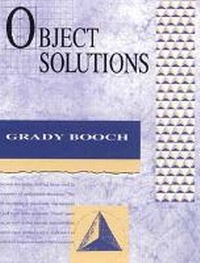
Object Solutions
Managing the Object-Oriented Project
Published on 13. November 1995
Book
Paperback/Softback
336 pages
978-0-8053-0594-4 (ISBN)
Description
Object Solutions: Managing the Object-Oriented Project, by Grady Booch, gives developers and managers practical suggestions for applying object technology to their projects. This book is a valuable resource not only for those who are embarking on their first object-oriented project, but also for seasoned OO veterans. Drawing on his world-wide experience in object-oriented software engineering, Booch explains how to apply the sound principles of OO technology in order to make systems development more timely and effective. Booch presents the reader with pragmatic advice, including the recommended practices and rules of thumb that are the hallmarks of successful projects. Object Solutions is an exceptional resource that offers concise, practical advice from a noted OO practitioner. *Provides a direct and balanced treatment of the most important issues facing object technology managers and developers. *Draws upon Booch's broad experience with hundreds of object-oriented projects around the world. *Emphasizes the practical aspects of managing OO projects by presenting project issues, implications, recommended practices, and rules of thumb.*
Presents numerous examples of real-world projects and demonstrates a variety of approaches to developing object-oriented systems. 0805305947B04062001
Presents numerous examples of real-world projects and demonstrates a variety of approaches to developing object-oriented systems. 0805305947B04062001
More details
Person
Grady Booch, is the Chief Scientist at Rational Software Corporation and developer of the Booch Method of object-oriented analysis and design. He is also co-developer of the Unified Modeling Language (UML). Widely recognized for these and many contributions in the field, he is a popular speaker at technology conferences around the world. Booch has twice received Software Development magazine's coveted Jolt-Cola Product Excellence Award for his seminal text, Object-Oriented Analysis and Design with Applications.
0805305947AB04062001
0805305947AB04062001
Content
1. First Principles.
When Bad Things Happen to Good Projects.
Establishing a Project's Focus.
Understanding a Project's Culture.
The Five Habits of Successful Object-Oriented Projects.
Issues in Managing Object-Oriented Projects.
2. Products and Process.
In Search of Excellent Objects.
Object-Oriented Architectures.
The Artifacts of a Software Project.
Establishing a Rational Design Process.
3. The Macro Process.
The One Minute Methodology.
Conceptualization.
Analysis.
Design.
Evolution.
Maintenance.
4. The Micro Process.
I'm OK, My Program's OK.
Identifying Classes and Objects.
Identifying the Semantics of Classes and Objects.
Identifying Relationships Among Classes and Objects.
Implementing Classes and Objects.
5. The Development Team.
Managers Who Hate Programmers, and the Programmers.
Who Work For Them.
Roles and Responsibilities.
Resource Allocation.
Technology Transfer.
Tools for the Worker.
6. Management and Planning.
Everything I Need to Know I'll Learn In My Next Project.
Managing Risk.
Planning and Scheduling.
Costing and Staffing.
Monitoring, Measuring, and Testing.
Documenting.
Projects in Crisis.
7. Special Topics.
What They Don't Teach You in Programming Class.
User-Centric Systems.
Data-Centric Systems.
Computation-Centric Systems.
Distributed Systems.
Legacy Systems.
Information Management Systems.
Real Time Systems.
Frameworks.
Epilogue.
Summary of Recommended Practices.
Summary of Rules of Thumb.
Glossary.
Bibliography.
Index. 0805305947T04062001
When Bad Things Happen to Good Projects.
Establishing a Project's Focus.
Understanding a Project's Culture.
The Five Habits of Successful Object-Oriented Projects.
Issues in Managing Object-Oriented Projects.
2. Products and Process.
In Search of Excellent Objects.
Object-Oriented Architectures.
The Artifacts of a Software Project.
Establishing a Rational Design Process.
3. The Macro Process.
The One Minute Methodology.
Conceptualization.
Analysis.
Design.
Evolution.
Maintenance.
4. The Micro Process.
I'm OK, My Program's OK.
Identifying Classes and Objects.
Identifying the Semantics of Classes and Objects.
Identifying Relationships Among Classes and Objects.
Implementing Classes and Objects.
5. The Development Team.
Managers Who Hate Programmers, and the Programmers.
Who Work For Them.
Roles and Responsibilities.
Resource Allocation.
Technology Transfer.
Tools for the Worker.
6. Management and Planning.
Everything I Need to Know I'll Learn In My Next Project.
Managing Risk.
Planning and Scheduling.
Costing and Staffing.
Monitoring, Measuring, and Testing.
Documenting.
Projects in Crisis.
7. Special Topics.
What They Don't Teach You in Programming Class.
User-Centric Systems.
Data-Centric Systems.
Computation-Centric Systems.
Distributed Systems.
Legacy Systems.
Information Management Systems.
Real Time Systems.
Frameworks.
Epilogue.
Summary of Recommended Practices.
Summary of Rules of Thumb.
Glossary.
Bibliography.
Index. 0805305947T04062001