

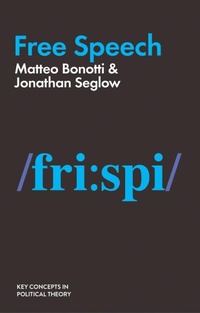
Free Speech
1st Edition
Published on 3. June 2021
Book
Paperback/Softback
180 pages
978-1-5095-2645-1 (ISBN)
Description
Freedom of speech is never very far away from political controversy. In recent years, the rise of populism, 'fake news' phenomena, waves of Islamophobia and anti-Semitism, and online hate attacks are among developments that have kept free speech at the forefront of both public and academic discussion.
In this new introduction, Matteo Bonotti and Jonathan Seglow offer a comprehensive and accessible analysis of the debates around freedom of speech. They introduce three major philosophical arguments for freedom of speech based on the values of truth, autonomy, and democracy, before critically examining their strengths and limits. Using a variety of case studies, including hate speech, offensive speech, Holocaust denial and pornography, they tackle pressing current issues including 'alternative facts' and 'No Platforming'. This book will be essential for both students and general readers wishing to understand the contemporary significance and philosophical roots of free speech, and how it relates to debates about citizenship, democracy, feminism, and multiculturalism.
More details
Other editions
Additional editions
Matteo Bonotti | Jonathan Seglow
Free Speech
Book
06/2021
1st Edition
Polity Press
€56.00
Shipment within 15-20 days
Matteo Bonotti | Jonathan Seglow
Free Speech
E-Book
05/2021
1st Edition
Wiley-Scrivener
€15.99
Available for download
Persons
Matteo Bonotti is Senior Lecturer in the Department of Politics and International Relations at Monash University.
Jonathan Seglow is Reader in Political Theory at Royal Holloway, University of London.
Content
Introduction
1. Theories of Free Speech
2. Hate speech
3. Holocaust denial
4. Offensive speech
5. Pornography
6. Contemporary Challenges
Conclusion
Notes
Bibliography
Index