

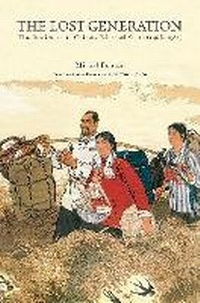
The Lost Generation
The Rustication of China's Educated Youth (1968-1980)
Published on 30. September 2013
Book
Hardback
580 pages
978-962-996-481-8 (ISBN)
Description
The Lost Generation is a vital component to understanding Maoism. The book provides a comprehensive account of the critical movement during which seventeen million young "educated" city-dwellers were supposed to transform themselves into peasants, potentially for life. Bonnin closely examines the Chinese leadership's motivations and the methods that they used over time to implement their objectives, as well as the day-to-day lives of those young people in the countryside, their difficulties, their doubts, their resistance and, ultimately, their revolt. The author draws on a rich and diverse array of sources, concluding with a comprehensive assessment of the movement that shaped an entire generation, including a majority of today's cultural, economic, and political elite.
More details
Language
English
Place of publication
Hong Kong
Hong Kong
Target group
Professional and scholarly
Illustrations
52
Dimensions
Height: 229 mm
Width: 152 mm
Thickness: 38 mm
Weight
454 gr
ISBN-13
978-962-996-481-8 (9789629964818)
Copyright in bibliographic data and cover images is held by Nielsen Book Services Limited or by the publishers or by their respective licensors: all rights reserved.
Schweitzer Classification
Other editions
Additional editions
E-Book
07/2015
The Chinese University of Hong Kong Press
€67.99
Available for download
Persons
Michel Bonnin is Professor at L'Ecole des hautes etudes en sciences sociales, Paris, France. From 1991 to 1998 he was the director of the French Research Centre on Contemporary China and editor-in-chief of China Perspectives, both of which he founded in Hong Kong. His primary areas of research are the social and political issues in the People's Republic of China. Bonnin has written extensively in French, English, and Chinese on the rustication movement of educated urban youth during the Maoist period.