

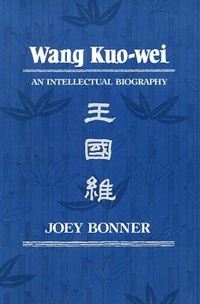
Wang Kuo-wei
An Intellectual Biography
Published on 25. April 1986
Book
Hardback
314 pages
978-0-674-94594-4 (ISBN)
Description
In this first full-fledged intellectual biography of the brilliant and multifaceted Chinese scholar Wang Kuo-wei (1877-1927), Joey Bonner throws important new light on the range and course of ideas in early twentieth-century China. Coincidentally, she illuminates the nature of Wang's intimate, thirty-year personal and professional association with the well-known Chinese scholar Lo Chen-yue (1866-1940) and provides a most comprehensive and compelling account of her biographee's posthumously controversial career in the years following the 1911 Revolution.
Pursuing her subject across the whole spectrum of his many scholarly interests, Bonner critically examines Wang's essays on German philosophy and philosophical aesthetics; his poetry, literary criticism, and aesthetic theory; and his works on ancient Chinese history, particularly of the Shang dynasty. Insightfully relating his strenuous intellectual search in the fields of philosophy, literature, and history to his very personal quest for truth, beauty, and virtue, Bonner shows in this finely crafted book how Wang's unhappiness in later life as well as his suicide can be understood only within the context of his humanistic concerns in general and his extreme commitment in the postimperial period to the Confucian ethicoreligious tradition in particular. Without compromising the clearheaded critical detachment that characterizes her analysis of the intricacies of his thought, Bonner has produced a portrait of Wang Kuo-wei suffused with warmth and sympathetic respect.
Pursuing her subject across the whole spectrum of his many scholarly interests, Bonner critically examines Wang's essays on German philosophy and philosophical aesthetics; his poetry, literary criticism, and aesthetic theory; and his works on ancient Chinese history, particularly of the Shang dynasty. Insightfully relating his strenuous intellectual search in the fields of philosophy, literature, and history to his very personal quest for truth, beauty, and virtue, Bonner shows in this finely crafted book how Wang's unhappiness in later life as well as his suicide can be understood only within the context of his humanistic concerns in general and his extreme commitment in the postimperial period to the Confucian ethicoreligious tradition in particular. Without compromising the clearheaded critical detachment that characterizes her analysis of the intricacies of his thought, Bonner has produced a portrait of Wang Kuo-wei suffused with warmth and sympathetic respect.
Reviews / Votes
Wang Kuo-wei is a unique figure in modern Chinese intellectual history who reflects within his own person some of the most complex aspects of China's modern cultural crisis. There could, in fact, be no more demanding undertaking than an intellectual biography of Wan Kuo-wei... Dr. Bonner has achieved a profound empathic understanding of what might be called the cultural despair of one of China's most interesting personalities; she has been able to use Wang Kuo-wei's own quite unique angle of vision to illuminate many aspects of modern China's cultural situation. This is the first biography of Wang Kuo-wei that succeeds in grasping his life as a comprehensible whole. -- Benjamin I. SchwartzMore details
Series
Language
English
Place of publication
Cambridge, Mass
United States
Target group
College/higher education
Professional and scholarly
Illustrations
2 photos, 1 chart
Weight
680 gr
ISBN-13
978-0-674-94594-4 (9780674945944)
Copyright in bibliographic data and cover images is held by Nielsen Book Services Limited or by the publishers or by their respective licensors: all rights reserved.
Schweitzer Classification
Content
Preface Acknowledgments 1. Prologue: The 1890s Generation 2. The Early Years 3. Wang as Educational Critic 4. Declaration of Principles 5. The Critical Philosophy 6. The Philosophy of Metaphysical Pessimism 7. Analysis of Dream of the Red Chamber 8. Disillusionment with Philosophy 9. The Aesthetic Education of Man 10. Wang's Lyrics, Lyric Criticism, and Mature Aesthetic Theory 11. Critique of Yuan Drama 12. Conservative Commitments 13. Archaeological Enthusiasms 14. Wang as Shang Genealogist 15. The Later Years 16. Epilogue: Across the Barriers of Culture and Time Abbreviations Notes Selected Bibliography Glossary Index