


Designing for Situated Knowledge Transformation
1st Edition
Published on 2. December 2019
Book
Hardback
294 pages
978-0-367-22573-5 (ISBN)
Description
How can knowledge developed in one context be put to use in other contexts? How can students learn to do so? How can educators design for learning this? These are fundamental challenges to many forms of education. The challenges are amplified in contemporary society where people traverse many different contexts and where contexts themselves are continuously changing.
Designing for Situated Knowledge Transformation provides a structured answer to these questions, through an investigation of the theoretical, empirical, methodological and pedagogical design aspects which they involve. Raising profound questions about the nature of knowledge, of situativity, and of transfer, transformation and resituation, it calls for and provides extended empirical studies of the forms of transformation that knowledge undergoes when people find themselves in new contexts while relying on existing knowledge.
Considering many avenues of practical application and insight, Designing for Situated Knowledge Transformation develops a coherent framework for developing learning designs for knowledge transformation that is crucial in today's educational settings.
Designing for Situated Knowledge Transformation provides a structured answer to these questions, through an investigation of the theoretical, empirical, methodological and pedagogical design aspects which they involve. Raising profound questions about the nature of knowledge, of situativity, and of transfer, transformation and resituation, it calls for and provides extended empirical studies of the forms of transformation that knowledge undergoes when people find themselves in new contexts while relying on existing knowledge.
Considering many avenues of practical application and insight, Designing for Situated Knowledge Transformation develops a coherent framework for developing learning designs for knowledge transformation that is crucial in today's educational settings.
More details
Series
Language
English
Place of publication
London
United Kingdom
Publishing group
Taylor & Francis Ltd
Target group
College/higher education
Illustrations
24 s/w Abbildungen, 18 s/w Zeichnungen
18 Line drawings, black and white; 24 Illustrations, black and white
Dimensions
Height: 234 mm
Width: 156 mm
Weight
540 gr
ISBN-13
978-0-367-22573-5 (9780367225735)
Copyright in bibliographic data and cover images is held by Nielsen Book Services Limited or by the publishers or by their respective licensors: all rights reserved.
Schweitzer Classification
Other editions
Additional editions
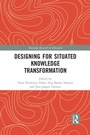
Nina Bonderup Dohn | Stig Borsen Hansen | Jens Jorgen Hansen
Designing for Situated Knowledge Transformation
Book
06/2021
1st Edition
Routledge
€63.70
Shipment within 10-20 days
Nina Bonderup Dohn | Stig Borsen Hansen | Jens Jorgen Hansen
Designing for Situated Knowledge Transformation
E-Book
11/2019
1st Edition
Routledge
€55.49
Available for download
Nina Bonderup Dohn | Stig Borsen Hansen | Jens Jorgen Hansen
Designing for Situated Knowledge Transformation
E-Book
11/2019
1st Edition
Routledge
€55.49
Available for download
Persons
Nina Bonderup Dohn is a professor at the Department of Design and Communication at the University of Southern Denmark, Denmark.
Stig Borsen Hansen is an associate professor at the Department of Design and Communication at the University of Southern Denmark, Denmark.
Jens Jorgen Hansen is an associate professor at the Department of Design and Communication at the University of Southern Denmark, Denmark.
Stig Borsen Hansen is an associate professor at the Department of Design and Communication at the University of Southern Denmark, Denmark.
Jens Jorgen Hansen is an associate professor at the Department of Design and Communication at the University of Southern Denmark, Denmark.
Content
Preface; Author biographies; Chapter 1. Introduction. Designing for situated knowledge transformation; Part 1. Situated knowledge transformation - theoretical framework; Chapter 2. Situativity of different forms of knowledge; Chapter 3. Conceptions of transfer, transformation and resituation; Chapter 4. Context framework for analysing situated knowledge transformation; Chapter 5. Implicit and explicit metaphysics in conceptualizing transfer and transformation; Part 2. Situated knowledge transformation - empirical processes; Chapter 6. Transfer and transformation of ethics knowledge in continuing professional development; Chapter 7. Micro-transformational processes across sub-domains in science learning; Chapter 8. Knowledge forms in students' collaborative work - PBL as a design for transfer; Part 3. Developing pragmatically useful design principles; Chapter 9. Practice-based design research to advance teaching and learning practices through situated partnerships; Chapter 10. Basic design principles for learning designs to support knowledge transformation; Chapter 11. Designing for technology supportive of learning designs: The methodology of learner centered value sensitive design; Chapter 12. Design for transfer of computational literacy skills; Chapter 13. Design principles for transfer and transformation of academic literacy; Part 4. Case studies of designing for learning to transform knowledge; Chapter 14. A comparative study of learning designs for transformation of knowledge in undergraduate laboratory physics; Chapter 15. Knowledge transformation across changes in situational demands between education and professional practice; Chapter 16. Designing for mediational transition and learning through simulation - a task analysis of knowledge transformation; Index