

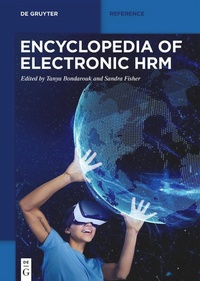
Encyclopedia of Electronic HRM
Description
The Encyclopedia of Electronic HRM is a comprehensive research-based reference resource with entries on core e-HRM areas, key concepts, and leading technologies. From electronic selection to HR analytics, from e-HRM implementation to HRIS cultural differences - each entry reflects the views of an expert in the field. Each entry provides a list of references and recommended further reading to enable the reader to gain a deeper awareness and understanding of each topic. The book formalizes the best knowledge in the field. It will inform and connect the different topics and scholars from the multiple disciplines who conduct research on e-HRM.
Who should read this book? Academic Researchers, including doctoral students, will appreciate the insightful (and occasionally provocative) guidance on future research opportunities. Practitioners will be able to quickly see the research evidence on e-HRM practices and tools, helping them make the business case for adopting technology. Students can use the individual entries as a quick but thorough introduction to a topic, particularly in master’s level courses.
- 47 entries that connect the history of e-HRM to the future
- Global viewpoints, including scholars and practitioners
- Concise definitions and summaries
- State-of-the-art contributions from leading experts in the field

More details
Other editions
Additional editions
Persons
Tanya Bondarouk, University of Twente, Netherlands;
Sandra Fisher, FH Münster, Germany