


Analyzing American Democracy
Politics and Political Science
3rd Edition
Published on 9. January 2019
Book
Paperback/Softback
722 pages
978-1-138-34519-5 (ISBN)
Description
This is an introductory American politics text covering the constitutional framework of American government, political behavior and informal institutions, the formal institutions of American government, and a concluding chapter on public policy. Every chapter highlights the most current thinking in political science research and discusses related public policy.
This text teaches students to think analytically by presenting current political science theories and research in answering the engaging, big questions facing American politics today. It serves as an introduction to the discipline by reflecting the theoretical developments and types of empirical inquiry conducted by researchers.
New to the Third Edition:
2016 and 2018 election updates and analysis of their political and policy impact
Social media's growing influence on politics
The impact of the alt-right and rising populism on elections and policy
New trends in public opinion
Weakening of the Voting Rights Act
Campaign finance upheaval
The changing congressional landscape
Updated tables, figures, and photos present the empirical details of American politics, helping students gain quantitative literacy
Landmark court cases, now highlighted and linked to key concepts
Refreshed feature boxes reinforce the book's dedication to helping students understand the scientific approach to politics, incorporating intriguing new topics including genetics and public opinion, the biology of political participation, and evolution and the bureaucracy
This text teaches students to think analytically by presenting current political science theories and research in answering the engaging, big questions facing American politics today. It serves as an introduction to the discipline by reflecting the theoretical developments and types of empirical inquiry conducted by researchers.
New to the Third Edition:
2016 and 2018 election updates and analysis of their political and policy impact
Social media's growing influence on politics
The impact of the alt-right and rising populism on elections and policy
New trends in public opinion
Weakening of the Voting Rights Act
Campaign finance upheaval
The changing congressional landscape
Updated tables, figures, and photos present the empirical details of American politics, helping students gain quantitative literacy
Landmark court cases, now highlighted and linked to key concepts
Refreshed feature boxes reinforce the book's dedication to helping students understand the scientific approach to politics, incorporating intriguing new topics including genetics and public opinion, the biology of political participation, and evolution and the bureaucracy
Reviews / Votes
Praise for Analyzing American Democracy:The new edition of Bond and Smith's revered text threads the needle by adding several exciting touches-most notably, the thoroughly updated content and thematically integrated boxes-without sacrificing the features that so many devoted instructors have long loved-most notably, the unapologetically scientific approach and the vivid, deeply engaging writing style.
John Hibbing, University of Nebraska-Lincoln
From its focus on the principles of democracy to the actual practice of democracy in the United States, Bond and Smith's introductory text provides university students with the necessary tools to critically analyze American politics. The authors effectively apply political science research in a way that is fresh and accessible to students and do so in a way that will make students think well beyond their preconceptions about politics. The chapter on elections is the most thorough and engaging treatment of presidential elections you will find in an introductory American politics textbook.
Jeffrey S. Peake, Clemson University
Jon Bond and Kevin Smith's Analyzing American Democracy provides the most comprehensive and nuanced treatment of American political institutions and behavior to date. By drawing upon the most recent political science literature, the text encourages students to see American politics through a theoretical lens, and promotes a more generalized understanding of political concepts that transcend time and space. With stimulating real-world examples of the trade-offs, paradoxes, and competing ethical perspectives that are negotiated in a modern representative democracy, students become conversant and critically-engaged in the challenges confronting the country, and thus, become better citizens.
Sarah A. Fulton, Texas A&M University
Analyzing American Democracy is one of the best American Government books on the market. Not only is it comprehensive in covering material across the vast spectrum of American politics, but it also has an interesting point of view: the idea that our expectations of government and its performance may not be entirely realistic. Bond and Smith have written a book that is accessible to undergraduate students, yet provides sufficient detail for professors to examine the nuances of American politics today.
Richard W. Waterman, University of Kentucky
Nobody does a better job than Bond and Smith of integrating modern political science with a thoroughly up-to-date introduction to American government. Most of my students have already been exposed to an AP-style high school American government survey, and a text that is clearly more science than civics is exactly what they need at the college level. On top of that the writing has the wit, snap, and drive that keeps students reading and thinking in spite of themselves.
John R. Alford, Rice University
Teaching a broad survey course that covers the breadth of American politics can be a daunting task for both instructors and students. Bond and Smith have organized what could be an overwhelming amount of information into a logical structure coupled with a straightforward, journalistic writing style that incorporates cutting-edge political science research with key political concepts. The result is a textbook that is truly an introduction to political science, not just civics or popular politics.
Amanda Friesen, Indiana University-Purdue University Indianapolis
More details
Edition
3rd edition
Language
English
Place of publication
London
United Kingdom
Publishing group
Taylor & Francis Ltd
Target group
College/higher education
Illustrations
25 s/w Tabellen, 80 s/w Photographien bzw. Rasterbilder, 80 farbige Zeichnungen, 160 farbige Abbildungen
160 color images, 25 tables, 80 halftones and 80 color line drawings
Dimensions
Height: 235 mm
Width: 191 mm
Weight
1320 gr
ISBN-13
978-1-138-34519-5 (9781138345195)
Copyright in bibliographic data and cover images is held by Nielsen Book Services Limited or by the publishers or by their respective licensors: all rights reserved.
Schweitzer Classification
Other editions
New editions
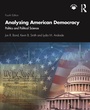
Jon R. Bond | Kevin B. Smith | Lydia Andrade
Analyzing American Democracy
Politics and Political Science
Book
08/2021
4th Edition
Routledge
€102.74
Article exhausted; check for reprint
Additional editions
Book
03/2019
3rd Edition
Routledge
€237.70
Withdrawn from sale
Persons
Jon R. Bond received his Ph.D. from the University of Illinois at Urbana-Champaign and is currently a professor of political science at Texas A&M University. His research analyzes the policy making process and the operation of democracy in American politics. Specifically, he is interested in the interactions of American political institutions, especially Congress and the presidency, and how electoral motivations affect democratic responsiveness in American political institutions. He has published more than three-dozen chapters and journal articles on presidential-congressional relations, congressional elections, and public policy. He served as president of Pi Sigma Alpha, the national political science honor society from 2006-2008, and president of the Southern Political Science Association, the oldest regional political science association from 2006-2007.
Kevin B. Smith received his Ph.D. from the University of Wisconsin-Milwaukee and is currently a professor of political science at the University of Nebraska-Lincoln, where he is also co-director of the UNL Political Science Physiology Lab. His primary research focus is on the biology of political attitudes and behavior. Smith is the recipient of his university's College of Arts & Sciences Outstanding Research and Creative Achievement Award.
Kevin B. Smith received his Ph.D. from the University of Wisconsin-Milwaukee and is currently a professor of political science at the University of Nebraska-Lincoln, where he is also co-director of the UNL Political Science Physiology Lab. His primary research focus is on the biology of political attitudes and behavior. Smith is the recipient of his university's College of Arts & Sciences Outstanding Research and Creative Achievement Award.
Content
Preface
1. The Basics of Democracy
PART I: THE CONSTITUTIONAL FRAMEWORK
2. The American Constitution
3. Federalism
4. Civil Liberties
5. Civil Rights
PART II: CONNECTING CITIZENS TO GOVERNMENT
6. Interest Groups
7. Political Parties
8. The Mass Media and Politics
9. Public Opinion and Political Socialization
10. Elections
11. Political Participation and Voting Behavior
PART III: OFFICIAL DECISION MAKING
12. Congress
13. The Presidency
14. The Bureaucracy
15. The Federal Judiciary
PART IV: CONCLUSION
16. Core Democratic Principles and Public Policy
Appendix A. Declaration of Independence
Appendix B. The Articles of Confederation
Appendix C. The Constitution of the United States
Appendix D. Federalist Papers Number 10
Federalist Papers Number 51
Appendix E. Partisan Control of the Presidency, Congress, and the Supreme
Court
References
Glossary
Cases Index
Name Index
Subject Index
1. The Basics of Democracy
PART I: THE CONSTITUTIONAL FRAMEWORK
2. The American Constitution
3. Federalism
4. Civil Liberties
5. Civil Rights
PART II: CONNECTING CITIZENS TO GOVERNMENT
6. Interest Groups
7. Political Parties
8. The Mass Media and Politics
9. Public Opinion and Political Socialization
10. Elections
11. Political Participation and Voting Behavior
PART III: OFFICIAL DECISION MAKING
12. Congress
13. The Presidency
14. The Bureaucracy
15. The Federal Judiciary
PART IV: CONCLUSION
16. Core Democratic Principles and Public Policy
Appendix A. Declaration of Independence
Appendix B. The Articles of Confederation
Appendix C. The Constitution of the United States
Appendix D. Federalist Papers Number 10
Federalist Papers Number 51
Appendix E. Partisan Control of the Presidency, Congress, and the Supreme
Court
References
Glossary
Cases Index
Name Index
Subject Index