


A Field Guide for Science Writers
Published on 10. December 1998
Book
Paperback/Softback
302 pages
978-0-19-512494-1 (ISBN)
Description
In A Field Guide for Science Writers, the official guide of the National Association of Science Writers, budding journalists and veteran reporters have a superb roadmap to this exciting area of journalism. Here some three dozen of the best known science writers in America share their hard-earned knowledge on how they do their job. Filled with anecdotes and down-to-earth, practical information, this book will be a bible for the would-be and jobbing science writer.
More details
Edition
New edition
Language
English
Place of publication
New York
United States
Target group
Professional and scholarly
Edition type
New edition
ISBN-13
978-0-19-512494-1 (9780195124941)
Copyright in bibliographic data is held by Nielsen Book Services Limited or its licensors: all rights reserved.
Schweitzer Classification
Other editions
New editions
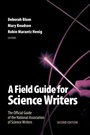
Deborah Blum | Mary Knudson | Robin Marantz Henig
A Field Guide for Science Writers
The Official Guide of the National Association of Science Writers (Revised)
Book
09/2005
2nd Edition
Oxford University Press Inc
€32.30
Shipment within 15-20 days
Deborah Blum | Mary Knudson | Robin Marantz Henig
A Field Guide for Science Writers
The Official Guide of the National Association of Science Writers
Book
09/2005
2nd Edition
Oxford University Press Inc
€44.56
Article exhausted; check different version
Persons
Content
PART I: GETTING STARTED; 1. Introduction; 2. Covering Science for Newspapers; 3. Writing Science for Magazines; 4. Writing for Trade Journals and Science Journals; 5. Broadcast Science Journalism; 6. Writing Books on Science Topics; PART II: TECHNIQUES OF THE TRADE; 7. Introduction; 8. Telling a Good Tale; 9. Investigative Science Journalism; 10. Using Sources; 11. Coping with Statistics; 12. Writing Articles from Science Journals,; 13. Scientists who Write about Science for the Public,; 14. Science Opinion Writing,; PART III: COVERING THE STORIES IN SCIENCE; 15. Critical Coverage of Public Health and Government,; 16. Reporting on Biology of Behavior,; 17. Covering Infectious Diseases,; 18. Reporting on Neuroscience,; 19. Toxins and Risk Reporting,; 20. Environmental Writing,; 21. Covering Earth Sciences,; 22. Covering Physics,; 23. Technology Writing,; 24. Writing about Astronomy,; PART IV: WORKING OUTSIDE THE MEDIA; 25. Introduction,; 26. Colleges and Unversities,; 27. Government Agencies,; 28. Nonprofits, Museum, and Small Research Laboratories,; PART V: PRACTICAL MATTERS; 30. Journalist and Scientist Co-Authors,; 31. When Your Office is in Your Home