

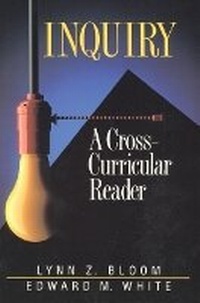
Inquiry
A Cross-Curricular Reader
Published on 9. November 2001
Book
Paperback/Softback
732 pages
978-0-13-466137-7 (ISBN)
Description
For courses in Freshman Composition, Advanced Composition, and Writing Across the Curriculum.
This cross-curricular composition reader emphasizes writing as thinking. Since good questions are at the heart of good writing, the book is organized around six perennially interesting questions. The reading selections in each chapter offer a variety of approaches to the chapter question, with representation from many disciplines and social perspectives.
This cross-curricular composition reader emphasizes writing as thinking. Since good questions are at the heart of good writing, the book is organized around six perennially interesting questions. The reading selections in each chapter offer a variety of approaches to the chapter question, with representation from many disciplines and social perspectives.
More details
Language
English
Place of publication
United States
Publishing group
Pearson Education (US)
Target group
Professional and scholarly
Dimensions
Height: 229 mm
Width: 152 mm
Weight
871 gr
ISBN-13
978-0-13-466137-7 (9780134661377)
Copyright in bibliographic data and cover images is held by Nielsen Book Services Limited or by the publishers or by their respective licensors: all rights reserved.
Schweitzer Classification
Other editions
New editions
Book
05/2020
2nd Edition
Pearson
€96.55
Article not available
Content
(NOTE: Each chapter begins with an Introduction, Rhetorical Issues, and Questions for Discovery and Discussion, and concludes with Questions for Reflection, and Writing.)
Introduction.
1. How Do I Know Who I Am?
What Is My Physical Self?
Maxine Hong Kingston, On Discovery. Margaret Walker, On Being Female, Black, and Free. Scott Russell Sanders, The Men We Carry in Our Minds. Robert Ornstein and Richard Thompson, Learning and Brain Growth. Nancy Mairs, On Being a Cripple. John Updike, At War with My Skin.
Who Am I in Relation to Others?
John Donne, Meditation: No Man Is an Island. Benjamin Franklin, Arriving at Moral Perfection. Frederick Douglass, "A glorious resurrection, from the tomb of slavery, to the heaven of freedom." Mike Rose, "I Just Wanna Be Average."
How Does My Writing Relate to My Self?
Elie Wiesel, Why I Write: Making No Become Yes. Shirley Brice Heath, Literate Traditions. Richard Rodriquez, Aria: Memoir of a Bilingual Childhood. Patricia Hampl, The Need to Say It. Paul Theroux, Being a Man.
2. How Do I Know What I Know?How Can I Think About Thinking?
Susanne K. Langer, Signs and Symbols. Plato, The Allegory of the Cave. Margaret Atwood, This Is a Photograph of Me. Frank Conroy, Think About It.
What Are Some Ways of Knowing?
Thomas Kuhn, The Route to Normal Science. Stephen Jay Gould, Evolution as Fact and Theory. Mary Field Belenky, "Just Knowing": The Inner Expert. Jane van Lawick-Goodall, First Observations. Evelyn Fox Keller, A World of Difference.
How Can I Understand What I Know?
Frances FitzGerald, America Revised. Linda Simon, The Naked Source. Laurel Thatcher Ulrich, Understanding Paternity: Separating Romance from Reality. James Thurber, University Days.
3. What Is Really Important?How Do We Develop a Sense of Values?
Mark Twain, You Can't Pray a Lie. Sissela Bok, Lies for the Public Good. Joan Didion, On Self-Respect. Paul Fussell, The Boy Scout Handbook.
What Does Nature Mean?
Stephen Hawking, Our Picture of the Universe. Italo Calvino, All at One Point. Leslie Marmon Silko, Landscape, History, and the Pueblo Imagination. Sue Hubbell, Poison Snakes.
How Do We Resolve Conflicts in Values?
Rita Levi-Montalcini, Doing Science in Secret. Bruno Bettelheim, The Ignored Lesson of Anne Frank. Jonathan Kozol, Distancing the Homeless. Sharon Olds, Sex Without Love.
4. What Is a Good Idea?What Is a Good Political Idea?
Thomas Jefferson, Declaration of Independence. Elizabeth Cady Stanton, Declaration of Sentiments. Abraham Lincoln, Gettysburg Address. Sojourner Truth, Ain't I a Woman. Alice Walker, The Civil Rights Movement: What Good Was It?
What Is a Good Scientific Idea?
Isaac Asimov, Those Crazy Ideas. Charles Darwin, Understanding Natural Selection. Barbara J. Culliton, Science's Restive Public. James D. Watson and Francis H. S. Crick, A Structure for Deoxyribose Nucleic Acid. Arthur Koestler, The `Cosmic Mystery.' Siv Cedering, "Letter from Caroline Herschel (1750-1848)."
How Can We Recognize and Encourage Creativity?
Linda Hogan, Hearing Voices. Jacob Bronowski, The Reach of Imagination. Gretel Ehrlich, Life at Close Range. Alexander Calandra, Angels on a Pin.
5. What Can We Learn from the Past?What Does Family History Mean?
Barry Lopez, Searching for Ancestors. Pauli Murray, The Inheritance of Values. Eudora Welty, Listening. Scott Russell Sanders, The Inheritance of Tools.
What Have We Done to the Earth?
Rachel Carson, The Obligation to Endure. William W. Warner, The Islands of Chesapeake Bay. John McPhee, Los Angeles Against the Mountains. Margaret Knox, Africa Daze Montana Knights.
How Does an Idea Evolve?
Henry David Thoreau, Civil Disobedience. Susan Griffin, I Like to Think of Harriet Tubman. Martin Luther King, Jr. Letter from Birmingham Jail. Lewis H. Van Dusen, Jr., Civil Disobedience: Destroyer of Democracy.
6. What Will the Future Be Like?What Is the Future of the Family?
T. Berry Brazelton, Issues for Working Parents. Deborah Fallows, Why Mothers Should Stay Home. Robert S. Weiss, Marriage as Partnership. Robert N. Butler, Successful Aging. Ellen Goodman, The Family that Stretches (Together).
Will War Shape the Future?
Margaret Mead, Warfare Is Only an Invention - Not a Biological Necessity. Czeslaw Milosz, American Ignorance of War. Carl Sagan, The Nuclear Winter. John Lewis Gaddis, Coping with Victory.
How Can We Think and Speak About the Future?
Robert B. Reich, Corporation and Nation. Perri Klass, Learning the Language. Gina Kolata, How Computers Get Common Sense. Adrienne Rich, Artificial Intelligence. Woody Allen, My Speech to the Graduates.
Introduction.
1. How Do I Know Who I Am?
What Is My Physical Self?
Maxine Hong Kingston, On Discovery. Margaret Walker, On Being Female, Black, and Free. Scott Russell Sanders, The Men We Carry in Our Minds. Robert Ornstein and Richard Thompson, Learning and Brain Growth. Nancy Mairs, On Being a Cripple. John Updike, At War with My Skin.
Who Am I in Relation to Others?
John Donne, Meditation: No Man Is an Island. Benjamin Franklin, Arriving at Moral Perfection. Frederick Douglass, "A glorious resurrection, from the tomb of slavery, to the heaven of freedom." Mike Rose, "I Just Wanna Be Average."
How Does My Writing Relate to My Self?
Elie Wiesel, Why I Write: Making No Become Yes. Shirley Brice Heath, Literate Traditions. Richard Rodriquez, Aria: Memoir of a Bilingual Childhood. Patricia Hampl, The Need to Say It. Paul Theroux, Being a Man.
2. How Do I Know What I Know?How Can I Think About Thinking?
Susanne K. Langer, Signs and Symbols. Plato, The Allegory of the Cave. Margaret Atwood, This Is a Photograph of Me. Frank Conroy, Think About It.
What Are Some Ways of Knowing?
Thomas Kuhn, The Route to Normal Science. Stephen Jay Gould, Evolution as Fact and Theory. Mary Field Belenky, "Just Knowing": The Inner Expert. Jane van Lawick-Goodall, First Observations. Evelyn Fox Keller, A World of Difference.
How Can I Understand What I Know?
Frances FitzGerald, America Revised. Linda Simon, The Naked Source. Laurel Thatcher Ulrich, Understanding Paternity: Separating Romance from Reality. James Thurber, University Days.
3. What Is Really Important?How Do We Develop a Sense of Values?
Mark Twain, You Can't Pray a Lie. Sissela Bok, Lies for the Public Good. Joan Didion, On Self-Respect. Paul Fussell, The Boy Scout Handbook.
What Does Nature Mean?
Stephen Hawking, Our Picture of the Universe. Italo Calvino, All at One Point. Leslie Marmon Silko, Landscape, History, and the Pueblo Imagination. Sue Hubbell, Poison Snakes.
How Do We Resolve Conflicts in Values?
Rita Levi-Montalcini, Doing Science in Secret. Bruno Bettelheim, The Ignored Lesson of Anne Frank. Jonathan Kozol, Distancing the Homeless. Sharon Olds, Sex Without Love.
4. What Is a Good Idea?What Is a Good Political Idea?
Thomas Jefferson, Declaration of Independence. Elizabeth Cady Stanton, Declaration of Sentiments. Abraham Lincoln, Gettysburg Address. Sojourner Truth, Ain't I a Woman. Alice Walker, The Civil Rights Movement: What Good Was It?
What Is a Good Scientific Idea?
Isaac Asimov, Those Crazy Ideas. Charles Darwin, Understanding Natural Selection. Barbara J. Culliton, Science's Restive Public. James D. Watson and Francis H. S. Crick, A Structure for Deoxyribose Nucleic Acid. Arthur Koestler, The `Cosmic Mystery.' Siv Cedering, "Letter from Caroline Herschel (1750-1848)."
How Can We Recognize and Encourage Creativity?
Linda Hogan, Hearing Voices. Jacob Bronowski, The Reach of Imagination. Gretel Ehrlich, Life at Close Range. Alexander Calandra, Angels on a Pin.
5. What Can We Learn from the Past?What Does Family History Mean?
Barry Lopez, Searching for Ancestors. Pauli Murray, The Inheritance of Values. Eudora Welty, Listening. Scott Russell Sanders, The Inheritance of Tools.
What Have We Done to the Earth?
Rachel Carson, The Obligation to Endure. William W. Warner, The Islands of Chesapeake Bay. John McPhee, Los Angeles Against the Mountains. Margaret Knox, Africa Daze Montana Knights.
How Does an Idea Evolve?
Henry David Thoreau, Civil Disobedience. Susan Griffin, I Like to Think of Harriet Tubman. Martin Luther King, Jr. Letter from Birmingham Jail. Lewis H. Van Dusen, Jr., Civil Disobedience: Destroyer of Democracy.
6. What Will the Future Be Like?What Is the Future of the Family?
T. Berry Brazelton, Issues for Working Parents. Deborah Fallows, Why Mothers Should Stay Home. Robert S. Weiss, Marriage as Partnership. Robert N. Butler, Successful Aging. Ellen Goodman, The Family that Stretches (Together).
Will War Shape the Future?
Margaret Mead, Warfare Is Only an Invention - Not a Biological Necessity. Czeslaw Milosz, American Ignorance of War. Carl Sagan, The Nuclear Winter. John Lewis Gaddis, Coping with Victory.
How Can We Think and Speak About the Future?
Robert B. Reich, Corporation and Nation. Perri Klass, Learning the Language. Gina Kolata, How Computers Get Common Sense. Adrienne Rich, Artificial Intelligence. Woody Allen, My Speech to the Graduates.