

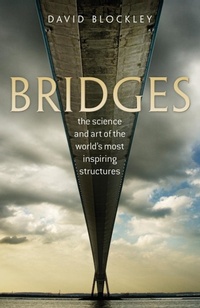
Bridges
The science and art of the world's most inspiring structures
1st Edition
Published on 26. April 2012
Book
Paperback/Softback
330 pages
978-0-19-964572-5 (ISBN)
Description
Bridges touch all our lives - every day we are likely to cross a bridge, or go under one. How many of us stop to consider how the bridge stands up and what sort of people designed and built something so strong?
Bridge building is a magnificent example of the practical and every day use of science. However, the story of bridges goes beyond science and technology, and involves issues relating to artistic and cultural development. After all, bridges are built by people, for people. Bridges can be icons for whole cities; just consider New York's Brooklyn Bridge, London's Tower Bridge, and Sydney's Harbour Bridge. Such bridges can be considered functional public art, as they have the power to delight or be an eyesore.
David Blockley explains how to read a bridge, in all its different forms, design, and construction, and the way the forces flow through arches and beams. He combines the engineering of how bridges stand up with the cultural, aesthetic, and historical importance they hold. Drawing on examples of particular bridges from around the world, he also looks in detail at the risk engineers take when building bridges, and examines why things sometimes go wrong.
Bridge building is a magnificent example of the practical and every day use of science. However, the story of bridges goes beyond science and technology, and involves issues relating to artistic and cultural development. After all, bridges are built by people, for people. Bridges can be icons for whole cities; just consider New York's Brooklyn Bridge, London's Tower Bridge, and Sydney's Harbour Bridge. Such bridges can be considered functional public art, as they have the power to delight or be an eyesore.
David Blockley explains how to read a bridge, in all its different forms, design, and construction, and the way the forces flow through arches and beams. He combines the engineering of how bridges stand up with the cultural, aesthetic, and historical importance they hold. Drawing on examples of particular bridges from around the world, he also looks in detail at the risk engineers take when building bridges, and examines why things sometimes go wrong.
Reviews / Votes
A fascinating book on a fascinating subject * Professional Engineering Magazine *More details
Language
English
Place of publication
Oxford
United Kingdom
Target group
General readers interested in bridges and their structure and history, as well students of engineering. Will also be of interest to engineers and construction professionals.
Illustrations
50 black and white illustrations
Dimensions
Height: 198 mm
Width: 129 mm
Thickness: 18 mm
Weight
352 gr
ISBN-13
978-0-19-964572-5 (9780199645725)
Copyright in bibliographic data and cover images is held by Nielsen Book Services Limited or by the publishers or by their respective licensors: all rights reserved.
Schweitzer Classification
Person
Professor Blockley is an engineer and an academic scientist. He has been Head of the Department of Civil Engineering and Dean of the Faculty of Engineering at the University of Bristol. He is a Fellow of the Royal Academy of Engineering, the Institution of Civil Engineers, the Institution of Structural Engineers, and the Royal Society of Arts. He has written four other books including The Penguin Dictionary of Civil Engineering (2005).
Content
1. Bridges are BATS: Why we build bridges ; 2. Underneath the Arches: Bridges need good foundations ; 3. Bending it: Bridges need strong structures ; 4. All Trussed up: Interdependence creates emergence ; 5. Let it all Hang Down: Structuring using tension ; 6. How Safe is Safe Enough? Incomplete science ; 7. Bridges built by people for people: Processes for joined-up thinking ; Glossary ; Bibliography