

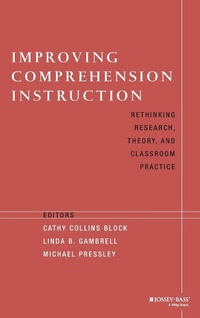
Improving Comprehension Instruction
Rethinking Research, Theory, and Classroom Practice
1st Edition
Published on 18. October 2002
Book
Hardback
448 pages
978-0-7879-6309-5 (ISBN)
Description
Co-published by Jossey-Bass and the International Reading Association, Improving Comprehension Instruction provides a comprehensive overview of current research, proven methods, and successful applications for designing and delivering effective comprehension instruction in K-12 classrooms across the curriculum. Featuring chapters written by noted experts in literacy, cognition, and teaching methodology, this much-needed volume examines the broad array of strategies that teachers can use to develop comprehension proficiency in all students, even those who have had limited previous success in reading. Each chapter focuses on a particular facet of comprehension, presenting research, model instructional practices, and steps needed to ensure that the instructional innovations are effectively adopted in the classroom. The book also highlights sample lessons, showing how comprehension can be prompted, modeled, or demonstrated by the teacher. Strategies for instructing students from urban at-risk or diverse linguistic backgrounds, for overcoming particular reading problems, and for making effective use of educational technology receive prominent attention.
Reviews / Votes
The Topics and instructional practices included in the book are certainly appropriate for the intended audience." (Childhood Education, Annual Theme 2004) "Highly Recommended." (Choice, May 2003)More details
Language
English
Place of publication
New York
United States
Publishing group
John Wiley & Sons Inc
Target group
College/higher education
Professional and scholarly
Product notice
sewn/stitched
Cloth over boards
With dust jacket
Dimensions
Height: 235 mm
Width: 157 mm
Thickness: 29 mm
Weight
797 gr
ISBN-13
978-0-7879-6309-5 (9780787963095)
Copyright in bibliographic data and cover images is held by Nielsen Book Services Limited or by the publishers or by their respective licensors: all rights reserved.
Schweitzer Classification
Persons
Cathy Collins Block is professor of education at Texas Christian University and a member of the national faculty of The University of Notre Dame. She has directed and served as principal investigator of six nationally funded research projects, published numerous research studies on compliance, and has served on the board of directors of a number of educational organizations.
Linda Gambrell is director, division of education at Clemson University. She has coauthored books on reading instruction and written numerous articles published in journals such as Reading Research Quarterly, The Reading Teacher, Educational Psychologist and Journal of Educational Research.
Michael Pressley is the professor of psychology at Michigan State University. He is an expert in comprehension processing in primary-level reading education. Pressley has received numerous awards for his research contributions in the fields of cognition, reading, and teaching.
Linda Gambrell is director, division of education at Clemson University. She has coauthored books on reading instruction and written numerous articles published in journals such as Reading Research Quarterly, The Reading Teacher, Educational Psychologist and Journal of Educational Research.
Michael Pressley is the professor of psychology at Michigan State University. He is an expert in comprehension processing in primary-level reading education. Pressley has received numerous awards for his research contributions in the fields of cognition, reading, and teaching.
Content
Tables, Figures, and Exhibits.
Foreword (Gerald G. Duffy).
Preface.
The Editors.
The Contributors.
Part One: New Directions in Comprehension Instruction.
Introduction: Improving Comprehension Instruction: An Urgent Priority (Linda B. Gambrell, Cathy Collins Block, and Michael Pressley).
1. Reconceptualizing Reading Comprehension (Anne P. Sweet and Catherine Snow).
2. The Thinking Process Approach to Comprehension Development: Preparing Students for Their Future Comprehension Challenges (Cathy Collins Block and Rebecca B. Johnson).
3. From Good to Memorable: Characteristics of Highly Effective Comprehension Teaching (Ellin Oliver Keene).
4. The Guided Reading Lesson: Explaining, Supporting, and Prompting for Comprehension (Gay Su Pinnell).
5. Instructional Components for Promoting Thoughtful Literacy Learning (Pamela J. Dunston).
Part Two: New Comprehension Lessons Across the Curriculum.
6. Differentiating Reading and Writing Lessons to Promote Content Learning (Karen D. Wood).
7. Parsing, Questioning, and Rephrasing (PQR): Building Syntactic Knowledge to Improve Reading Comprehension (James Flood, Diane Lapp, and Douglas Fisher).
8. Using Writing to Improve Comprehension: A Review of the Writing-to-Reading Research (Bena R. Hef.in and Douglas K. Hartman).
9. Research-Based Comprehension Practices That Create Higher-Level Discussions (Janice F. Almasi).
10. Goose Bumps and Giggles: Engaging Young Readers' Critical Thinking with Books from the Teachers' Choices Project and Graphic Organizers (Kathy N. Headley and Jean Keeler).
Part Three: Integrating Technology and Innovative Instruction.
11. Using Technology to Individualize Reading Instruction (David Rose and Bridget Dalton).
12. Computers, Kids, and Comprehension: Instructional Practices That Make a Difference (Linda D. Labbo).
13. Out of This World: Cyberspace, Literacy, and Learning (Victoria Gentry Ridgeway, Chris L. Peters, and Terrell Seawell Tracy).
14. Reading in the Digital Era: Strategies for Building Critical Literacy (Lisa Patel Stevens and Thomas W. Bean).
Part Four: Overcoming Comprehension Challenges.
15. Hitting the Wall: Helping Struggling Readers Comprehend (D. Ray Reutzel, Kay Camperell, and John A. Smith).
16. At-Risk Students: Learning to Break Through Comprehension Barriers (Lynn Romeo).
17. Helping Struggling Readers Make Sense of Reading (Irene W. Gaskins, Sally R. Laird, Colleen O'Hara, Theresa Scott, and Cheryl A. Cress).
Conclusion: Improving Comprehension Instruction: A Path for the Future (Michael Pressley).
Name Index.
Subject Index.
Foreword (Gerald G. Duffy).
Preface.
The Editors.
The Contributors.
Part One: New Directions in Comprehension Instruction.
Introduction: Improving Comprehension Instruction: An Urgent Priority (Linda B. Gambrell, Cathy Collins Block, and Michael Pressley).
1. Reconceptualizing Reading Comprehension (Anne P. Sweet and Catherine Snow).
2. The Thinking Process Approach to Comprehension Development: Preparing Students for Their Future Comprehension Challenges (Cathy Collins Block and Rebecca B. Johnson).
3. From Good to Memorable: Characteristics of Highly Effective Comprehension Teaching (Ellin Oliver Keene).
4. The Guided Reading Lesson: Explaining, Supporting, and Prompting for Comprehension (Gay Su Pinnell).
5. Instructional Components for Promoting Thoughtful Literacy Learning (Pamela J. Dunston).
Part Two: New Comprehension Lessons Across the Curriculum.
6. Differentiating Reading and Writing Lessons to Promote Content Learning (Karen D. Wood).
7. Parsing, Questioning, and Rephrasing (PQR): Building Syntactic Knowledge to Improve Reading Comprehension (James Flood, Diane Lapp, and Douglas Fisher).
8. Using Writing to Improve Comprehension: A Review of the Writing-to-Reading Research (Bena R. Hef.in and Douglas K. Hartman).
9. Research-Based Comprehension Practices That Create Higher-Level Discussions (Janice F. Almasi).
10. Goose Bumps and Giggles: Engaging Young Readers' Critical Thinking with Books from the Teachers' Choices Project and Graphic Organizers (Kathy N. Headley and Jean Keeler).
Part Three: Integrating Technology and Innovative Instruction.
11. Using Technology to Individualize Reading Instruction (David Rose and Bridget Dalton).
12. Computers, Kids, and Comprehension: Instructional Practices That Make a Difference (Linda D. Labbo).
13. Out of This World: Cyberspace, Literacy, and Learning (Victoria Gentry Ridgeway, Chris L. Peters, and Terrell Seawell Tracy).
14. Reading in the Digital Era: Strategies for Building Critical Literacy (Lisa Patel Stevens and Thomas W. Bean).
Part Four: Overcoming Comprehension Challenges.
15. Hitting the Wall: Helping Struggling Readers Comprehend (D. Ray Reutzel, Kay Camperell, and John A. Smith).
16. At-Risk Students: Learning to Break Through Comprehension Barriers (Lynn Romeo).
17. Helping Struggling Readers Make Sense of Reading (Irene W. Gaskins, Sally R. Laird, Colleen O'Hara, Theresa Scott, and Cheryl A. Cress).
Conclusion: Improving Comprehension Instruction: A Path for the Future (Michael Pressley).
Name Index.
Subject Index.