

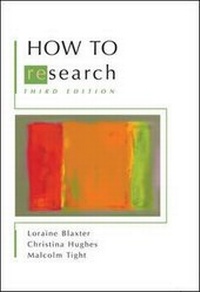
How to Research
3rd Edition
Published on 16. November 2006
Book
Paperback/Softback
304 pages
978-0-335-21746-5 (ISBN)
Description
Praise for the first edition:"...an excellent choice for any student about to start a research project for the first time."
British Journal of Educational TechnologyPraise for the second edition:"How to Research is best used as a reference tool to dip in and out of when required. Not only is it an excellent starting point for new researchers and students, but undoubtedly the more experienced researcher will also find it valuable. Furthermore, those involved in teaching research methods or supervising research students would find this a useful source of information, exercises and ideas."
SRA NewsHow to Research is a practical handbook for those carrying out small scale research projects and discusses the practice and experience of doing research in the social sciences. The new edition has been updated throughout and includes extensively revised chapters on introductory thinking about research and data analysis. Building on the strengths of the previous edition, Blaxter, Hughes and Tight include new material on:
Writing research proposals Making presentations Researching in your own workplace Data collection software and time management Case studies of small scale research projects
It is written in an original, accessible and jargon free style using a variety of different forms of presentation to support the researcher. It is written for all those who are required to complete a research project as part of their studies and is invaluable for those conducting research in the workplace.
British Journal of Educational TechnologyPraise for the second edition:"How to Research is best used as a reference tool to dip in and out of when required. Not only is it an excellent starting point for new researchers and students, but undoubtedly the more experienced researcher will also find it valuable. Furthermore, those involved in teaching research methods or supervising research students would find this a useful source of information, exercises and ideas."
SRA NewsHow to Research is a practical handbook for those carrying out small scale research projects and discusses the practice and experience of doing research in the social sciences. The new edition has been updated throughout and includes extensively revised chapters on introductory thinking about research and data analysis. Building on the strengths of the previous edition, Blaxter, Hughes and Tight include new material on:
Writing research proposals Making presentations Researching in your own workplace Data collection software and time management Case studies of small scale research projects
It is written in an original, accessible and jargon free style using a variety of different forms of presentation to support the researcher. It is written for all those who are required to complete a research project as part of their studies and is invaluable for those conducting research in the workplace.
More details
Edition
3rd edition
Language
English
Place of publication
Milton Keynes
United Kingdom
Target group
College/higher education
Illustrations
ill
Dimensions
Height: 229 mm
Width: 152 mm
Thickness: 18 mm
Weight
497 gr
ISBN-13
978-0-335-21746-5 (9780335217465)
Copyright in bibliographic data and cover images is held by Nielsen Book Services Limited or by the publishers or by their respective licensors: all rights reserved.
Schweitzer Classification
Other editions
New editions
Loraine Blaxter | Christina Hughes | Malcolm Tight
How to Research
Book
09/2010
4th Edition
Open University Press
€35.00
Shipment within 15-20 days
Persons
Lecturer in the School of Health and Social Studies at University of Warwick.
Reader in Sociology at the University of Warwick
Professor in the Department of Educational Research at Lancaster University
Reader in Sociology at the University of Warwick
Professor in the Department of Educational Research at Lancaster University
Content
List of boxesAll at sea but learning to swim
Getting started
Thinking about methods
Reading for research
Managing your project
Collecting data
Analysing data
Writing up
Finishing off
References
Index
Getting started
Thinking about methods
Reading for research
Managing your project
Collecting data
Analysing data
Writing up
Finishing off
References
Index