

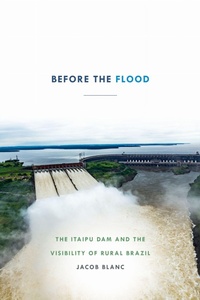
Before the Flood
The Itaipu Dam and the Visibility of Rural Brazil
Published on 15. November 2019
Book
Hardback
320 pages
978-1-4780-0429-5 (ISBN)
Description
In Before the Flood Jacob Blanc traces the protest movements of rural Brazilians living in the shadow of the Itaipu dam-the largest producer of hydroelectric power in the world. In the 1970s and 1980s, local communities facing displacement took a stand against the military officials overseeing the dam's construction, and in the context of an emerging national fight for democracy, they elevated their struggle for land into a referendum on the dictatorship itself. Unlike the broader campaign against military rule, however, the conflict at Itaipu was premised on issues that long predated the official start of dictatorship: access to land, the defense of rural and indigenous livelihoods, and political rights in the countryside. In their efforts against Itaipu and through conflicts among themselves, title-owning farmers, landless peasants, and the AvA-Guarani Indians articulated a rural-based vision for democracy. Through interviews and archival research-including declassified military documents and the first-ever access to the Itaipu Binational Corporation-Before the Flood challenges the primacy of urban-focused narratives and unearths the rural experiences of dictatorship and democracy in Brazil.
Reviews / Votes
"The colossal Itaipu Dam at the Brazil-Paraguay border may well be the most enduring monument to the ambitions of Brazil's twenty-one-year military dictatorship. And, as Jacob Blanc incisively argues in Before the Flood, its construction also formed part of a longer history of predation, with the spectacular visibility of Itaipu being premised on the invisibility of the region's agrarian population. This remarkable study not only rescues the displaced rural people from oblivion but reveals how their political struggles contributed to the ongoing efforts for a more equitable and dignified way of life in the Brazilian countryside." - Barbara Weinstein, author of (The Color of Modernity: Sao Paulo and the Making of Race and Nation in Brazil) "During the waning years of military rule, tens of thousands of rural Brazilians were permanently displaced from their homes near the Paraguayan border by the Itaipu hydroelectric dam in the name of energy development and binational cooperation. Jacob Blanc's illuminating study traces the diverse historical paths of the affected communities to hierarchies of landholding patterns, cultural capital, and political visibility. In the process, he deftly explores the political dividends and divides that marked rural social movements' struggles for democratic inclusion in the Brazilian countryside." - Seth Garfield, author of (In Search of the Amazon: Brazil, the United States, and the Nature of a Region) "... Before the Flood makes a welcome and timely contribution to our understanding of large dam politics and of rural empowerment. Blanc's arguments are interesting, intricate, and convincing."- Peter Brewitt (Environmental History) "A pleasure to read, this book illuminates forces of power and protest mobilized against a useful but predatory, and thus unsustainable, form of green-energy infrastructure-the hydroelectric dam.... Blanc's fascinating and illuminating book is itself a form of protest, a scholarly performance that makes the hinterlands visible and the complications of history readable." - Stephanie C. Kane (Journal of Interdisciplinary History) "[Blanc's] source base is impressive, drawing from oral history interviews, state archives in Brazil and Paraguay, and-most innovatively-the records of the ItaipU Binational itself.... The result is a fine piece of scholarship with demonstrated value for classroom use." - Michael Huner (The Americas) "Blanc's compelling social history of the rural experiences of Itaipu's flooding also makes a very important contribution to energy studies. ... By situating these peoples as actors and not just collateral costs of development, Before the Flood expands the limits of a growing field in an exciting way."
- Jennifer Eaglin (Ethnohistory)
More details
Language
English
Place of publication
North Carolina
United States
Target group
Professional and scholarly
College/higher education
Product notice
Cloth over boards
Illustrations
40 illustrations
Dimensions
Height: 236 mm
Width: 155 mm
Thickness: 23 mm
Weight
567 gr
ISBN-13
978-1-4780-0429-5 (9781478004295)
Copyright in bibliographic data and cover images is held by Nielsen Book Services Limited or by the publishers or by their respective licensors: all rights reserved.
Schweitzer Classification
Other editions
Additional editions
E-Book
11/2019
1st Edition
De Gruyter
€208.99
Available for download
Person
Jacob Blanc is Lecturer in Latin American History at the University of Edinburgh and coeditor of Big Water: The Making of the Borderlands between Brazil, Argentina, and Paraguay.
Content
Abbreviations ix
Note on Terminology and Orthography xi
Acknowledgments xiii
Introduction. History as Seen from the Countryside 1
1. Borders, Geopolitics, and the Forgotten Roots of Itaipu 20
2. The Project of the Century and the Battle for Public Opinion 53
3. The Double Reality of Abertura: Rural Experiences of Dictatorship and Democracy 82
4. Sem Tekoha nAo hA TekO: AvA Guarani Lands and the Construction of Indigeneity 125
5. The Last Political Prisoner: Borderland Elites and the Twilight of Military Rule 154
6. "Men without a Country": Agrarian Resettlement and the Strategies of Frontier Colonization 170
7. Land for Those Who Work It: Mastro and a New Era of Agrarian Reform in Brazil 197
Conclusion. After the Flood 228
Notes 235
Bibliography 277
Index 291
Note on Terminology and Orthography xi
Acknowledgments xiii
Introduction. History as Seen from the Countryside 1
1. Borders, Geopolitics, and the Forgotten Roots of Itaipu 20
2. The Project of the Century and the Battle for Public Opinion 53
3. The Double Reality of Abertura: Rural Experiences of Dictatorship and Democracy 82
4. Sem Tekoha nAo hA TekO: AvA Guarani Lands and the Construction of Indigeneity 125
5. The Last Political Prisoner: Borderland Elites and the Twilight of Military Rule 154
6. "Men without a Country": Agrarian Resettlement and the Strategies of Frontier Colonization 170
7. Land for Those Who Work It: Mastro and a New Era of Agrarian Reform in Brazil 197
Conclusion. After the Flood 228
Notes 235
Bibliography 277
Index 291