

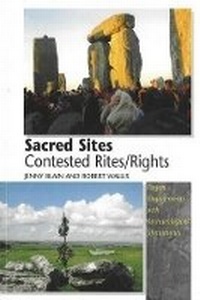
Sacred Sites - Contested Rites/Rights
Pagan Engagements with Archaeological Monuments
Will be published approx. on 1. June 2007
Book
Paperback/Softback
252 pages
978-1-84519-130-6 (ISBN)
Description
Paganism is held to be the fastest growing 'religion' in Britain today. Pagan identities and constructions of sacredness contest assumptions of a 'closed' past and untouchable heritage, within a socio-politics in which prehistoric archaeology -- the stone circles, burial cairns and rock art of the British Isles -- is itself subject to political and economic threats. Pagans see prehistoric monuments in a living, enchanted landscape of deities, ancestors, spirits, 'wights' and other non-human agencies engaged with for personal and community empowerment. From all areas of Britain and indeed worldwide, people come to sacred sites of prehistory to make pilgrimage, befriend places, give offerings, act as unofficial 'site guardians', campaign for 'site welfare'. Summer solstice access at Stonehenge attracts tens of thousands of celebrants; threats of quarrying near Derbyshire's Nine Ladies stone circle or Yorkshire's Thornborough Henges lead to protests and campaigns for the preservation of sacred landscapes and conservation of plant and animal species. Pagans can be seen as allies to the interests of heritage management, yet instances of site damage and recent claims for the reburial of non-Christian human remains disrupt the preservation ethos of those who manage and study these sites, and the large-scale celebrations at Stonehenge and Avebury are subject to continual negotiation. In this book an anthropologist (Blain) and archaeologist (Wallis) examine interfaces between paganisms and archaeology, considering the emergence of 'sacred sites' in pagan and heritage discourse and implications of pagan involvement for heritage management, archaeology, anthropology -- and for pagans themselves, as well as considering practical guidelines for reciprocal benefit.
Reviews / Votes
"(This Book) seeks to fill a lacuna in the academic study of alternative interests in archaeological sites. -- The authors stress that sacredness is constituted within discourse, that landscape and all its components have agency, and that for dialogue to occur, everyone involved must abandon the idea of a single truth. This is an important and highly recommended book." -- Michael York, Bath Spa University.More details
Language
English
Place of publication
Liverpool
United Kingdom
Target group
Professional and scholarly
Illustrations
35+ b/w photos
Dimensions
Height: 155 mm
Width: 230 mm
Weight
398 gr
ISBN-13
978-1-84519-130-6 (9781845191306)
Copyright in bibliographic data and cover images is held by Nielsen Book Services Limited or by the publishers or by their respective licensors: all rights reserved.
Schweitzer Classification
Content
Introduction: The Politics of Location; 'Sacred Sites'? Paganisms, Representation and Imaginings of the Past; Avebury; Stonehenge; Derbyshire and Yorkshire: Stanton Moor and Thornborough Henges; Spirits of Moor and Glen: Pagans and Rock Art Sites in Britain; The Rollright Stones and the Rollright Trust; Reburial, Museums, Pagans and Respect; Towards a Conclusion: Strategies for Dialogic and Future Directions; Index.