

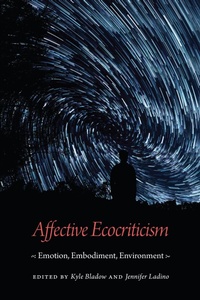
Affective Ecocriticism
Emotion, Embodiment, Environment
Published on 1. November 2018
Book
Paperback/Softback
360 pages
978-1-4962-0756-2 (ISBN)
Description
Scholars of ecocriticism have long tried to articulate emotional relationships to environments. Only recently, however, have they begun to draw on the complex interdisciplinary body of research known as affect theory. Affective Ecocriticism takes as its premise that ecocritical scholarship has much to gain from the rich work on affect and emotion happening within social and cultural theory, geography, psychology, philosophy, queer theory, feminist theory, narratology, and neuroscience, among others. This vibrant and important volume imagines a more affective-and consequently more effective-ecocriticism, as well as a more environmentally attuned affect studies.
These interdisciplinary essays model a range of approaches to emotion and affect in considering a variety of primary texts, including short story collections, films, poetry, curricular programs, and contentious geopolitical locales such as Canada's Tar Sands. Several chapters deal skeptically with familiar environmentalist affects like love, hope, resilience, and optimism; others consider what are often understood as negative emotions, such as anxiety, disappointment, and homesickness-all with an eye toward reinvigorating or reconsidering their utility for the environmental humanities and environmentalism. Affective Ecocriticism offers an accessible approach to this theoretical intersection that will speak to readers across multiple disciplinary and geographic locations.
These interdisciplinary essays model a range of approaches to emotion and affect in considering a variety of primary texts, including short story collections, films, poetry, curricular programs, and contentious geopolitical locales such as Canada's Tar Sands. Several chapters deal skeptically with familiar environmentalist affects like love, hope, resilience, and optimism; others consider what are often understood as negative emotions, such as anxiety, disappointment, and homesickness-all with an eye toward reinvigorating or reconsidering their utility for the environmental humanities and environmentalism. Affective Ecocriticism offers an accessible approach to this theoretical intersection that will speak to readers across multiple disciplinary and geographic locations.
Reviews / Votes
"Affective Ecocriticism cements the importance of affect-and not only data or narrative-to understanding current environmental crises and relations. It also posits how affect bears on acting on these crises (or not) and pivoting our relations. That is, the essays here aren't merely descriptive or diagnostic; they also look to possibilities for response."-Heather Houser, associate professor of English at the University of Texas at Austin and author of Ecosickness in Contemporary U.S. Fiction: Environment and Affect "Affect theory and ecocriticism are both already vibrant fields of inquiry, but Affective Ecocriticism makes a strong case for their inherent compatibility. This field-defining book demonstrates the deeper ground that both of these approaches might find were they to understand the basic fact of their shared concerns, methods, and aims."-Rachel Greenwald Smith, associate professor of English at Saint Louis University and author of Affect and American Literature in the Age of NeoliberalismMore details
Language
English
Place of publication
Lincoln
United States
Target group
Professional and scholarly
Product notice
Paperback (trade)
Illustrations
9 photographs, index
Dimensions
Height: 153 mm
Width: 229 mm
Thickness: 26 mm
Weight
550 gr
ISBN-13
978-1-4962-0756-2 (9781496207562)
Copyright in bibliographic data and cover images is held by Nielsen Book Services Limited or by the publishers or by their respective licensors: all rights reserved.
Schweitzer Classification
Other editions
Additional editions
E-Book
11/2018
1st Edition
University of Nebraska Press
€36.99
Available for download
E-Book
11/2018
1st Edition
University of Nebraska Press
€42.99
Available for download
Persons
Kyle Bladow is an assistant professor of Native American studies at Northland College. Jennifer Ladino is an associate professor of English at the University of Idaho. She is the author of Reclaiming Nostalgia: Longing for Nature in American Literature.
Content
List of Illustrations
Acknowledgments
Kyle Bladow and Jennifer Ladino, Toward an Affective Ecocriticism: Placing Feeling in the Anthropocene
Theoretical Foundations
Nicole Merola, "`what do we do but keep breathing as best we can this / minute atmosphere': Juliana Spahr and Anthropocene Anxiety"
Alexa Weik von Mossner, "From Nostalgic Longing to Solastalgic Distress: A Cognitive Approach to Love in the Anthropocene"
Neil Campbell, "A New Gentleness: Affective Ficto-regionality"
Affective Attachments: Land, Bodies, Justice
Jobb Arnold, "Feeling the Fires of Climate Change: Land Affect in Canada's Tar Sands"
William Major, "Wendell Berry and the Affective Turn"
Tom Hertweck, "A Hunger for Words: Food Affects and Embodied Ideology"
Ryan Hediger, "Uncanny Homesickness and War: Loss of Affect, Loss of Place, and Reworlding in Redeployment"
Animality: Feeling Species and Boundaries
Robert Azzarello, "Desiring Species with Darwin and Freud"
Brian Deyo, "Tragedy, Ecophobia, and Animality in the Anthropocene"
Allyse Knox-Russell, "Futurity without Optimism: Detaching from Anthropocentrism and Grieving Our Fathers in Beasts of the Southern Wild"
Environmentalist Killjoys: Politics and Pedagogy
Nicole Seymour, "The Queerness of Environmental Affect"
Lisa Ottum, "Feeling Let Down: Affect, Environmentalism, and the Power of Negative Thinking"
Graig Uhlin, "Feeling Depleted: Ecocinema and the Atmospherics of Affect"
Sarah Jaquette Ray, "Feeling Fine at the End of the World: The Affect Arc of Undergraduate Environmental Studies Curricula"
Acknowledgments
Kyle Bladow and Jennifer Ladino, Toward an Affective Ecocriticism: Placing Feeling in the Anthropocene
Theoretical Foundations
Nicole Merola, "`what do we do but keep breathing as best we can this / minute atmosphere': Juliana Spahr and Anthropocene Anxiety"
Alexa Weik von Mossner, "From Nostalgic Longing to Solastalgic Distress: A Cognitive Approach to Love in the Anthropocene"
Neil Campbell, "A New Gentleness: Affective Ficto-regionality"
Affective Attachments: Land, Bodies, Justice
Jobb Arnold, "Feeling the Fires of Climate Change: Land Affect in Canada's Tar Sands"
William Major, "Wendell Berry and the Affective Turn"
Tom Hertweck, "A Hunger for Words: Food Affects and Embodied Ideology"
Ryan Hediger, "Uncanny Homesickness and War: Loss of Affect, Loss of Place, and Reworlding in Redeployment"
Animality: Feeling Species and Boundaries
Robert Azzarello, "Desiring Species with Darwin and Freud"
Brian Deyo, "Tragedy, Ecophobia, and Animality in the Anthropocene"
Allyse Knox-Russell, "Futurity without Optimism: Detaching from Anthropocentrism and Grieving Our Fathers in Beasts of the Southern Wild"
Environmentalist Killjoys: Politics and Pedagogy
Nicole Seymour, "The Queerness of Environmental Affect"
Lisa Ottum, "Feeling Let Down: Affect, Environmentalism, and the Power of Negative Thinking"
Graig Uhlin, "Feeling Depleted: Ecocinema and the Atmospherics of Affect"
Sarah Jaquette Ray, "Feeling Fine at the End of the World: The Affect Arc of Undergraduate Environmental Studies Curricula"