

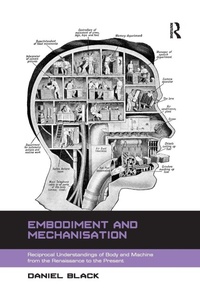
Embodiment and Mechanisation
Reciprocal Understandings of Body and Machine from the Renaissance to the Present
1st Edition
Published on 25. November 2016
Book
Paperback/Softback
220 pages
978-1-138-26724-4 (ISBN)
Description
Drawing on philosophical, neurological and cultural answers to the question of what constitutes a body, this book explores the interaction between mechanistic beliefs about human bodies and the successive technologies that have established and illustrated these beliefs. At the same time, it draws upon newer perspectives on technology and embodied human thought in order to highlight the limitations and inadequacies of such beliefs and suggest alternative perspectives. In so doing, it provides a position from which widely held assumptions about our relationship with technology can be understood and questioned, by both showing how these presuppositions have emerged and developed, and examining the extent to which they are dependent upon our grasp of specific technologies. Illustrated with examples from the Renaissance and Enlightenment periods, as well as the industrial age and the recent eras of informatics, gene science and nanotechnology, Embodiment and Mechanisation highlights the ways in which technological changes have led to shifts in the definition of machine and body, investigating their shared underlying belief that all matter can be reduced to a common substance. From clockwork and cadavers to engines and energy, this volume reveals our long-standing fascination with and enduring commitment to the idea that bodies are machines and that machines are in some sense bodies. As such, it will appeal to scholars across the humanities and social sciences with interests in the sociology of science and technology, embodiment, cultural studies and the history of ideas.
Reviews / Votes
'Embodiment and Mechanisation is an exciting and impressive exploration of the matter of mechanistic thought, and one that makes a profound contribution to contemporary theories of embodiment and the intellectual histories that shape them. Black's analysis of the complex and shifting body-machine relationship is insightful, richly variegated, and precise in its execution. From dissection to information processing, automata to robotics, steam engines to artificial intelligence, Embodiment and Mechanisation is a veritable tour de force. Try as I might, I couldn't put it down.' Nikki Sullivan, Macquarie University, AustraliaMore details
Language
English
Place of publication
London
United Kingdom
Publishing group
Taylor & Francis Ltd
Target group
College/higher education
Dimensions
Height: 234 mm
Width: 156 mm
Thickness: 12 mm
Weight
345 gr
ISBN-13
978-1-138-26724-4 (9781138267244)
Copyright in bibliographic data and cover images is held by Nielsen Book Services Limited or by the publishers or by their respective licensors: all rights reserved.
Schweitzer Classification
Other editions
Additional editions
Daniel Black
Embodiment and Mechanisation
Reciprocal Understandings of Body and Machine from the Renaissance to the Present
E-Book
04/2016
Routledge
€72.49
Available for download
Daniel Black
Embodiment and Mechanisation
Reciprocal Understandings of Body and Machine from the Renaissance to the Present
E-Book
04/2016
Routledge
€72.49
Available for download
Daniel Black
Embodiment and Mechanisation
Reciprocal Understandings of Body and Machine from the Renaissance to the Present
Book
05/2014
1st Edition
Routledge
€231.50
Shipment within 10-20 days
Person
Daniel Black is Lecturer in Communications and Media Studies at Monash University, Australia and co-editor of Complicated Currents: Media Flows, Soft Power and East Asia. He has published numerous book chapters and articles investigating our embodied relationship with technology, including publication in journals such as Body & Society and Theory, Culture & Society.
Content
Introduction; Chapter 1 How to Look at Bodies; Chapter 2 Machina Carnis; Chapter 3 Android Dreams; Chapter 4 Informateriality; Chapter 5 An Aesthetics of the Invisible; Conclusion;