

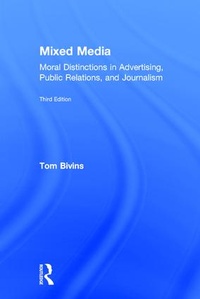
Mixed Media
Moral Distinctions in Advertising, Public Relations, and Journalism
3rd Edition
Published on 7. September 2017
Book
Hardback
338 pages
978-1-138-70097-0 (ISBN)
Description
Mixed Media offers students of journalism, advertising, and public relations the tools for making ethical and moral decisions within their professional disciplines. Covering both ethical theory and its practical application to the media professions, Mixed Media serves as an indispensable starting point for those seeking to develop an ethical framework with regard to mass media. Each media industry is covered with specific attention paid to relevant ethical decision-making approaches involving primary concerns such as truth telling, constituent obligations, persuasion versus advocacy, and respect for the consumers of public communication. In addition, the book covers new media and how ethics affect such concepts as social media, word-of-mouth advertising, and the impact of the digital revolution. And, new to this edition, recent concerns in areas such as satire and the dilemma of free speech versus constraint are discussed, as well as the quandry of native advertising in journalism. Readers will come away with a greater appreciation for moral philosophy and theory as a foundation for decision making, and will develop a personal "yardstick" by which to measure their decisions.
More details
Edition
3rd edition
Language
English
Place of publication
London
United Kingdom
Publishing group
Taylor & Francis Ltd
Target group
Professional and scholarly
Dimensions
Height: 229 mm
Width: 152 mm
Weight
453 gr
ISBN-13
978-1-138-70097-0 (9781138700970)
Copyright in bibliographic data and cover images is held by Nielsen Book Services Limited or by the publishers or by their respective licensors: all rights reserved.
Schweitzer Classification
Other editions
New editions
Book
06/2023
4th Edition
Routledge
€207.10
Shipment within 10-20 days
Additional editions
Book
09/2017
3rd Edition
Routledge
€88.08
Article exhausted; check for reprint
Person
Tom Bivins is the John L. Hulteng Chair in Media Ethics in the School of Journalism and Communication at the University of Oregon where he is the head of the Graduate Certificate Program in Communication Ethics.
Content
Preface
PART I: THE BASICS
Chapter 1: What Is Media Ethics?
Ethics and the Act of Communication
Ethics or Morals?
The Media and Morality
Moral Excuses
Can Personal Ethics Become Professional Ethics?
Media Similarities: The Common Threads
Media Differences: A Coat of Many Colors
Forming Ethical Standards for the Mass Media
Can the Media be Ethical?
Chapter 2: Moral Claimants, Obligation, and Social Responsibility
Relationships among Media and Their Claimants
Functional versus Moral Obligation
The Nature of Obligation
The Libertarian Approach
The Social Responsibility Approach
What Does It All Mean?
Chapter 3: The Media and Professionalism
Central Features of Professionalism
Secondary Features of Professionalism
Are the Media Professions?
Service to Society
The Professional-Client Relationship
Ethics Codes
Profession versus Professionalism
PART II: THE THEORIES
Chapter 4: Introduction
Why Don't We Just Act Ethically?
Why Can't We All Be Right? The Dilemma of Relativism
Why We Reason the Way We Do
Social Contract Theory: The Debate Between the One and the Many
Chapter 5: The Argument over Means and Ends
Consequential Ethical Theories
Duty-Based Ethical Theories
Chapter 6: Virtue and Caring
Virtue Ethics
The Ethic of Care
Chapter 7: Free Speech
History of Free Speech in the United States
John Milton and the Marketplace of Ideas
The Liberty Theory
Free Speech and the Individual versus Society
Liberty-Limiting Principles
Satire and Freedom of Expression: A Special Case
What Does It All Mean?
Chapter 8: A Checklist for Ethical Decision Making
How to Choose Applicable Theories
Organizing Your Approach
The Checklist
An Example
What Does It All Mean?
PART III: ISSUES AND APPLICATIONS
Chapter 9: Ethical Issues Common across the Media
To Tell the Truth
Truth as a Legal Concept
Truth and the Act of Communication
Can We Tell Truth From Fiction?
Avoiding Harm
What Does It All Mean?
Chapter 10: Ethical Issues Common to Both Public Relations and Advertising
What's the Difference between PR and Advertising?
Public Relations, Advertising, and the First Amendment
Ethics and Persuasion
Propaganda versus Persuasion
What Does It All Mean?
Chapter 11: Ethics and Public Relations
What Is Public Relations?
Ethical Approaches Specific to Public Relations
Special Issues in Public Relations Ethics
What Does It All Mean?
Chapter 12: Ethics and Advertising
What Is Advertising?
Ethical Approaches Specific to Advertising
Special Issues in Advertising Ethics
What Does It All Mean?
Chapter 13: Ethics in News Journalism
The Broad Issues in News Journalism
Ethical Approaches Specific to News Journalism
Special Issues in Journalism Ethics
What Does It All Mean?
Index
PART I: THE BASICS
Chapter 1: What Is Media Ethics?
Ethics and the Act of Communication
Ethics or Morals?
The Media and Morality
Moral Excuses
Can Personal Ethics Become Professional Ethics?
Media Similarities: The Common Threads
Media Differences: A Coat of Many Colors
Forming Ethical Standards for the Mass Media
Can the Media be Ethical?
Chapter 2: Moral Claimants, Obligation, and Social Responsibility
Relationships among Media and Their Claimants
Functional versus Moral Obligation
The Nature of Obligation
The Libertarian Approach
The Social Responsibility Approach
What Does It All Mean?
Chapter 3: The Media and Professionalism
Central Features of Professionalism
Secondary Features of Professionalism
Are the Media Professions?
Service to Society
The Professional-Client Relationship
Ethics Codes
Profession versus Professionalism
PART II: THE THEORIES
Chapter 4: Introduction
Why Don't We Just Act Ethically?
Why Can't We All Be Right? The Dilemma of Relativism
Why We Reason the Way We Do
Social Contract Theory: The Debate Between the One and the Many
Chapter 5: The Argument over Means and Ends
Consequential Ethical Theories
Duty-Based Ethical Theories
Chapter 6: Virtue and Caring
Virtue Ethics
The Ethic of Care
Chapter 7: Free Speech
History of Free Speech in the United States
John Milton and the Marketplace of Ideas
The Liberty Theory
Free Speech and the Individual versus Society
Liberty-Limiting Principles
Satire and Freedom of Expression: A Special Case
What Does It All Mean?
Chapter 8: A Checklist for Ethical Decision Making
How to Choose Applicable Theories
Organizing Your Approach
The Checklist
An Example
What Does It All Mean?
PART III: ISSUES AND APPLICATIONS
Chapter 9: Ethical Issues Common across the Media
To Tell the Truth
Truth as a Legal Concept
Truth and the Act of Communication
Can We Tell Truth From Fiction?
Avoiding Harm
What Does It All Mean?
Chapter 10: Ethical Issues Common to Both Public Relations and Advertising
What's the Difference between PR and Advertising?
Public Relations, Advertising, and the First Amendment
Ethics and Persuasion
Propaganda versus Persuasion
What Does It All Mean?
Chapter 11: Ethics and Public Relations
What Is Public Relations?
Ethical Approaches Specific to Public Relations
Special Issues in Public Relations Ethics
What Does It All Mean?
Chapter 12: Ethics and Advertising
What Is Advertising?
Ethical Approaches Specific to Advertising
Special Issues in Advertising Ethics
What Does It All Mean?
Chapter 13: Ethics in News Journalism
The Broad Issues in News Journalism
Ethical Approaches Specific to News Journalism
Special Issues in Journalism Ethics
What Does It All Mean?
Index