

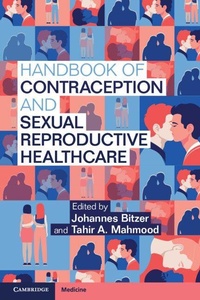
Handbook of Contraception and Sexual Reproductive Healthcare
Published on 7. April 2022
Book
Paperback/Softback
192 pages
978-1-108-95863-9 (ISBN)
Description
The purpose of sexual and reproductive healthcare should be the enhancement of personal relationships and a healthy sex life and not merely counselling and care related to procreation or sexually transmitted infections. Providing practical and evidence-based guidance, this handbook follows the curriculum of the joint EBCOG and ESCRH Certificate and Diploma Examination in Sexual and Reproductive Health. Short, clearly structured text focuses on the essential knowledge of each topic, allowing readers to quickly access key information. Written by trusted experts in the field, topics covered include contraception, infertility and sexual dysfunction, sexual violence and STIs. The text provides advice and practical tips for how to practice patient-centred counselling and shared decision-making. Improving the relationship between the patient and healthcare-provider leads to increased trust, adherence of advice and more satisfactory treatment for the patient.
More details
Language
English
Place of publication
Cambridge
United Kingdom
Target group
College/higher education
Product notice
Paperback (trade)
Illustrations
Worked examples or Exercises
Dimensions
Height: 234 mm
Width: 156 mm
Thickness: 27 mm
Weight
761 gr
ISBN-13
978-1-108-95863-9 (9781108958639)
Copyright in bibliographic data and cover images is held by Nielsen Book Services Limited or by the publishers or by their respective licensors: all rights reserved.
Schweitzer Classification
Other editions
Additional editions
Johannes Bitzer
Handbook of Contraception and Sexual Reproductive Healthcare
E-Book
04/2022
Cambridge University Press
€36.99
Available for download
Johannes Bitzer | Tahir A. Mahmood
Handbook of Contraception and Sexual Reproductive Healthcare
E-Book
03/2022
Cambridge University Press
€36.99
Available for download
Persons
Johannes Bitzer is Professor Emeritus of Obstetrics and Gynecology at University Hospital Basel, Switzerland. He is also Honorary Fellow of the UK Faculty of Sexual and Reproductive Health, and the Director of the Diploma in Sexual Medicine at University Basel Advanced Studies Center. He is a former President of the European Society of Contraception and Reproductive Health (ESCRH) and Editor in Chief of the European Journal of Contraception and Reproductive Health Care. He is a former President of the International Society of Psychosomatic Obstetrics and Gynecology. Tahir Mahmood is Consultant Gynaecologist Victoria Hospital, Kirkcaldy, and Murrayfield Spire Hospital, Edinburgh, Scotland. He is also Honorary Senior Clinical Lecturer, School of Medicine, University of St Andrews, Scotland. He is a former President of the European Board and College of Obstetrics and Gynaecology (EBCOG) and Past Vice-President of the Royal College of Obstetricians and Gynaecologists (RCOG). He chairs the Quality Assurance Committee of the EBCOG examination.
Content
Section 1. Scientific Basis of Contraception and Family Planning: 1. Basic physiology of menstrual cycle and ovulation; 2. Physiological basis of female contraception; 3. Basic physiology of spermatogenesis; 4. Mechanisms of male contraception; 5. contraceptive counseling: An interactive approach; Section 2. Methods of Contraception: 6. Combined hormonal contraceptives; 7. Progestogen-only contraceptives; 8. Depot hormonal contraceptive devices; 9. Non-hormonal intra-uterine device; 10. Barrier methods: Male and female; 11. Fertility awareness-based methods; 12. Female sterilization; 13. Male sterilization; 14. Male hormonal contraception; 15. Emergency contraception; Section 3 Contraception and Medical Conditions: 16. Contraception for cancer patients; 17. Benign breast disease, and benign uterine and ovarian; 18. Cardiovascular disease and contraception; 19. Respiratory diseases; 20. Renal diseases; 21. Contraception for obese women; 22. Contraception and HIV; 23. Neurological and psychiatric disorders; 24. Contraception for women with immunosuppressive conditions; 25. Previous organ transplant; 26. Previous bariatric surgery; 27. Systemic lupus erythematosus; 28. Contraception for disabled people; 29. Diabetes (Type 1 and 2) and Gestational Diabetes Mellitus; 30. Thyroid dysfunction; 31. Polycystic ovarian disease; 32. Liver disease; 33. Inflammatory bowel disease; 34. Inherited Blood Disorders (Sickle Cell Disease, Thalassaemia, etc); 35. Contraception for LGBT; 36. Contraception for women with special needs: Life cycle approach to contraception and sexual and reproductive health care; 37. Contraception and drug interaction; Section 4. Subfertility: 38. Male subfertility; 39. Female subfertility; 40. Fertility options for LGBT couples; 41. Pre-pregnancy care; Section 5. Termination of Pregnancy: 42. Medical method for termination of Pregnancy; 43. Surgical methods for termination of pregnancy; 44. Practical approaches to termination of pregnancy at different gestational ages; Section 6. Sexually Transmitted Diseases and Other Vulvovaginal and Urogenital Infections: 45. Vulvovaginal candidiasis; 46. Bacterial vaginosis; 47. Anogenital warts; 48. Trichomonas vaginalis; 49. Anogenital herpes; 50. Chlamydia Trachomatis Infection; 51. Syphilis; 52. Gonorrhoea; 53. Hepatitis; 54. HIV; 55. Mycoplasma genitalium; 56. Molluscum Contagiosum; 57. Acute and chronic pelvic inflammatory disease; 58. Sexually Transmitted Infection, Pelvic Inflammatory Disease and Contraceptive Options; 59. Contact Tracing; 60. Sexually transmitted infections during pregnancy and postpartum; 61. Sexually transmitted infections and complications in newborns; 62. Recurrent vulvovaginal infections (vulvovaginitis); Section 7. Sexual Health: 63. Sexual counseling and basic care for sexual dysfunction; 64. Sexual health and sexual dysfunctions; 65. Sexual violence against women; Section 8. Cervical Cancer Screening: Section 9. Standards of Care for Sexual and Reproductive Healthcare Services; Index.