

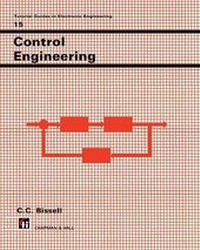
Control Engineering
Published on 27. December 2012
Book
Paperback/Softback
VII, 183 pages
978-1-4615-9713-1 (ISBN)
Description
The appearance of this book in the series 'Tutorial Guides in Electronic Engineer ing' is a reflection of the importance attached to control in electronics and electrical engineering curricula. Yet control engineering is essentially interdisciplinary in nature, and plays a fundamental role in many other areas of technology. I have therefore tried to make this text equally relevant to readers whose main interest lie outside electronics, by concentrating on general systems characteristics rather than on specific implementations. I have restricted myself to the 'classical' approach to single-input, single-output systems, since I feel this is the most appropriate subject matter for a first course in control. However, the Tutorial Guide style, with its detailed treatment of simple design examples, should also render the text useful to practising engineers who need to revise and apply dimly remembered material - or even to those whose training did not include control. is assumed to be familiar with complex numbers, phasors, and The reader elementary calculus. Apart from these topics, the mathematical requirements are of simple first- and second-order linear differential few, although prior knowledge equations would be useful.
More details
Series
Edition
Softcover reprint of the original 1st ed. 1988
Language
English
Place of publication
New York, NY
United States
Target group
Professional and scholarly
Research
Product notice
Paperback (trade)
Illustrations
29
29 s/w Abbildungen
black & white illustrations
Dimensions
Height: 25.4 cm
Width: 20.3 cm
Thickness: 10 mm
Weight
427 gr
ISBN-13
978-1-4615-9713-1 (9781461597131)
DOI
10.1007/978-1-4615-9711-7
Schweitzer Classification
Other editions
Additional editions
Book
10/1991
1st Edition
Nelson Thornes Ltd
€52.43
Article exhausted; check different version
Content
1 Systems, objectives and strategies.- 2 General characteristics of feedback.- 3 Modelling dynamic systems.- 4 The frequency response approach to control system design.- 5 The s-plane and transient response.- 6 The root-locus technique.- 7 Steady-state performance.- 8 Controllers and compensators.- Appendix 1: Polar plots.- Appendix 2: The Routh-Hurwitz criterion.- Further reading.- A nswers to numerical problems.